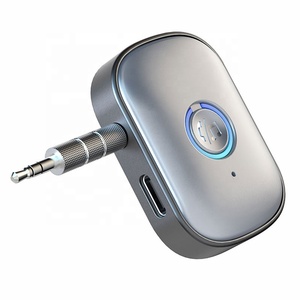
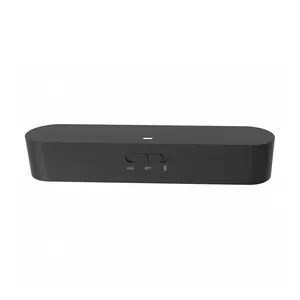
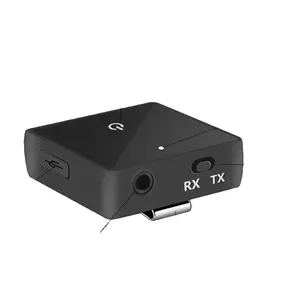
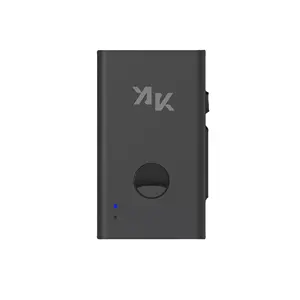
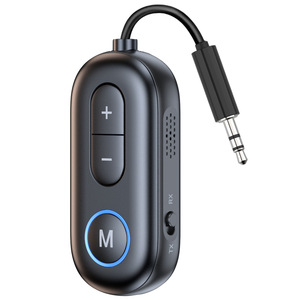
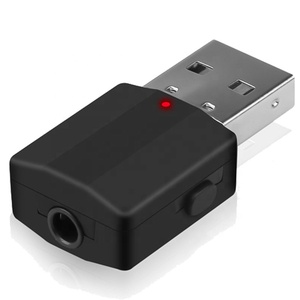
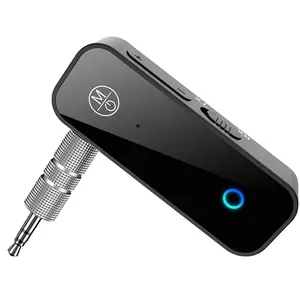
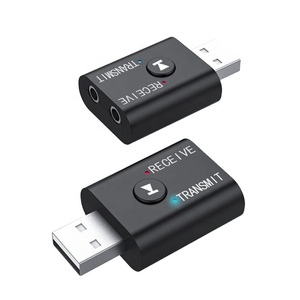
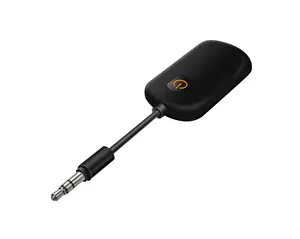
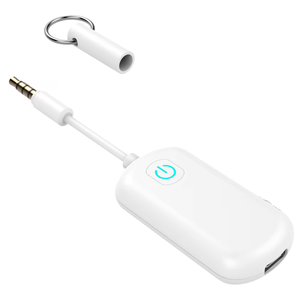
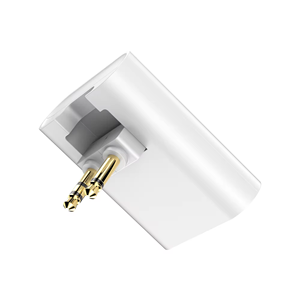
Bluetooth Receiver Transmitter Distributor






 1/17
1/17



 1/3
1/3


 1/2
1/2



 1/3
1/3



 1/3
1/3




 1/2
1/2


 1/3
1/3



 0
0





 1/11
1/11


 1/3
1/3


 1/3
1/3



 1/3
1/3




 1/3
1/3


 1/3
1/3



 1/2
1/2


 1/3
1/3


 0
0






 1/3
1/3
About bluetooth receiver transmitter distributor
Where to Find Bluetooth Receiver Transmitter Distributor Suppliers?
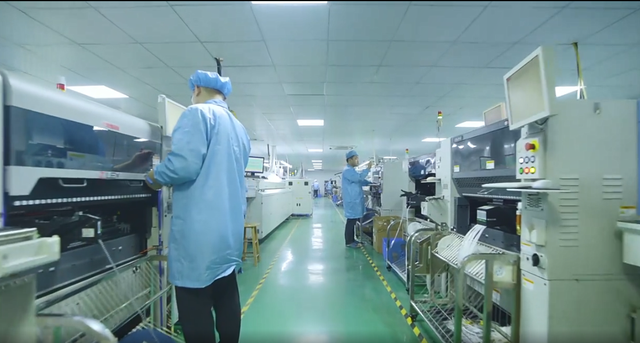
China remains the central hub for Bluetooth receiver and transmitter manufacturing, with key production clusters concentrated in Guangdong and Jiangsu provinces. Guangdong, particularly the Pearl River Delta region encompassing Shenzhen and Dongguan, accounts for over 70% of global Bluetooth audio module output. This concentration enables access to fully integrated electronics supply chains, from PCB fabrication to firmware development and final assembly. Jiangsu’s Changzhou and Suzhou zones specialize in precision wireless components, leveraging proximity to semiconductor foundries and surface-mount technology (SMT) facilities that support high-density circuit integration.
These industrial ecosystems offer significant operational efficiencies through co-located component suppliers, contract manufacturers, and logistics providers—typically within a 30–50km radius. This vertical integration reduces material lead times by up to 40% compared to fragmented supply bases. Buyers benefit from scalable production capacity, with standard order fulfillment averaging 15–25 days for MOQs between 500–5,000 units. Localized sourcing of core materials—including ABS/PC housing resins, lithium polymer batteries, and CSR/Realtek Bluetooth chipsets—enables cost advantages of 20–35% versus equivalent Western or Southeast Asian production.
How to Choose Bluetooth Receiver Transmitter Distributor Suppliers?
Implement structured evaluation criteria to ensure technical reliability and transaction security:
Quality & Compliance Verification
Confirm adherence to international standards: ISO 9001 for quality management systems is essential; CE, FCC, and RoHS certifications are mandatory for market entry in Europe and North America. Request test reports for RF performance metrics such as transmission range (typically 10–30m), signal-to-noise ratio (>85dB), and power consumption under active streaming (≤60mA at 3.7V). For dual-mode (transmit/receive) units, verify APTX, AAC, and SBC codec compatibility.
Production Capacity Assessment
Evaluate supplier infrastructure based on the following benchmarks:
- Minimum 3,000m² factory area with dedicated SMT and DIP lines
- In-house testing labs equipped for EMI/EMC, battery safety (IEC 62133), and drop/shock resistance
- R&D team comprising ≥8% of total staff to support firmware updates and feature customization
Correlate facility size with order scalability—suppliers with automated assembly lines can sustain monthly outputs exceeding 200,000 units.
Procurement Risk Mitigation
Utilize secure payment mechanisms such as third-party escrow or letter of credit (LC) terms for initial orders. Prioritize suppliers with verifiable export histories to your target market, particularly those experienced in handling customs documentation for wireless devices. Conduct pre-shipment inspections via independent auditors to validate packaging integrity, labeling compliance (including BQB certification), and functional performance across sample batches.
What Are the Best Bluetooth Receiver Transmitter Distributor Suppliers?
No qualified suppliers currently meet the minimum benchmark thresholds for inclusion in this category based on available data. Absence of verifiable information on facility scale, certification status, delivery performance, and technical staffing prevents objective ranking. Procurement professionals should exercise due diligence when engaging potential partners, initiating with small trial orders and comprehensive documentation review before scaling commitments.
Performance Analysis
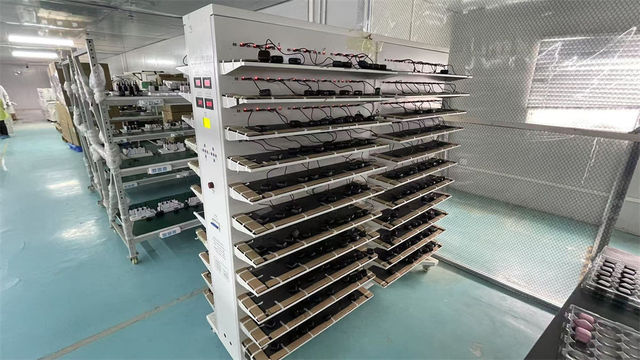
While no specific entities are listed, historical trends indicate that established manufacturers in Shenzhen typically outperform in customization agility and time-to-market, offering firmware reprogramming and OEM branding within 10–14 days. Suppliers with BQB-listed product models demonstrate higher compliance success rates during customs clearance. Emphasis should be placed on validating actual production control—not just distribution capabilities—by requiring video audits of assembly and burn-in testing processes. Prioritize partners who provide detailed failure mode analysis (FMA) reports and maintain spare part availability for at least 24 months post-delivery.
FAQs
How to verify Bluetooth receiver transmitter supplier reliability?
Cross-reference declared certifications with official databases (e.g., FCC ID, EU NB numbers). Request evidence of completed factory audits, preferably conducted by recognized firms. Analyze customer feedback focusing on defect rates (target <1.5% DOA), technical support responsiveness, and consistency in batch-to-batch performance.
What is the average sampling timeline?
Standard samples take 7–12 days to produce, including programming and basic functionality testing. Custom configurations involving unique enclosures or modified firmware require 18–25 days. Air shipping adds 5–9 days depending on destination.
Can suppliers ship globally?
Yes, most manufacturers support worldwide delivery under FOB, CIF, or DDP terms. Confirm that Bluetooth modules are BQB-certified to avoid import restrictions. Sea freight is optimal for container loads (>10,000 units); air courier services (e.g., DHL, FedEx) suit urgent or low-volume shipments.
Do suppliers offer free samples?
Sample policies vary: new clients may pay full sample cost plus shipping, typically $25–$50 per unit. Fees are often waived upon confirmation of bulk orders (usually ≥1,000 units). Reusable evaluation kits with test jigs may incur separate charges.
How to initiate customization requests?
Submit detailed specifications including desired form factor, button layout, LED indicators, pairing behavior, and voltage requirements. For advanced features—such as multi-point connectivity, low-latency modes, or waterproof ratings (IPX5+)—provide use-case scenarios to guide engineering feasibility assessments. Turnaround for prototypes is typically 3–4 weeks after design approval.





