Build My Own App

 CN
CN





 1/6
1/6
 CN
CN


 1/5
1/5
 CN
CN



 1/3
CN
1/3
CN


 1/3
1/3


 0
CN
0
CN

 1/3
1/3


 1/2
1/2


 1/3
1/3


 1/1
1/1




 1/2
1/2
 CN
CN


 1/3
1/3




 1/3
1/3






 1/3
1/3




 0
0



 1/3
1/3


 0
0



 1/3
1/3






 1/3
1/3





 1/3
1/3


 0
0
About build my own app
Where to Find App Development Service Providers?
The global app development services market is highly decentralized, with specialized talent pools distributed across technology hubs in North America, Eastern Europe, South Asia, and East Asia. Unlike hardware manufacturing, software development lacks geographic concentration due to the digital nature of deliverables, enabling remote collaboration across time zones. However, regional clusters such as Bangalore (India), Kyiv (Ukraine), Warsaw (Poland), and Shenzhen (China) have emerged as competitive centers due to dense networks of skilled developers, supportive regulatory environments for IT exports, and cost-efficient operational structures.
These regions offer scalable engagement models—ranging from freelance contractors to enterprise-grade development firms—with documented efficiencies in agile project management and rapid prototyping. Buyers benefit from access to mature tech ecosystems featuring certified professionals proficient in cross-platform frameworks (React Native, Flutter), backend integration (Node.js, Django), and cloud deployment (AWS, Google Cloud). Typical advantages include reduced development cycles by 25–40% through parallelized workflows, 30–50% lower labor costs compared to onshore teams in the U.S. or Western Europe, and flexibility in team scaling based on project scope.
How to Choose App Development Service Providers?
Prioritize these verification protocols when selecting partners:
Technical Compliance
Verify adherence to recognized software quality standards, including ISO/IEC 27001 for information security and CMMI Level 3+ for process maturity. For regulated industries (healthcare, finance), confirm compliance with domain-specific requirements such as HIPAA or GDPR. Demand documentation of code review practices, version control systems (e.g., Git), and automated testing coverage (unit, integration, UI).
Development Capability Audits
Evaluate technical infrastructure and human capital:
- Minimum team size of 15 full-time developers for mid-to-large projects
- Dedicated project managers using Jira, Trello, or equivalent tracking tools
- Proven experience with CI/CD pipelines and DevOps automation
Cross-reference client portfolios with GitHub activity or live app store deployments to validate technical execution and update frequency.
Transaction Safeguards
Implement milestone-based payment structures with escrow arrangements where applicable. Review contractual terms covering intellectual property transfer, non-disclosure agreements (NDAs), and post-launch support obligations. Conduct pilot sprints—delivering a minimum viable feature set within 2–3 weeks—to assess workflow compatibility and code quality before long-term commitment.
What Are the Best App Development Service Providers?
No supplier data available for comparative analysis.
Performance Analysis
Without verified supplier profiles, procurement decisions must rely on independent assessment frameworks. Focus on vendors demonstrating transparent development methodologies, auditable code repositories, and verifiable client testimonials. Prioritize those offering structured onboarding processes, regular sprint reviews, and documented QA procedures. In absence of quantitative metrics, qualitative benchmarks such as responsiveness (target ≤4-hour response time), revision turnaround (≤48 hours per iteration), and defect resolution rates become critical evaluation criteria.
FAQs
How to verify app development service provider reliability?
Audit publicly listed clients and request case studies with measurable outcomes (e.g., user retention, load performance). Validate certifications through official registries and conduct video interviews with assigned development teams. Assess financial stability and organizational longevity—preferably firms operating over three years with consistent revenue streams.
What is the average project timeline for a custom mobile app?
A standard MVP with core functionality requires 12–16 weeks. Full-featured applications incorporating third-party APIs, real-time data synchronization, and admin dashboards typically take 20–28 weeks. Complex systems involving AI/ML components or multi-tier authentication extend timelines to 35+ weeks depending on scope.
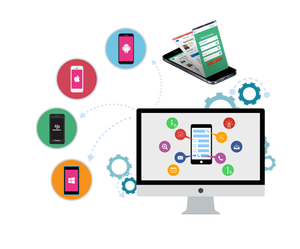
Can app developers deploy to both iOS and Android platforms?
Yes, most providers support dual-platform deployment. Native development uses Swift (iOS) and Kotlin (Android), while cross-platform solutions like React Native reduce time-to-market by up to 30%. Confirm platform-specific compliance with Apple App Store Review Guidelines and Google Play Console policies prior to submission.
Do agencies provide free pilot engagements?
Pilot terms vary. Some vendors offer no-cost discovery phases including wireframes and technical scoping. Actual coding pilots are typically billed at reduced rates or credited toward full project contracts upon continuation.
How to initiate customization requests?
Submit detailed functional specifications including user flows, screen mockups, database schema, and API endpoints. Reputable providers respond with system architecture proposals, effort estimates, and sprint planning within five business days. Expect iterative feedback loops during requirement finalization to align technical feasibility with business objectives.





