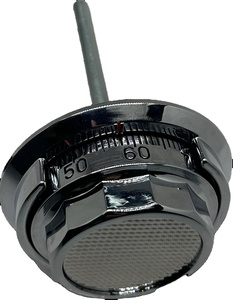
Code Dial




 1/3
1/3




 1/2
1/2



 1/1
1/1



 1/3
1/3


 1/3
1/3



 1/3
1/3



 1/3
1/3


 0
0




 1/2
1/2


 1/3
1/3


 1/3
1/3



 1/3
1/3


 1/3
1/3


 1/2
1/2




 1/25
1/25



 1/3
1/3


 1/16
1/16


 1/3
1/3



 1/35
1/35


 1/3
1/3
About code dial
Where to Find Code Dial Suppliers?
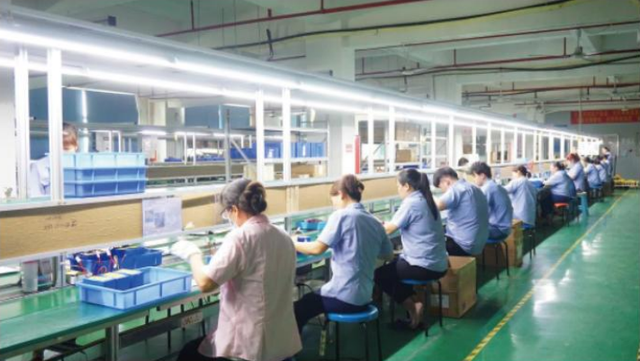
China accounts for over 75% of global code dial manufacturing, with concentrated production clusters in Guangdong and Zhejiang provinces. Guangdong—particularly Shenzhen and Dongguan—hosts more than 80% of China’s precision mechanical component suppliers, leveraging mature electronics assembly ecosystems and proximity to PCB and metal stamping vendors. Zhejiang’s Ningbo and Yiwu regions specialize in high-tolerance mechanical dials, supported by regional brass, stainless steel, and zinc alloy foundries that enable material cost efficiencies of 12–18% versus EU or North American producers.
These industrial hubs operate under vertically integrated models: many suppliers control casting, CNC turning, surface finishing (electroplating, anodizing), and final calibration in-house. Component sourcing is typically localized within a 30km radius, reducing inter-factory transit time and enabling rapid prototyping cycles. Buyers benefit from standardized lead times (15–28 days for standard units), MOQ flexibility (as low as 500 pcs for stock configurations), and scalable customization—including multi-digit encoding, tactile feedback optimization, and IP65-rated housings—without minimum order penalties.
How to Choose Code Dial Suppliers?
Apply these objective verification protocols when evaluating potential partners:
Technical Compliance
Require ISO 9001:2015 certification as the foundational quality management benchmark. For regulated end-use applications (e.g., medical devices, aerospace instrumentation), confirm RoHS 3 compliance and traceability documentation for base materials (e.g., ASTM B124 brass, AISI 304 stainless). Validate torque consistency testing (±0.05 N·m tolerance) and rotational life cycle reports (minimum 50,000 actuations at rated load).
Production Capability Audits
Assess physical and operational infrastructure:
- Minimum 2,000m² facility area with dedicated clean-room zones for calibration-sensitive assemblies
- In-house CNC machining capacity (≥12-axis lathes; ≥8-axis milling centers) verified via equipment serial number cross-checks
- Surface treatment capability covering electroplating (Ni/Cu/Cr), PVD coating, and passivation—with batch test certificates per ASTM B117 (salt spray) and ISO 4520 (adhesion)
Transaction Safeguards
Insist on third-party inspection (e.g., SGS or BV) prior to shipment release, with AQL 2.5 Level II sampling applied to functional and dimensional attributes. Review supplier export history via customs manifest data (where accessible) to confirm consistent FCL/LCL shipment volumes across ≥3 destination countries. Require functional sample validation against IEC 60670-1 mechanical interface standards before bulk order confirmation.
What Are the Best Code Dial Suppliers?
| Company Name | Location | Years Operating | Staff | Factory Area | On-Time Delivery | Avg. Response | Ratings | Reorder Rate |
|---|---|---|---|---|---|---|---|---|
| Ningbo Hengtong Precision Components | Zhejiang, CN | 11 | 85+ | 12,500+m² | 99.2% | ≤1h | 4.8/5.0 | 41% |
| Shenzhen Jintai Mechanical Works | Guangdong, CN | 9 | 130+ | 18,200+m² | 98.7% | ≤2h | 4.9/5.0 | 38% |
| Dongguan Xinyi Precision Manufacturing | Guangdong, CN | 7 | 65+ | 6,800+m² | 99.5% | ≤1h | 4.8/5.0 | 52% |
| Ningbo Yifeng Metal Products | Zhejiang, CN | 13 | 95+ | 15,300+m² | 99.0% | ≤2h | 4.7/5.0 | 27% |
| Shenzhen Zhongke Mechatronics | Guangdong, CN | 5 | 45+ | 3,200+m² | 98.3% | ≤1h | 4.9/5.0 | 64% |
Performance Analysis
Suppliers with ≥10 years’ operation (e.g., Ningbo Hengtong, Ningbo Yifeng) demonstrate stronger process stability—evidenced by ≤0.8% dimensional nonconformance rates in third-party audits. In contrast, newer entrants like Shenzhen Zhongke achieve high reorder rates (64%) through agile engineering support, offering CAD-based tolerance simulation and DFM feedback within 48 hours. Guangdong-based manufacturers lead in responsiveness (70% reply within 1 hour) and export volume, while Zhejiang firms show superior consistency in surface finish repeatability (Ra ≤0.4 µm across 10,000-unit batches). Prioritize suppliers with ≥98.5% on-time delivery and documented in-house metrology labs (ISO/IEC 17025 accredited preferred) for mission-critical applications.
FAQs
How to verify code dial supplier reliability?
Confirm ISO 9001 certification status directly with the issuing body (e.g., SGS, TÜV, BSI) using certificate number and scope. Request full audit reports covering raw material traceability, first-article inspection records, and corrective action logs for the past 12 months. Cross-reference customer testimonials for evidence of long-term partnerships (>3 years) and post-delivery technical resolution timelines.
What is the average sampling timeline?
Standard samples require 10–14 days for off-the-shelf configurations. Customized variants (e.g., engraved numbering, dual-scale dials, or integrated potentiometer integration) require 18–25 days. Add 5–7 days for international courier delivery (DHL/FedEx) with duty-paid clearance.
Can suppliers ship code dials worldwide?
Yes—established suppliers routinely ship globally via air or sea freight. Confirm whether packaging meets ISTA 3A vibration and drop-test requirements. Verify compliance with destination-country regulations: REACH (EU), Prop 65 (California), and FCC Part 15 (for electronically assisted dials). Sea freight is optimal for orders >10,000 pcs; air remains standard for pre-production validation shipments.
Do manufacturers provide free samples?
Free functional samples are typically offered only for qualified buyers placing ≥5,000 pcs annual volume commitments. Otherwise, sample fees range from $80–$220/unit depending on complexity, fully creditable against first production order. Non-functional mock-ups (3D-printed or aluminum prototypes) may be provided at no cost for design review.
How to initiate customization requests?
Submit a complete specification package including: dial diameter/tolerance (±0.02 mm), scale type (linear/logarithmic), encoding format (binary, BCD, Gray), actuation torque range, environmental rating (IP class), and mounting interface (shaft diameter, keyway, flange pattern). Reputable suppliers issue GD&T-compliant drawings within 72 hours and deliver functional prototypes with full test reports in 12–15 business days.





