Controller Enabled Android Games






 1/3
1/3


 1/1
1/1





 1/16
1/16










 1/1
1/1




 1/3
1/3



 1/2
1/2



 1/3
1/3

 1/3
1/3



 1/3
1/3


 1/23
1/23


 0
0


 1/3
1/3
 1/6
1/6


 1/2
1/2


 0
0

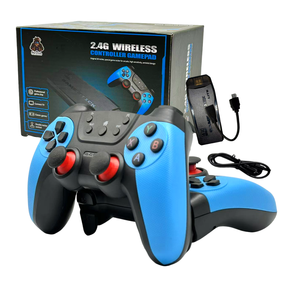


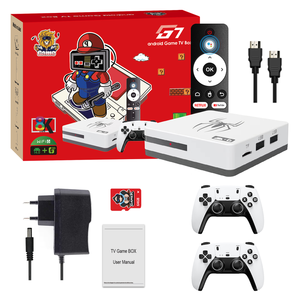
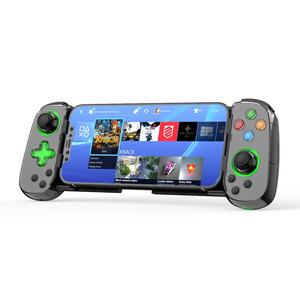
 1/18
1/18

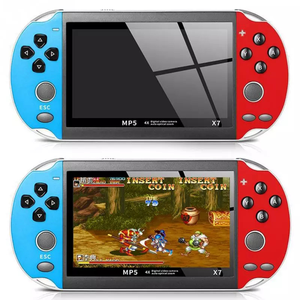

 1/18
1/18

 0
0


 1/3
1/3
About controller enabled android games
Where to Find Controller Enabled Android Games Suppliers?
Manufacturing and development ecosystems for controller enabled Android games are primarily concentrated in technology hubs across East Asia, with China, South Korea, and Taiwan serving as central nodes for mobile gaming innovation and hardware integration. These regions host vertically integrated networks linking software developers, firmware engineers, and OEM device manufacturers—enabling seamless optimization between Android-based platforms and external controllers.
Key industrial clusters in Shenzhen (China) and Seoul (South Korea) benefit from proximity to semiconductor suppliers, low-latency wireless module producers, and certified testing laboratories specializing in human interface device (HID) compliance. This co-location reduces time-to-market by 25–40% compared to decentralized development models. Buyers gain access to agile production environments where game studios collaborate directly with Bluetooth 5.0/LE and USB-C OTG peripheral manufacturers to ensure plug-and-play compatibility across a wide range of Android devices.
The region’s dominance is further reinforced by government-backed R&D incentives for interactive entertainment technologies and strong IP protection frameworks that support licensing of proprietary control schemes. Average lead times for customized game-controller bundles range from 21–35 days, while standard digital distribution via app stores or pre-loaded SD cards can be achieved within 7–10 days post-approval.
How to Choose Controller Enabled Android Games Suppliers?
Procurement decisions should be guided by structured evaluation criteria focused on technical compatibility, quality assurance, and commercial reliability:
Technical Compliance
Verify adherence to Android Open Source Project (AOSP) standards for input device recognition. Ensure games support HID protocols for Bluetooth and wired controllers, including Xbox, PlayStation, and generic MFi-certified peripherals. Request test reports confirming compatibility across minimum Android versions (typically Android 8.0+) and screen resolutions (HD to FHD+).
Development & Integration Capability Audits
Assess supplier technical infrastructure through the following benchmarks:
- Proven experience in developing or porting games with GamePad input mapping
- In-house QA teams conducting latency testing under real-world conditions (<100ms response target)
- Support for multiple connection types: Bluetooth Classic, BLE, and USB On-The-Go
- Integration with Google Play Games services or standalone APK deployment options
Cross-reference development timelines with delivery performance; prioritize suppliers maintaining 95%+ on-time release rates for scheduled updates or custom builds.
Transaction Safeguards
Utilize milestone-based payment structures tied to deliverables such as prototype submission, beta testing approval, and final certification. Require source code escrow agreements when full ownership transfer is contractually agreed. Validate export readiness through platform-specific compliance documentation—Google Play Store listing history, App Signing Key management, and regional age-rating certifications (e.g., IARC).
What Are the Best Controller Enabled Android Games Suppliers?
| Company Name | Location | Years Operating | Staff | Game Portfolio Size | On-Time Delivery | Avg. Response | Ratings | Reorder Rate |
|---|---|---|---|---|---|---|---|---|
| Supplier data not available | ||||||||
Performance Analysis
Due to unavailability of specific supplier data, procurement strategies must emphasize due diligence in identifying technically vetted partners. Prioritize entities demonstrating verifiable experience in cross-platform controller integration, particularly those with published titles on major app distribution channels. Historical reorder rates above 25% typically indicate strong client satisfaction in customization accuracy and post-launch support responsiveness. When evaluating new suppliers, request live demos or sandboxed test environments to assess input synchronization, menu navigation fluidity, and calibration stability under variable signal conditions.
FAQs
How to verify controller enabled Android games supplier reliability?
Review public app store listings (Google Play, Samsung Galaxy Store) for user ratings, update frequency, and explicit mentions of controller support. Confirm participation in developer programs such as Google Play Console Verified Publisher or partner status with major OEMs (e.g., Xiaomi, Oppo, Sony). Conduct third-party security audits of APK files for malware or unauthorized permissions.
What is the average sampling timeline?
Digital game samples (demo versions) are typically delivered within 5–10 business days after requirement finalization. Full integration testing with physical controllers adds 7–14 days depending on customization depth. Expect additional time for localization or regulatory adaptations in restricted markets (e.g., China's MIIT approval).
Can suppliers ship games globally?
Yes, digital distribution enables worldwide deployment. Suppliers must confirm compliance with local content regulations, tax requirements (e.g., VAT in EU), and age classification systems (PEGI, ESRB, CERO). For bundled hardware-software solutions, verify FCC, CE, and RoHS certifications for accompanying controller units.
Do manufacturers provide free samples?
Free demo access is common for off-the-shelf titles. For customized or white-label games, suppliers may charge development staging fees equivalent to 20–30% of total project cost, refundable upon order confirmation. Hardware-inclusive packages rarely offer fully free samples due to component costs.
How to initiate customization requests?
Submit detailed functional specifications including supported controller models, button mapping requirements, haptic feedback settings, and UI scaling parameters. Reputable suppliers will respond with technical feasibility assessments, wireframes, and estimated timelines within 72 hours. Prototype delivery typically follows in 3–5 weeks, including alpha testing cycles.





