Create Website With Ai




































































About create website with ai
Where to Source AI-Powered Website Builder Services?
The global market for AI-driven website development services is increasingly concentrated among specialized technology firms in India and China, where cost-efficient engineering talent and scalable digital infrastructure enable competitive service delivery. Indian suppliers dominate in software-as-a-service (SaaS) solutions and custom AI integrations, leveraging a large English-speaking technical workforce with expertise in machine learning frameworks and full-stack web development. Chinese providers, particularly in Shenzhen and Guangzhou, focus on high-volume e-commerce platforms integrated with AI chatbots and automation tools, supported by mature electronics and cloud computing ecosystems.
These regional hubs offer structured advantages: Indian developers typically provide agile project cycles (2–6 weeks for MVP deployment) and strong client communication responsiveness (average response time under 1 hour), while Chinese suppliers excel in bulk customization for B2B and B2C storefronts, often bundling AI features with Shopify or WordPress-based architectures. Buyers benefit from diversified offerings ranging from template-based AI builders to fully customized dynamic websites with embedded NLP models, all at significantly lower labor costs compared to Western markets—often 40–60% less for equivalent scope.
How to Evaluate AI Website Builder Suppliers?
Procurement decisions should be guided by systematic assessment of technical capability, operational reliability, and transactional safeguards:
Technical Expertise Validation
Confirm demonstrated experience in core technologies: React/Vue.js frontends, Node.js/Django backends, and integration of AI libraries such as TensorFlow or Hugging Face. For AI functionality (e.g., chatbots, content generation), require documented use cases showing model training data sources, accuracy benchmarks, and latency performance. Prioritize suppliers listing dedicated AI application development portfolios over generic web design providers.
Production Capacity & Workflow Transparency
Assess operational scale through objective indicators:
- Minimum portfolio of 100+ active software listings indicating sustained output
- Dedicated AI/ML project teams within organizational structure
- Version control practices (e.g., GitHub/GitLab integration) and CI/CD pipelines
Cross-reference claimed capabilities with verified order history and on-time delivery rates (>75% recommended threshold).
Risk Mitigation Protocols
Enforce secure payment terms using escrow mechanisms until final deliverables pass functional testing. Require milestone-based releases with source code verification at each phase. Validate supplier reputation via verifiable transaction volume (e.g., >$2,000 online revenue) and consistent response times (≤8 hours preferred). Pre-deployment audits should include demo environments and API documentation reviews.
Top AI Website Builder Service Providers
| Company Name | Specialization | Starting Price | Min. Order | On-Time Delivery | Avg. Response | Online Revenue | Main Product Lines |
|---|---|---|---|---|---|---|---|
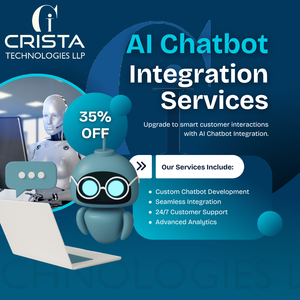
| CRISTA TECHNOLOGIES LLP | AI Website Design, WordPress Plugins | $200 | 1 unit | 80% | ≤1h | US $900+ | Software (970) |
| Shenzhen Douples Technology Co., Ltd. | B2C/B2B Custom AI Websites | $30,000 | 1 unit | 100% | ≤8h | - | Software (N/A) |
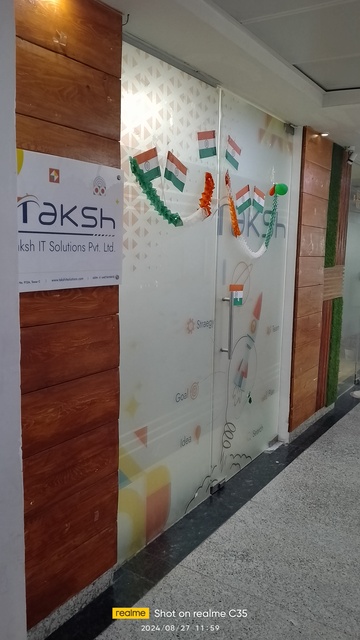
| TAKSH IT SOLUTIONS PRIVATE LIMITED | Custom AI Applications, Chatbots | $5,000 | 1 unit | 75% | ≤1h | US $2,000+ | AI Apps (235), Web Apps (133) |
| INNOJS INFOTECH PRIVATE LIMITED | AI-Powered Platforms (E-Learning, Real Estate) | $999 | 2 units | - | ≤10h | - | Software (966) |
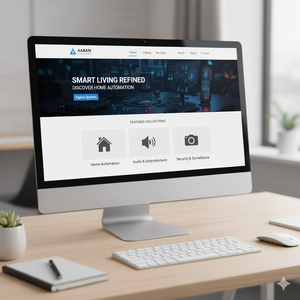
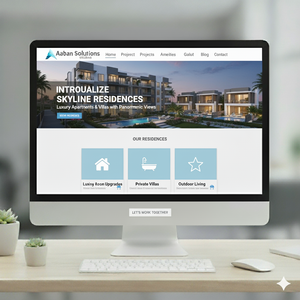
| AABAN SOLUTIONS PRIVATE LIMITED | Professional Website Design + AI Features | $15 | 1 piece | - | ≤1h | - | Software (521) |
Performance Analysis
CRISTA TECHNOLOGIES and TAKSH IT SOLUTIONS stand out for balanced pricing and responsiveness, both offering sub-hour reply times and verifiable transaction volumes—ideal for mid-tier projects requiring iterative feedback. Shenzhen Douples commands premium pricing ($30K+) but guarantees 100% on-time delivery, positioning it for enterprise-grade deployments demanding strict SLAs. INNOJS targets niche verticals like real estate search and e-learning with standardized AI modules priced between $999–$2,999, though longer response windows suggest potential bottlenecks during peak demand. AABAN SOLUTIONS offers the lowest entry point ($15 AI chatbot add-ons), suitable for budget-conscious buyers prioritizing feature modularity over end-to-end site creation.
FAQs
What are typical lead times for AI-integrated websites?
Standard builds range from 3 to 6 weeks depending on complexity. Template-based sites with pre-trained AI components can deploy in as little as 10 days. Fully custom applications involving proprietary algorithms or third-party API integrations may require 8–12 weeks.
Do suppliers support post-launch maintenance?
Service continuity varies. Some providers include 30–90 days of bug fixes and updates; extended support contracts are typically available at 15–20% of initial project cost annually. Clarify SLAs for uptime, patch frequency, and data security compliance before contract signing.
Can I request source code ownership?
Yes, most suppliers transfer full IP rights upon final payment for custom developments. Verify licensing terms for AI models used—open-source frameworks (e.g., Llama, BERT) are generally unrestricted, but commercial APIs may impose usage fees or attribution requirements.
Are there hidden costs in AI website projects?
Potential add-ons include domain hosting, SSL certificates, third-party API access (e.g., Google Maps, Stripe), and ongoing AI model retraining. Request itemized quotes that separate development labor from recurring operational expenses.
How is AI functionality tested before deployment?
Reputable vendors conduct unit testing, integration validation, and user acceptance testing (UAT) cycles. For chatbots, expect accuracy metrics (e.g., >85% intent recognition rate) and fallback protocol demonstrations. Buyers should define KPIs upfront—such as load capacity, response latency (<1.5s), and content coherence—to ensure alignment.





