Data Link Layer







 1/3
1/3



 1/3
1/3


 1/2
1/2






 1/3
1/3

 1/3
1/3








 1/3
1/3


 1/1
1/1



 1/3
1/3








 1/3
1/3


 1/10
1/10

 1/3
1/3


 0
0



 1/2
1/2


 1/3
1/3

 0
0



 1/1
1/1

 0
0
About data link layer
Where to Find Data Link Layer Suppliers?
No active manufacturing or technology suppliers specializing in "data link layer" as a standalone product were identified in the current industrial supplier database. The term "data link layer" refers to a conceptual and functional layer within the OSI (Open Systems Interconnection) model used in telecommunications and networking, rather than a physical product or equipment category. As such, it is not manufactured, sourced, or distributed through traditional industrial supply chains.
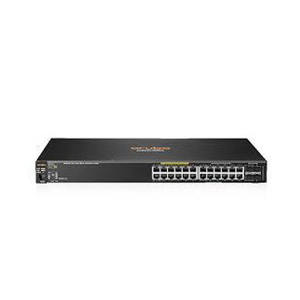
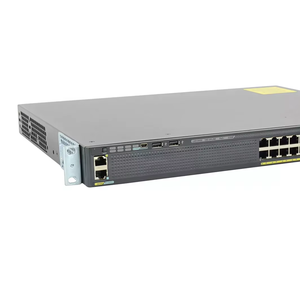
Components and systems that implement data link layer functionality—such as network interface cards (NICs), Ethernet controllers, switches, and communication ICs—are produced by semiconductor and networking hardware manufacturers. These are typically integrated into broader electronic devices and infrastructure. Unlike mechanical or construction equipment, no geographic manufacturing clusters specialize in "data link layer" production, as it is a protocol-level function implemented via firmware, software, and silicon design.
How to Choose Data Link Layer Technology Providers?
Since the data link layer is not a purchasable product but a functional standard, sourcing decisions should focus on selecting hardware or integrated solutions that comply with established data link protocols (e.g., IEEE 802.3 for Ethernet, IEEE 802.11 for wireless). Buyers must evaluate suppliers of networking components based on technical adherence and system integration capabilities:
Protocol Compliance
Ensure products support standardized data link protocols relevant to the application. For wired networks, verify IEEE 802.3 (Ethernet) compliance; for wireless applications, confirm IEEE 802.11 or 802.15.4 standards. Request conformance test reports from accredited labs to validate interoperability and error-handling performance at the data link level.
Hardware Integration Capability
Evaluate component suppliers based on:
- Availability of MAC (Media Access Control) and PHY (Physical Layer) layer integration
- Support for frame synchronization, error detection (CRC), and flow control mechanisms
- Driver and firmware documentation for custom stack implementation
Confirm compatibility with higher-layer protocols (e.g., IP) and lower-layer physical media (e.g., twisted pair, fiber).
Quality and Reliability Verification
Prioritize suppliers with ISO 9001-certified design and production processes. For industrial or automotive applications, demand additional certifications such as IATF 16949 or AEC-Q100 qualification. Review mean time between failures (MTBF) data and electromagnetic compatibility (EMC) testing results to ensure stable data link performance under operational conditions.
What Are the Best Data Link Layer Component Suppliers?
No supplier data was available for entities offering "data link layer" as a discrete product. However, leading semiconductor and networking equipment manufacturers known for robust data link layer implementations include global firms specializing in communication ICs and embedded networking solutions. These providers are typically headquartered in technologically advanced regions such as the United States, Germany, Japan, and Taiwan, with R&D centers focused on protocol optimization and low-latency transmission.
Performance Analysis
While no local or regional clusters produce "data link layer" units, top-tier suppliers differentiate themselves through high integration density, low power consumption, and support for real-time communication protocols (e.g., EtherCAT, PROFINET). Buyers should assess vendors based on ecosystem support, including SDK availability, reference designs, and long-term component availability (LTA) programs essential for industrial and IoT deployments.
FAQs
How to verify data link layer functionality in hardware?
Use packet analyzers and protocol testers to observe frame formatting, MAC addressing, and error detection behavior. Confirm proper handling of collisions (in shared media), frame delimiting, and retransmission logic. Vendor-provided datasheets should specify supported frame sizes, bit error rates, and duplex modes.
What is the typical lead time for networking components with defined data link features?
Standard Ethernet controllers and NICs have lead times of 8–12 weeks under normal market conditions. During semiconductor shortages, lead times may extend to 20–30 weeks. Consider buffer stocking or multi-sourcing strategies for mission-critical applications.
Can data link layer functions be customized?
Yes, in embedded systems and FPGAs, data link layer logic can be customized using HDL (VHDL/Verilog) or programmable logic. ASIC and FPGA-based solutions allow tailored frame formats, priority queuing, and deterministic latency. Customization requires deep expertise in digital design and protocol standards.
Do suppliers provide development tools for data link layer testing?
Reputable semiconductor suppliers offer evaluation kits, SPICE models, and simulation software to validate data link behavior pre-deployment. Look for vendors providing IBIS models for signal integrity analysis and full-stack software libraries for rapid integration.
How to source components with specific data link layer capabilities?
Define required parameters: medium type (copper, optical, wireless), data rate (10/100/1000 Mbps), duplex mode, and protocol suite. Use parametric search engines from authorized distributors (e.g., Digi-Key, Mouser) to filter by MAC integration, power efficiency, and temperature range. Engage directly with manufacturers for volume procurement and lifecycle management.





