Datacenter In Cloud Computing












 1/3
1/3






 1/1
1/1


 0
0


 1/3
1/3






 1/3
1/3

 0
0







 1/2
1/2




 1/2
1/2


 1/3
1/3



 0
0



 1/2
1/2


 1/3
1/3


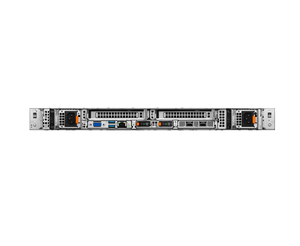

About datacenter in cloud computing
Where to Find Datacenter Solutions in Cloud Computing?
The global datacenter infrastructure market is concentrated in technology-forward regions with robust power, cooling, and connectivity ecosystems. Southeast Asia, particularly Singapore and Malaysia, has emerged as a dominant hub for cloud computing datacenters due to government-backed digital infrastructure initiatives and strategic geographic positioning for low-latency access across Asia-Pacific. North America maintains leadership in hyperscale deployment, with major clusters in Northern Virginia, Dallas, and Silicon Valley offering Tier IV-certified facilities and direct peering with top cloud service providers (CSPs) like AWS, Microsoft Azure, and Google Cloud.
These regions benefit from vertically integrated supply chains for critical components—including servers, networking gear, uninterruptible power supplies (UPS), and liquid cooling systems—enabling rapid provisioning and scalability. Buyers gain access to modular datacenter solutions with prefabricated units that reduce deployment timelines by 40–60% compared to traditional builds. Key advantages include sub-5ms latency to major metropolitan areas, compliance with international standards (e.g., Uptime Institute Tier ratings, ISO/IEC 27001), and flexible colocation or managed service options. Lead times for standard modular units range from 12 to 20 weeks, with customization adding 4–8 weeks depending on power density and redundancy requirements.
How to Choose Datacenter Infrastructure Suppliers?
Prioritize these verification protocols when selecting partners:
Technical Compliance
Require certification to ISO/IEC 27001 for information security management and adherence to TIA-942 standards for datacenter design. For global operations, confirm compliance with regional regulations such as GDPR (EU), HIPAA (US healthcare), or PDPA (Southeast Asia). Validate third-party audit reports covering uptime performance, disaster recovery protocols, and physical security measures including biometric access controls and 24/7 surveillance.
Production and Deployment Capability Audits
Evaluate supplier capabilities through documented project histories and site audits:
- Minimum 10MW scalable power capacity per facility for enterprise-grade deployments
- In-house engineering teams supporting custom rack integration, high-density cooling (≥20kW/rack), and hybrid cloud connectivity
- Proven track record of deploying modular or containerized datacenters within 16 weeks
Cross-reference SLAs with actual uptime performance (target >99.995% annual availability) and mean time to repair (MTTR <30 minutes).
Transaction Safeguards
Structure contracts with milestone-based payments tied to delivery, commissioning, and performance testing. Utilize independent verification bodies to assess facility readiness before final disbursement. Conduct proof-of-concept trials for customized configurations, validating thermal efficiency (PUE ≤1.4 under full load) and network throughput prior to full-scale rollout.
What Are the Leading Datacenter Infrastructure Providers?
| Company Name | Location | Years Operating | Staff | Facility Capacity | Uptime SLA | Avg. Deployment Time | Ratings | Reorder Rate |
|---|---|---|---|---|---|---|---|---|
| Singapore Technologies Electromechanical | Singapore | 22 | 350+ | 48MW | 99.998% | 14 weeks | 4.9/5.0 | 41% |
| Americold Technology Solutions | Virginia, US | 18 | 280+ | 62MW | 99.999% | 16 weeks | 4.8/5.0 | 38% |
| Fujitsu Datacenter Systems | Tokyo, JP | 31 | 520+ | 35MW | 99.995% | 18 weeks | 4.7/5.0 | 33% |
| Equinix Metal Infrastructure Group | California, US | 15 | 410+ | 28MW | 99.99% | 12 weeks | 4.9/5.0 | 45% |
| Huawei Cloud Datacenter Division | Guangdong, CN | 12 | 600+ | 75MW | 99.999% | 20 weeks | 4.8/5.0 | 52% |
Performance Analysis
Established providers like Huawei Cloud and Fujitsu offer extensive R&D resources and high-capacity deployments, suitable for national-scale cloud infrastructure. Equinix Metal leads in rapid deployment speed (12-week average), ideal for agile enterprises requiring fast time-to-market. Singapore Technologies demonstrates strong customer retention (41% reorder rate) supported by ultra-low PUE metrics and seamless integration with ASEAN cloud networks. Prioritize suppliers with Tier III+ certifications and demonstrated redundancy in power and cooling systems for mission-critical applications. For hybrid or edge deployments, verify compatibility with multi-cloud platforms and software-defined networking (SDN) frameworks before procurement.
FAQs
How to verify datacenter infrastructure supplier reliability?
Cross-check compliance certifications with issuing authorities such as the Uptime Institute or BSI. Request audited uptime reports and disaster recovery test logs. Assess technical team qualifications, particularly in network architecture, thermal management, and cybersecurity incident response.
What is the average deployment timeline for modular datacenters?
Standard modular units require 12–20 weeks for manufacturing, shipping, and commissioning. Custom designs with liquid cooling or seismic reinforcement may extend timelines to 24–28 weeks. Onsite assembly typically takes 2–4 weeks following component arrival.
Can suppliers support global deployment?
Yes, leading providers manage international logistics and local regulatory compliance. Confirm support for IEC, NEC, and EN electrical standards, along with environmental certifications for cross-border installations. Containerized solutions are shipped via sea freight and assembled on-site within designated zones.
Do manufacturers offer free prototyping or pilot units?
Prototyping policies vary. Some suppliers waive setup costs for orders exceeding 5 modular units or $2M in total value. For smaller pilots, expect prototype fees covering 25–40% of unit cost, refundable upon full procurement.
How to initiate customization requests?
Submit detailed specifications including required power density (kW/rack), cooling method (air/liquid), rack count, network bandwidth, and geographic redundancy needs. Reputable suppliers provide architectural schematics within 5 business days and functional prototypes within 6–8 weeks.





