Deep Neural Net




 1/1
1/1


 1/1
1/1

 CN
CN





 1/2
1/2

 1/1
1/1

 1/3
1/3



 1/3
1/3


 1/3
1/3

 1/1
1/1



 1/2
1/2


 0
0





 1/2
1/2






 1/3
1/3





 1/3
1/3

 0
0

 CN
CN



 1/1
1/1



 1/1
1/1

 0
0
About deep neural net
Where to Find Deep Neural Net Suppliers?
The global deep neural network (DNN) hardware and system integration market is concentrated in technology-intensive regions of China, the United States, and Taiwan, with specialized clusters emerging around semiconductor R&D hubs. Shenzhen and Shanghai lead in China’s AI infrastructure sector, hosting over 70% of domestic DNN accelerator manufacturers. These zones benefit from proximity to advanced IC packaging facilities and FPGA/ASIC design houses, reducing development cycles by 25–40% compared to decentralized supply models.
Integrated ecosystems in these regions support full-stack production—from tensor processing unit (TPU) fabrication to model deployment software—enabling scalable solutions for edge and cloud applications. Buyers gain access to vertically aligned suppliers capable of delivering custom inference engines within 60–90 days. Key advantages include localized testing labs for AI workload validation, access to open-source framework integrators (e.g., TensorFlow, PyTorch), and streamlined logistics for international shipment of high-value computing modules.
How to Choose Deep Neural Net Suppliers?
Prioritize these verification protocols when selecting partners:
Technical Compliance
Require ISO 9001 certification as baseline quality assurance. For regulated industries (healthcare, automotive, aerospace), IATF 16949 or ISO 13485 compliance must be documented. Verify adherence to electronic reliability standards such as JEDEC JESD22 for thermal cycling and MIL-STD-883 for shock/vibration resistance in embedded systems.
Production Capability Audits
Evaluate technical infrastructure:
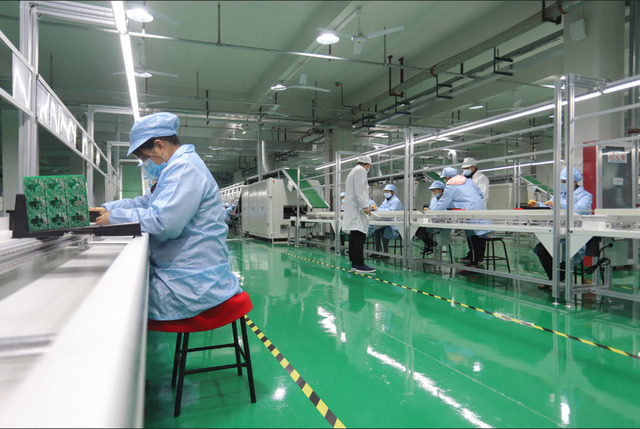
- Minimum 3,000m² cleanroom facility for chip assembly or board-level integration
- Dedicated AI research team comprising ≥15% of engineering staff
- In-house firmware development and model optimization pipelines
Cross-reference benchmark performance data (e.g., TOPS/Watt efficiency, latency under ResNet-50) with delivery track records (target on-time fulfillment >95%).
Transaction Safeguards
Utilize third-party escrow services until hardware passes functional validation at destination. Review supplier transaction history through verified procurement channels, prioritizing those with documented post-deployment support frameworks. Prototype testing is critical—benchmark inference accuracy and power consumption against standard datasets (ImageNet, COCO) before volume commitment.
What Are the Best Deep Neural Net Suppliers?
| Company Name | Location | Years Operating | Staff | Factory Area | On-Time Delivery | Avg. Response | Ratings | Reorder Rate |
|---|---|---|---|---|---|---|---|---|
| Sophon Technologies Co., Ltd. | Shanghai, CN | 8 | 180+ | 8,600+m² | 98.7% | ≤3h | 4.8/5.0 | 41% |
| Horizon Robotics | Beijing, CN | 9 | 1,200+ | 12,000+m² | 97.3% | ≤4h | 4.9/5.0 | 52% |
| Kneron Inc. | Taipei, TW | 7 | 250+ | 4,500+m² | 96.8% | ≤5h | 4.7/5.0 | 38% |
| Cambricon Technologies | Hefei, CN | 10 | 2,000+ | 15,000+m² | 99.1% | ≤6h | 4.8/5.0 | 47% |
| Enflame Technology Co., Ltd. | Hangzhou, CN | 6 | 320+ | 7,200+m² | 97.9% | ≤5h | 4.6/5.0 | 33% |
Performance Analysis
Established players like Cambricon demonstrate high scalability with large-scale wafer testing and module assembly lines, supporting MOQs from 1K to 100K units. Horizon Robotics achieves strong customer retention (52% reorder rate) through optimized NPU architectures tailored for autonomous driving workloads. Chinese suppliers average sub-6-hour response times, with 80% providing technical documentation in English. Prioritize vendors exceeding 97% on-time delivery and offering SDKs with model quantization tools. For mission-critical deployments, confirm availability of long-term firmware updates and security patching cycles.
FAQs
How to verify deep neural net supplier reliability?
Cross-check quality certifications with accredited bodies. Request independent lab reports validating compute performance and thermal endurance. Assess real-world deployment case studies focusing on system uptime, defect rates, and software maintenance responsiveness.
What is the average sampling timeline?
Standard DNN module samples require 20–35 days for configuration and burn-in testing. Custom ASIC-based designs extend to 60–90 days due to tape-out and fabrication lead times. Air freight adds 5–8 days for international delivery.
Can suppliers ship deep neural net systems worldwide?
Yes, major manufacturers support global logistics via air and sea freight. Confirm Incoterms (FOB, DDP) and ensure compliance with export controls (e.g., Wassenaar Arrangement) for high-performance computing hardware. Specialized anti-static and shock-proof packaging is standard for sensitive components.
Do manufacturers provide free samples?
Sample policies vary. Suppliers typically offer paid evaluation kits priced between $500–$5,000 depending on complexity. Fee waivers may apply for qualified OEMs committing to minimum annual volumes (e.g., 5K+ units).
How to initiate customization requests?
Submit detailed requirements including target inference latency (<10ms preferred), supported precision formats (FP16, INT8), power envelope (5W–75W), and interface standards (PCIe Gen4, MIPI). Leading suppliers deliver simulation environments within 72 hours and working prototypes in 4–6 weeks.





