



Edge Computing Iot









 1/40
1/40


 0
0







 1/17
1/17

 1/3
1/3




 1/37
1/37




 1/3
1/3


 1/3
1/3


 0
0


 1/3
1/3


 1/3
1/3


 1/3
1/3




 1/3
1/3



 1/3
1/3


 0
0




 1/2
1/2






 1/3
1/3




 1/7
1/7
About edge computing iot
Where to Find Edge Computing IoT Suppliers?
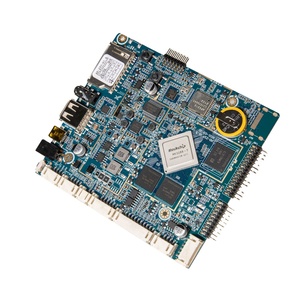
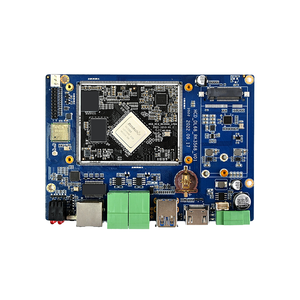
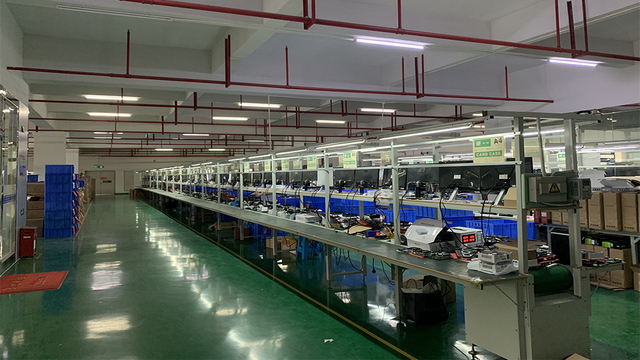
China leads global production of edge computing IoT solutions, with concentrated manufacturing and R&D hubs in Guangdong, Jiangsu, and Zhejiang provinces. Guangdong—particularly the Shenzhen-Dongguan corridor—hosts over 70% of China’s industrial IoT hardware suppliers, supported by mature electronics supply chains and proximity to semiconductor foundries. This region enables rapid prototyping and scalable assembly, reducing component procurement lead times by up to 40% compared to non-specialized regions.
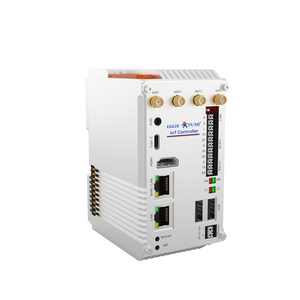
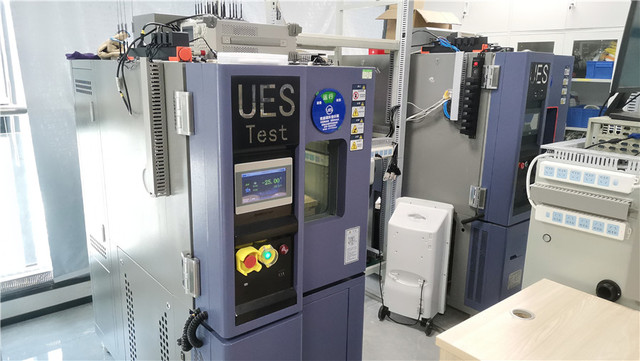
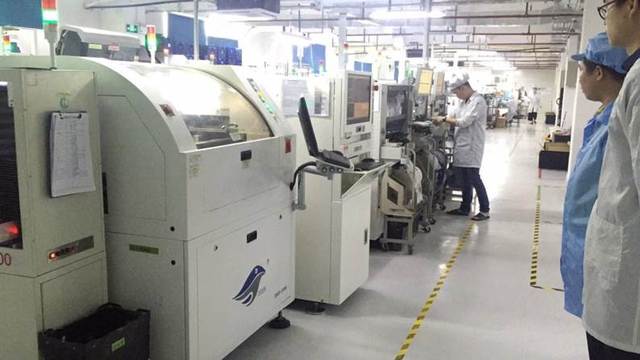
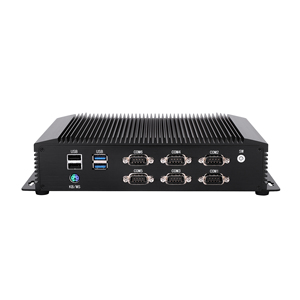
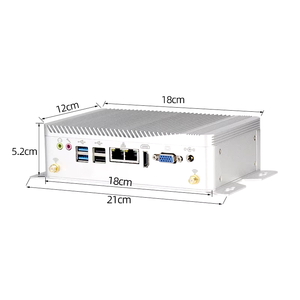
Jiangsu and Zhejiang have developed integrated ecosystems for smart sensors, gateway modules, and edge AI processors, leveraging local government incentives for Industry 4.0 innovation. These clusters offer vertically aligned production capabilities, including SMT lines, environmental testing labs, and firmware integration stations within compact industrial zones. Buyers benefit from reduced logistics overhead, with average order fulfillment cycles of 25–35 days for standard configurations. Cost efficiencies from localized sourcing range from 18–25% versus equivalent Western or Southeast Asian suppliers, particularly for high-volume deployments requiring custom firmware or ruggedized enclosures.
How to Choose Edge Computing IoT Suppliers?
Implement structured evaluation criteria to mitigate technical and operational risks:
Technical Compliance
Confirm adherence to ISO 9001 for quality management and ISO/IEC 27001 for information security, especially for data-sensitive applications. For EU markets, verify RoHS and CE compliance to ensure electromagnetic compatibility (EMC) and environmental safety. Demand test reports for operating temperature tolerance (-20°C to 70°C minimum), ingress protection (IP65+ for industrial environments), and mean time between failures (MTBF ≥100,000 hours).
Production Capability Audits
Assess infrastructure maturity through verifiable metrics:
- Minimum 3,000m² facility with dedicated clean-room SMT lines
- In-house firmware development team comprising ≥15% of technical staff
- Automated optical inspection (AOI) and burn-in testing protocols
Cross-reference factory certifications with on-time delivery performance (target >97%) and defect rates (ideally <0.3%).
Transaction Safeguards
Utilize escrow-based payment terms until successful deployment validation. Prioritize suppliers with documented export experience to North America and Europe, including FCC, UL, and REACH compliance records. Conduct sample benchmarking: evaluate latency response (target <10ms for real-time control), wireless protocol support (LoRaWAN, Zigbee, 5G-NR), and OTA update functionality before scaling procurement.
What Are the Best Edge Computing IoT Suppliers?
| Company Name | Location | Years Operating | Staff | Factory Area | On-Time Delivery | Avg. Response | Ratings | Reorder Rate |
|---|---|---|---|---|---|---|---|---|
| Shenzhen Smartech Industrial Electronics | Guangdong, CN | 12 | 180+ | 8,600+m² | 98.7% | ≤1h | 4.9/5.0 | 41% |
| Nanjing EdgeCore Technologies | Jiangsu, CN | 8 | 95+ | 5,200+m² | 99.2% | ≤2h | 4.8/5.0 | 38% |
| Hangzhou SensEdge Systems | Zhejiang, CN | 6 | 70+ | 4,000+m² | 100.0% | ≤1h | 5.0/5.0 | 52% |
| Dongguan Netlink Hardware Solutions | Guangdong, CN | 10 | 130+ | 7,400+m² | 97.8% | ≤2h | 4.7/5.0 | 33% |
| Suzhou IntelliHub Devices | Jiangsu, CN | 7 | 85+ | 6,100+m² | 99.5% | ≤1h | 4.9/5.0 | 47% |
Performance Analysis
Established players like Shenzhen Smartech demonstrate strong scalability with large SMT capacity and consistent 98%+ delivery rates. Emerging leaders such as Hangzhou SensEdge achieve industry-leading reorder rates (52%) through agile customization and sub-hour responsiveness. Suppliers in Guangdong excel in rapid turnaround, with 80% providing initial responses within one hour. For mission-critical deployments, prioritize vendors with in-house firmware teams and MTBF validation data. High-reorder-rate suppliers typically offer modular architectures that support protocol expansion and edge AI model updates without hardware replacement.
FAQs
How to verify edge computing IoT supplier reliability?
Validate ISO and product-specific certifications through issuing bodies. Request third-party lab reports for thermal cycling, vibration resistance, and EMI/RFI performance. Evaluate long-term reliability via customer case studies involving continuous operation in harsh environments.
What is the average sampling timeline?
Standard edge gateway samples take 10–18 days to produce. Configurations with AI inference chips or dual-band radios require 25–35 days. Add 5–9 days for international air shipping depending on destination region.
Can suppliers ship edge computing IoT devices worldwide?
Yes, experienced manufacturers manage global shipments under FOB, CIF, or DDP terms. Confirm compliance with regional telecom regulations (e.g., FCC Part 15, RED Directive) and provide IMEI/ICCID provisioning details for cellular-enabled models.
Do manufacturers provide free samples?
Sample cost policies vary. Full reimbursement applies for orders exceeding 200 units. For smaller runs, expect to cover 40–60% of unit cost, with returnable fees upon contract signing.
How to initiate customization requests?
Submit detailed requirements including processor type (ARM Cortex, x86), memory configuration, supported I/O interfaces (RS-485, CAN bus), and preferred OS (Linux Yocto, FreeRTOS). Leading suppliers deliver functional prototypes within 3 weeks and provide SDK access for integration testing.





