Eeprom Programmer Reader Producer



 0
0


 1/3
1/3


 1/3
1/3




 1/2
1/2




 1/3
1/3


 1/1
1/1

 0
0


 1/3
1/3



 1/26
1/26




 1/4
1/4




 1/2
1/2


 1/3
1/3

 1/1
1/1


 1/3
1/3


 1/14
1/14



 1/1
1/1


 1/3
1/3


 1/1
1/1


 0
0


 1/1
1/1
About eeprom programmer reader producer
Where to Find EEPROM Programmer Reader Producer Suppliers?
China remains the central hub for electronic programming equipment manufacturing, with concentrated production clusters in Guangdong and Jiangsu provinces. Guangdong, particularly the Pearl River Delta region, hosts over 70% of China’s electronics test and measurement device suppliers, supported by Shenzhen’s advanced semiconductor ecosystem and rapid prototyping infrastructure. This enables streamlined access to ICs, PCBs, and firmware development resources essential for EEPROM programmer production.
Jiangsu’s Yangtze River Delta zone specializes in precision electronic instrumentation, leveraging proximity to research institutions and Tier-1 component manufacturers. These regions benefit from vertically integrated supply chains—encompassing circuit design, SMT assembly, and functional testing—reducing component procurement lead times by 25–40% compared to non-specialized markets. Buyers gain access to compact yet efficient ecosystems where engineering talent, contract manufacturing, and export logistics converge within 80km radii.
Key advantages include fast turnaround for small-batch orders (typically 15–25 days), cost efficiency (15–25% lower than European or North American equivalents), and strong flexibility for OEM/ODM configurations. Monthly production capacity across mid-tier facilities ranges from 1,000 to 5,000 units, scalable with modular assembly lines optimized for low-power embedded systems.
How to Choose EEPROM Programmer Reader Producer Suppliers?
Implement structured evaluation criteria to ensure technical reliability and supply chain integrity:
Quality & Compliance Verification
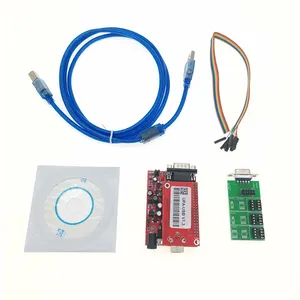
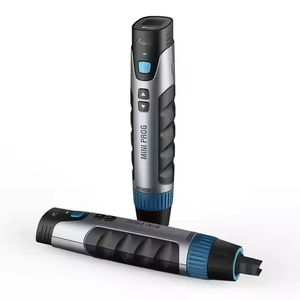
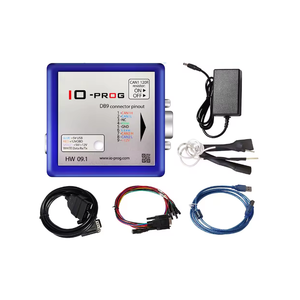
Confirm adherence to ISO 9001:2015 for standardized quality management. For global market compliance, verify RoHS and CE certifications, particularly for electromagnetic compatibility (EMC) and safety standards. Request test reports validating signal integrity, voltage tolerance (typically 1.8V–5V), and protocol support (I²C, SPI, Microwire).
Technical Production Assessment
Evaluate core capabilities through documented evidence:
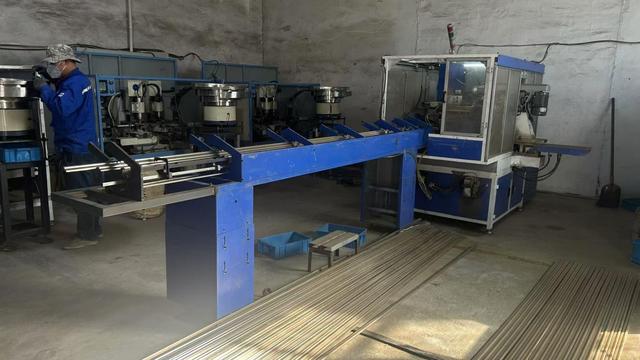
- Minimum 1,000m² cleanroom or ESD-protected facility area
- In-house PCB design and firmware development teams (minimum 8+ engineers)
- Automated functional testing stations with logging capabilities
Cross-reference production videos with delivery performance (target ≥97%) to assess process stability and scalability.
Procurement Risk Mitigation
Utilize third-party inspection services prior to shipment, especially for first-time engagements. Review transaction history via verified trade platforms, prioritizing suppliers with documented after-sales service protocols. Conduct sample validation—test read/write accuracy across multiple EEPROM models (e.g., 24Cxx, 25-series) under varying clock speeds before scaling orders.
What Are the Best EEPROM Programmer Reader Producers?
No supplier data is currently available for detailed comparison.
Performance Analysis
In absence of specific supplier profiles, procurement focus should remain on regional strengths: Guangdong-based producers typically offer faster innovation cycles and broader protocol compatibility due to dense tech integration, while Jiangsu manufacturers emphasize precision calibration and long-term device stability. Prioritize partners demonstrating verifiable experience in programming tool development, with documented support for at least 500 IC types and firmware update mechanisms. For high-volume contracts, confirm on-time delivery rates exceeding 98% and possession of ISO-certified workflows.
FAQs
How to verify EEPROM programmer producer reliability?
Audit certification authenticity through issuing bodies. Request factory inspection reports covering ESD controls, soldering processes, and burn-in testing procedures. Analyze customer feedback focusing on software stability, driver compatibility (Windows/Linux), and technical support responsiveness.
What is the average sampling timeline?
Standard samples take 7–14 days to produce. Units requiring custom firmware or specialized ZIF sockets may extend to 21 days. Add 5–7 days for international express delivery.
Can suppliers export globally?
Yes, established producers manage international shipments under FOB Shenzhen or CIF destination terms. Confirm compliance with import regulations related to electronic devices in target markets. Air freight is recommended for samples; sea consolidation suits bulk orders.
Do manufacturers offer free samples?
Free samples are uncommon but negotiable for projected annual volumes exceeding 500 units. Otherwise, expect to cover 50–70% of unit cost plus shipping, refundable against initial orders.
How to initiate customization requests?
Submit detailed requirements including target EEPROM families, interface type (USB-C, RS232), power delivery specs, and enclosure material preferences. Reputable producers provide schematic reviews within 48 hours and deliver prototypes within 3–4 weeks with test logs.





