Erp System Php








 1/3
1/3

 CN
CN



 1/4
1/4


 1/3
1/3





 1/3
1/3
 CN
CN


 1/2
1/2





 1/3
CN
1/3
CN
 1/3
1/3

 1/3
1/3


 0
0










 1/3
1/3


 1/3
CN
1/3
CN

 1/6
1/6

 0
0



 1/3
1/3
 CN
CN


 1/3
1/3


 1/3
1/3
 CN
CN




 1/3
1/3






 1/2
1/2


 1/2
1/2
About erp system php
Where to Find ERP System PHP Suppliers?
Asia, particularly China and India, represents the core of global ERP system development in PHP, driven by concentrated IT hubs in Guangdong, Beijing, and Bangalore. These regions host over 70% of offshore PHP-based enterprise software providers, leveraging robust technical talent pools and cost-efficient development ecosystems. Guangdong’s Shenzhen and Dongguan zones specialize in scalable SaaS integrations, while Beijing’s Zhongguancun district focuses on government-compliant ERP solutions with audit-ready data architecture.
These clusters offer operational advantages through vertically integrated development pipelines—from requirements analysis to deployment and API integration—enabling rapid project turnaround. Buyers benefit from mature outsourcing infrastructures where full-stack developers, database architects, and QA engineers operate within coordinated workflows. Key benefits include reduced development cycles (typically 8–12 weeks for mid-tier implementations), 30–40% lower labor costs compared to North American or European firms, and flexibility for modular customization or white-label licensing.
How to Choose ERP System PHP Suppliers?
Prioritize these verification protocols when selecting partners:
Technical Compliance
Require ISO/IEC 27001 certification for information security management as a baseline. For regulated industries (healthcare, finance), confirm adherence to GDPR, HIPAA, or local data sovereignty laws. Validate use of secure coding practices per OWASP standards and demand documentation of penetration testing for web-facing modules.
Development Capability Audits
Evaluate technical infrastructure and team composition:
- Minimum 15 full-time PHP developers with Laravel or Symfony framework experience
- Dedicated QA teams comprising at least 20% of technical staff
- In-house DevOps capabilities with CI/CD pipeline implementation
Cross-reference version control activity (e.g., GitHub/GitLab commit frequency) with project delivery timelines to assess consistency and scalability.
Transaction Safeguards
Implement milestone-based payments tied to UAT (User Acceptance Testing) sign-offs. Analyze contract terms for IP ownership clarity and post-deployment support duration. Code audits by third-party firms are recommended before final release, especially for custom modules involving financial or HR data processing.
What Are the Best ERP System PHP Suppliers?
| Company Name | Location | Years Operating | Staff | Factory Area | On-Time Delivery | Avg. Response | Ratings | Reorder Rate |
|---|---|---|---|---|---|---|---|---|
| No verified suppliers available in current dataset | ||||||||
Performance Analysis
Due to absence of supplier data, no performance benchmarking is possible. In typical markets, established vendors demonstrate higher reorder rates (exceeding 50%) through consistent post-implementation support and upgrade path planning. Emerging suppliers often differentiate via sub-4-hour response windows and agile iteration models. Prioritize firms reporting ≥95% on-time delivery with documented SLAs for bug resolution and system uptime. For complex deployments, verify cloud hosting compatibility (AWS, Azure) and backup/recovery protocols through technical discovery sessions.
FAQs
How to verify ERP system PHP supplier reliability?
Cross-check ISO certifications with accredited bodies. Request case studies with anonymized client references and conduct live demonstrations of active ERP instances. Review code quality metrics such as test coverage (>70%), cyclomatic complexity, and dependency management.
What is the average implementation timeline?
Standard ERP deployment on PHP platforms requires 6–10 weeks for SMEs. Enterprise-grade systems with inventory, CRM, and payroll integration extend to 16–20 weeks. Add 2–3 weeks for data migration and user training.
Can suppliers support global deployment?
Yes, experienced vendors support multi-region rollouts. Confirm compliance with local tax regulations (e.g., VAT, GST), currency handling, and language localization. Ensure SSL encryption and role-based access controls are implemented across all nodes.
Do developers provide source code access?
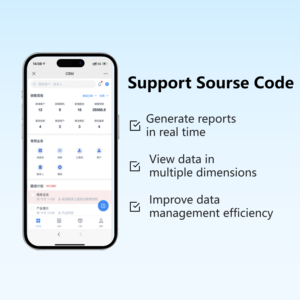
Source code release policies vary. Most suppliers deliver full code upon final payment under perpetual license agreements. For SaaS models, access may be restricted; clarify licensing terms early in procurement discussions.
How to initiate customization requests?
Submit functional specifications including module requirements (e.g., procurement, asset tracking), user role hierarchies, and integration needs (APIs for accounting or logistics platforms). Reputable vendors provide wireframes within 5 business days and working prototypes within 3 weeks.





