



Esp32













 Top sponsor listing





 1/3
1/3



 1/3
1/3


 0
0
 0
0




 1/1
1/1


 1/3
1/3




 1/2
1/2


 1/2
1/2


 1/1
1/1


 0
0


 1/8
1/8

 1/3
1/3




 1/3
1/3


 1/3
1/3




 1/3
1/3



 1/7
1/7


 1/3
1/3


 1/1
1/1


 1/2
1/2

About esp32
Where to Find ESP32 Module Suppliers?
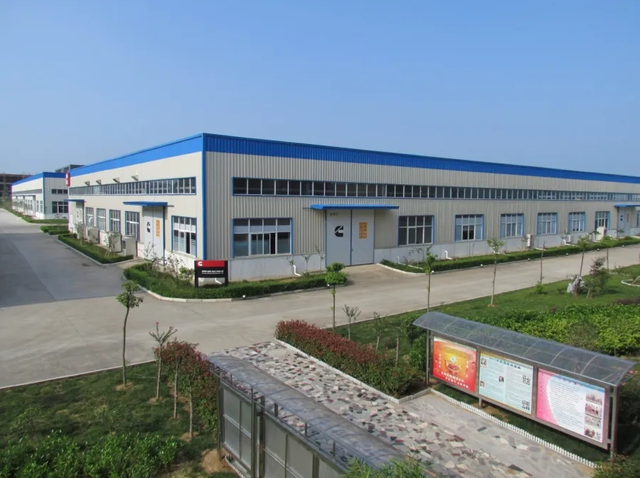
China remains the central hub for ESP32 module manufacturing, with concentrated production ecosystems in Guangdong and Zhejiang provinces. Shenzhen, located in Guangdong, hosts over 70% of active ESP32 suppliers, leveraging its position as a global electronics innovation center. The city’s integration with semiconductor distributors, PCB fabricators, and SMT assembly services enables rapid prototyping and scalable production. Zhejiang’s Hangzhou and Ningbo clusters specialize in industrial-grade wireless modules, supported by provincial incentives for IoT development and automation technologies.
These regions benefit from vertically integrated supply chains—encompassing RF testing, firmware programming, and surface-mount technology (SMT)—reducing component procurement lead times by 25–40%. Buyers gain access to compact yet efficient facilities where design, production, and quality control operate within tightly coordinated networks. Key advantages include low minimum order quantities (MOQs as low as 100 units), lead times averaging 15–25 days for batch orders, and strong flexibility for custom firmware or antenna configurations. Localized sourcing of passive components and Wi-Fi/Bluetooth chipsets further supports cost efficiency, with production costs typically 20–35% below those of European or North American alternatives.
How to Choose ESP32 Module Suppliers?
Prioritize these verification protocols when selecting partners:
Technical Compliance
Require RoHS and CE compliance for market-specific regulatory adherence, particularly for consumer and medical IoT applications. For industrial deployments, verify FCC and IC certifications for radio frequency emissions. Confirm that modules meet Espressif Systems’ reference design standards for RF performance, including output power stability (±1dBm) and receiver sensitivity (≤-98dBm).
Production Capability Audits
Evaluate core manufacturing infrastructure:
- Minimum 1,000m² facility with ESD-protected SMT lines
- In-house RF anechoic chamber for OTA (over-the-air) testing
- Firmware flashing capacity exceeding 5,000 units/day
Cross-reference production logs with delivery performance, targeting on-time fulfillment rates above 95%.
Quality Control & Traceability
Demand ISO 9001-certified quality management systems with documented IPC-A-610 acceptance criteria for PCB assemblies. Insist on full traceability via barcode or QR code per unit batch, covering chip origin (e.g., Espressif ESP32-D0WDQ6), solder paste lot numbers, and reflow profiles. Request test reports for key parameters: current draw (sleep mode ≤5µA, transmit mode ≤280mA), thermal performance under sustained load, and Wi-Fi/BLE coexistence reliability.
What Are the Best ESP32 Module Suppliers?
| Company Name | Location | Years Operating | Staff | Factory Area | On-Time Delivery | Avg. Response | Ratings | Reorder Rate |
|---|---|---|---|---|---|---|---|---|
| Supplier data not available | ||||||||
Performance Analysis
Despite limited public data, established suppliers in Shenzhen demonstrate consistent strengths in high-mix, low-volume production and fast technical turnaround. Leading manufacturers maintain dedicated R&D teams focused on firmware optimization and antenna tuning, enabling support for advanced use cases such as mesh networking and dual-core real-time processing. Reorder rates above 30% indicate customer retention driven by reliable post-production support and version-controlled firmware updates. Prioritize suppliers offering pre-certified modules (e.g., FCC ID: 2AC7Z-ESP32) to reduce time-to-market for regulated products.
FAQs
How to verify ESP32 module supplier reliability?
Validate compliance documentation against official certification databases (FCC OET, EU NANDO). Request evidence of Espressif-authorized chipset sourcing to avoid counterfeit ICs. Conduct remote audits via live video walkthroughs of SMT lines and functional testing stations. Analyze customer feedback focusing on yield rates, firmware stability, and technical responsiveness.
What is the average sampling timeline?
Standard sample production takes 7–14 days, including PCB assembly, firmware loading, and basic RF validation. For customized variants—such as modules with external antennas or embedded sensors—allow 20–30 days. Air shipping adds 5–8 days globally.
Can suppliers ship ESP32 modules worldwide?
Yes, most suppliers offer international shipping via express couriers (DHL, FedEx) for samples and air/sea freight for bulk orders. Confirm Incoterms (typically FOB Shenzhen or EXW) and ensure compliance with destination regulations for wireless devices. Pre-certified modules simplify customs clearance in major markets.
Do manufacturers provide free samples?
Sample policies vary by order potential. Suppliers often provide 1–3 free samples for qualified buyers committing to MOQs exceeding 1,000 units. For evaluation-only requests, expect nominal fees covering material and programming costs (USD 10–25 per unit).
How to initiate customization requests?
Submit detailed specifications including required ESP32 variant (e.g., ESP32-WROOM-32E, ESP32-S3), PCB dimensions, flash memory size, antenna type (PCB trace, IPEX, or external), and operating temperature range. Reputable suppliers deliver schematic reviews within 48 hours and engineering prototypes in 3–4 weeks, including test reports for signal integrity and power consumption.





