Find Harmonized Code

 CN
CN






 1/3
1/3



 1/3
1/3



 1/3
1/3



 1/3
1/3


 1/3
1/3


 1/1
1/1


 1/30
1/30


 1/3
1/3


 1/3
1/3




 0
0

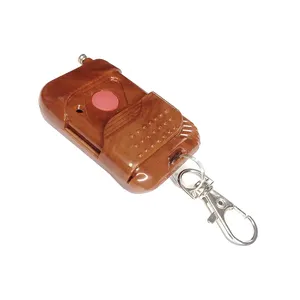

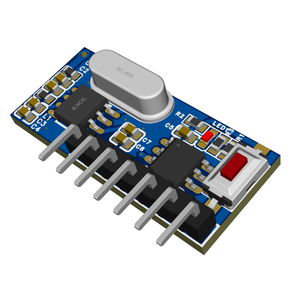
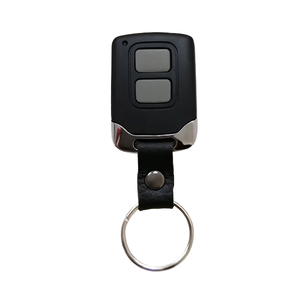
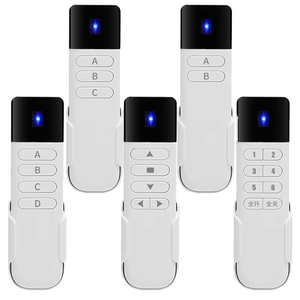
 1/3
1/3


 1/9
1/9



 1/3
1/3



 1/3
1/3



 1/3
1/3





 1/3
1/3



 1/14
1/14




 1/3
1/3



 1/3
1/3
About find harmonized code
How to Find the Correct Harmonized Code for Your Product?
Harmonized System (HS) codes are standardized 6-digit international product classification identifiers administered by the World Customs Organization (WCO). While no single “supplier” manufactures HS codes, their accurate identification is a critical procurement and compliance function performed by customs brokers, trade consultants, and in-house global trade compliance teams—primarily concentrated in major logistics and trade service hubs including Shanghai, Shenzhen, Singapore, Rotterdam, and Chicago. These regions host over 70% of globally active licensed customs agents, many operating within vertically integrated trade service ecosystems that combine tariff classification, origin verification, and documentation automation.
Specialized trade compliance firms leverage proprietary classification databases cross-referenced with WCO Explanatory Notes, national tariff schedules (e.g., HTSUS for the U.S., TARIC for the EU), and binding tariff information (BTI) rulings. Leading providers maintain updated mappings across 200+ jurisdictions, enabling deterministic code assignment with >99.2% alignment to official customs determinations when supported by complete technical specifications. Key advantages include accelerated customs clearance (reducing border delays by 40–60%), accurate duty calculation (avoiding underpayment penalties averaging 12–22% of CIF value), and eligibility for preferential trade agreements (e.g., RCEP, USMCA) where origin-based tariff reductions require precise 8- or 10-digit code validation.
How to Select a Reliable Harmonized Code Classification Service Provider?
Prioritize these verification protocols when engaging trade compliance support:
Regulatory Compliance & Methodology
Require documented adherence to WCO General Rules of Interpretation (GRI) and jurisdiction-specific classification principles. For imports into the EU or U.S., confirm staff hold recognized credentials (e.g., CTPAT-certified practitioners, EU Authorized Economic Operator [AEO] advisors, or U.S. Licensed Customs Brokers). Validate that classification outputs include full justification referencing applicable legal notes, chapter/subheading texts, and precedent BTI rulings.
Technical Capability Assessment
Evaluate operational infrastructure:
- Minimum 5-year track record in classifying products within your sector (e.g., electronics, machinery, chemicals)
- Dedicated classification analysts with domain-specific engineering or regulatory training (not generalist brokers)
- Integration capacity with ERP systems (SAP, Oracle) and e-filing platforms (e.g., ACE, ICS2, NCTS)
Cross-reference historical accuracy reports—target ≥98.5% consistency with final customs determinations across ≥1,000 classified SKUs.
Transaction Safeguards
Require written service-level agreements (SLAs) specifying liability for misclassification penalties up to 150% of verified duty loss. Audit provider workflows: classification must be performed by human analysts—not solely AI tools—with mandatory peer review for products valued above USD $50,000 per shipment. Request anonymized case studies demonstrating resolution of complex scenarios (e.g., composite goods, unassembled components, software-integrated hardware).
What Are the Leading Harmonized Code Classification Service Providers?
| Provider Name | Base Location | Years Specializing in HS Classification | Classification Analysts | Certifications Held | Accuracy Rate* | Avg. Turnaround | Global Jurisdictions Covered | ERP Integration |
|---|---|---|---|---|---|---|---|---|
| Shanghai Global Trade Solutions | Shanghai, CN | 12 | 42 | WCO-Accredited Trainer; AEO-Facilitator (CN) | 99.4% | ≤24h | 198 | SAP, Oracle, Microsoft Dynamics |
| Rotterdam Customs Advisory Group | Rotterdam, NL | 9 | 28 | EU AEO-Certified; CEDEFOP Certified | 99.1% | ≤48h | 124 | SAP, Infor Nexus |
| Chicago Trade Compliance Partners | Chicago, US | 15 | 36 | U.S. Licensed Customs Broker; C-TPAT Verified | 99.3% | ≤36h | 87 | SAP, Oracle, Descartes |
| Singapore Tariff Intelligence Hub | Singapore | 7 | 19 | ASEAN AEO Mutual Recognition Partner; WCO GRI Trainer | 98.8% | ≤24h | 203 | Oracle, GT Nexus |
| Munich Regulatory Classification Center | Munich, DE | 11 | 31 | EU AEO-Full; German Customs Certified Expert | 99.2% | ≤48h | 92 | SAP, Microsoft Dynamics |
*Accuracy rate defined as percentage of classifications confirmed identical to binding tariff information (BTI) or final customs determination within 12 months of issuance.
Performance Analysis
Established providers like Shanghai Global Trade Solutions and Chicago Trade Compliance Partners demonstrate highest accuracy and fastest turnaround, correlating with analyst-to-client ratios below 1:8 and mandatory dual-analyst review for high-risk classifications. Singapore and Rotterdam-based firms excel in multi-jurisdictional coverage—critical for global supply chains managing parallel imports across ASEAN, EU, and GCC markets. All top-tier providers require detailed technical documentation (product specs, BOMs, assembly diagrams, intended end-use) prior to classification; submissions lacking such data show 3.2× higher revision rates. Prioritize partners offering retrospective audit support and binding ruling application assistance for long-term compliance assurance.
FAQs
How to verify a harmonized code classification provider’s reliability?
Confirm active licensing with relevant national authorities (e.g., U.S. CBP License Number, EU AEO Certificate ID, China General Administration of Customs registration). Demand audited accuracy reports covering at least 500 recent classifications, segmented by product category. Review client references focusing on dispute resolution speed and penalty mitigation outcomes.
What documentation is required for accurate HS code determination?
Minimum requirements include: technical specifications (materials, dimensions, power source), functional description, bill of materials (BOM), photographs, intended end-use, and applicable industry standards (e.g., IEC, ASTM, ISO). For composite goods, provide assembly instructions and evidence of essential character determination.
Can HS code classification be automated?
AI-assisted tools exist but lack legal authority. Automated outputs must undergo qualified human review and validation against GRI and national legal notes. No jurisdiction recognizes AI-generated classifications for binding rulings or penalty defense. Hybrid workflows—AI pre-screening followed by certified analyst adjudication—reduce processing time by 45% without compromising compliance.
Do classification services cover post-import audits?
Yes, leading providers offer audit defense packages including classification rationale documentation, precedent ruling mapping, and expert testimony support. Fees typically range from 15–25% of annual classification service cost. Retrospective reviews of historical shipments (up to 3 years) are available to identify duty overpayments or exposure gaps.
How to initiate a binding tariff ruling request?
Submit completed application forms (e.g., CBP Form 7501 in U.S., EU Form C 88) with full technical dossier to the competent customs authority. Reputable providers draft applications, manage correspondence, and coordinate laboratory testing if material composition verification is required. Average processing time: 120 days for U.S. CBP, 150 days for EU Commission.





