Frontend And Backend




 1/4
1/4





 1/6
1/6





 1/3
1/3

 CN
CN




 1/3
1/3





 1/3
1/3




 1/3
1/3





 1/3
1/3




 1/3
1/3



 1/3
1/3


 1/2
1/2






 0
0





 1/3
1/3







 1/3
1/3







 1/3
1/3




 1/3
1/3





 1/3
1/3

 0
0




 1/3
1/3


 0
0
About frontend and backend
Where to Source Frontend and Backend Development Services?
The global market for frontend and backend development services is highly decentralized, with major technology outsourcing hubs concentrated in Asia, Eastern Europe, and Latin America. India leads in volume-based delivery, accounting for over 40% of outsourced software projects, supported by a vast talent pool fluent in modern frameworks such as React, Angular, Node.js, and Django. Eastern European countries—including Ukraine, Poland, and Romania—specialize in high-complexity backend systems and secure API integrations, often operating within ISO 27001-certified environments to meet stringent data protection standards.
These regions offer structured development ecosystems combining agile project management, CI/CD pipelines, and DevOps integration, enabling efficient collaboration across time zones. Buyers benefit from scalable engagement models—ranging from dedicated teams to fixed-price contracts—with average lead times of 4–8 weeks for MVP deployment. Cost efficiencies are significant: labor costs in these regions are typically 50–70% lower than in North America or Western Europe, while maintaining technical parity through continuous upskilling and certification programs.
How to Evaluate Frontend and Backend Service Providers?
Adopt the following verification criteria when assessing potential partners:
Technical Proficiency and Compliance
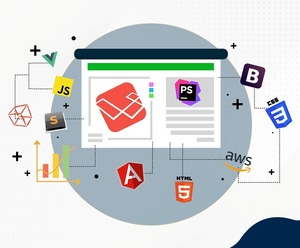
Require documented proof of expertise in core technologies: HTML5, CSS3, JavaScript (ES6+), and responsive design frameworks for frontend; RESTful APIs, GraphQL, database architecture (SQL/NoSQL), and cloud infrastructure (AWS, Azure, GCP) for backend. Validate adherence to industry standards such as OWASP for security, WCAG 2.1 for accessibility, and GDPR or CCPA compliance where applicable. ISO 9001 and ISO 27001 certifications indicate mature quality and information security management systems.
Development Capacity and Infrastructure
Assess operational scale and technical maturity:
- Minimum team size of 20 full-stack developers with role-specific specialization
- Dedicated QA and DevOps units comprising at least 15% of technical staff
- Proven experience with containerization (Docker), orchestration (Kubernetes), and automated testing frameworks
Cross-reference client case studies with version control activity (e.g., GitHub/GitLab commit frequency) and sprint delivery consistency to confirm execution capability.
Project Delivery Safeguards
Implement milestone-based payment structures tied to deliverables verified through staging environments. Prioritize suppliers utilizing transparent tracking tools (Jira, Trello, Asana) with real-time reporting. Conduct code audits via third-party reviewers before final acceptance. For long-term engagements, require SLAs covering uptime (for backend services), bug resolution timelines (target ≤48 hours), and documentation completeness.
What Are the Top Frontend and Backend Development Firms?
No supplier data available for comparative analysis.
Performance Analysis
In the absence of specific supplier metrics, procurement focus should shift toward qualitative validation. Emphasis must be placed on technical due diligence, including live coding assessments, architecture review sessions, and reference checks with past clients. Established vendors typically demonstrate consistent delivery patterns, defined onboarding processes, and formal change management protocols. Emerging providers may offer competitive pricing but require closer oversight during initial phases to mitigate integration risks.
FAQs
How to verify a development firm’s technical reliability?
Request access to recent code repositories (with sensitive data redacted) and conduct peer reviews for structure, scalability, and security practices. Verify certifications held by key engineers (e.g., AWS Certified Developers, Google Professional Cloud Architects). Confirm third-party audit history, particularly for fintech or healthcare projects requiring HIPAA or PCI-DSS alignment.
What is the typical timeline for MVP development?
A fully functional MVP with integrated frontend and backend components generally takes 6–12 weeks, depending on feature complexity. Basic CRUD applications can be delivered in 4–6 weeks, while systems involving real-time data processing, user authentication, and third-party API integrations may extend to 14 weeks. Add 1–2 weeks for security testing and performance optimization.
Can development teams integrate with existing in-house systems?
Yes, experienced providers support seamless integration through standardized APIs, microservices architecture, and modular code design. Ensure compatibility by sharing current tech stack documentation early in the scoping phase. Most firms use middleware solutions to bridge legacy systems with modern platforms.
Do agencies provide post-launch support?
Reputable firms offer tiered maintenance packages, including bug fixing, server monitoring, and quarterly updates. Standard support windows range from 3 to 12 months post-deployment, with optional renewals. SLAs should specify response times, escalation paths, and patch deployment frequency.
How to initiate customization or feature expansion?
Submit detailed requirements including user stories, wireframes, and data flow diagrams. Leading providers respond with technical specifications, effort estimation (in man-days), and UI prototypes within 5–7 business days. Agile teams can begin sprints within two weeks of agreement, delivering incremental builds every 2–3 weeks.





