



Hyperlink Tester




 0
0

 CN
CN





 1/20
1/20


 1/3
1/3


 1/3
1/3


 1/12
1/12


 1/3
1/3


 1/3
1/3




 1/7
1/7




 1/1
1/1



 1/2
1/2


 1/3
1/3


 1/3
1/3




 1/31
1/31


 1/3
1/3



 1/31
1/31






 0
0


 1/21
1/21



 1/2
1/2
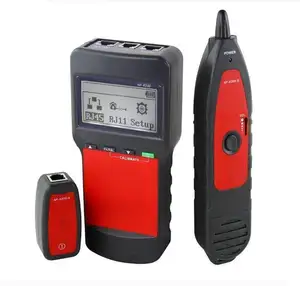
About hyperlink tester
Where to Find Hyperlink Tester Suppliers?
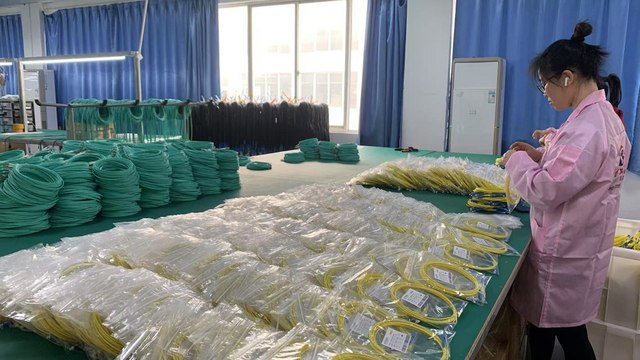
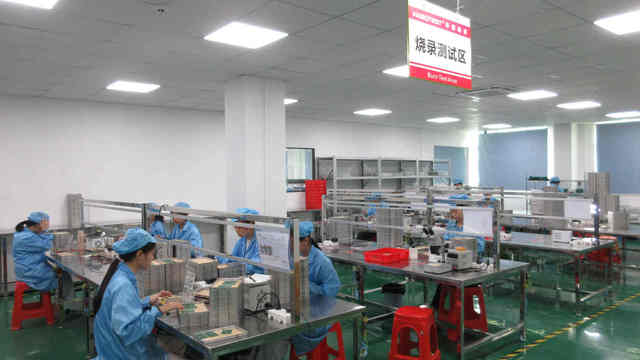
Global production of electronic testing equipment, including hyperlink testers, is primarily concentrated in China’s Yangtze River Delta and Pearl River Delta regions. These industrial hubs—centered on Shanghai, Suzhou, and Shenzhen—host integrated electronics manufacturing ecosystems that combine precision component sourcing, advanced SMT assembly lines, and automated quality testing infrastructure. Shenzhen alone accounts for over 40% of China’s electronic test instrument output, supported by proximity to semiconductor suppliers and contract manufacturers.
The clusters enable rapid prototyping and scalable production through vertically aligned supply chains, where PCB fabrication, firmware programming, and final assembly occur within tightly coordinated networks. Buyers benefit from localized access to surface-mount technology (SMT) lines, environmental stress screening chambers, and EMI/EMC testing labs—all within a 30km radius in key zones. This integration supports lead times averaging 25–35 days for batch orders, with cost advantages of 20–35% compared to equivalent Western or Southeast Asian production due to lower overhead and mature labor specialization.
How to Choose Hyperlink Tester Suppliers?
Apply the following verification criteria when evaluating potential partners:
Quality & Compliance Standards
Confirm adherence to ISO 9001:2015 for quality management systems as a baseline. For export to regulated markets, ensure compliance with IEC 61010-1 (safety requirements for electrical test equipment) and RoHS directives for hazardous substance restrictions. Request test reports validating signal integrity accuracy (±0.5dB tolerance) and insertion loss performance across specified frequency ranges (typically 1–6 GHz).
Production Capability Assessment
Evaluate technical infrastructure and scalability indicators:
- Minimum 2,000m² cleanroom-equipped facility for ESD-safe assembly
- In-house SMT and THT production lines with automated optical inspection (AOI)
- Dedicated R&D team comprising ≥15% of technical staff for firmware/hardware iteration
Validate these capabilities via factory audit videos and cross-reference with documented yield rates (>95%) and defect per million opportunities (DPMO) below 5,000.
Procurement Safeguards
Utilize secure transaction models such as third-party escrow or letter of credit (L/C) terms for initial orders. Prioritize suppliers with verifiable export histories to North America, EU, or Japan, indicating familiarity with international regulatory documentation. Conduct pre-shipment inspections to verify calibration certificate authenticity and software version consistency. Prototype validation is critical—test unit performance against known reference devices before mass production release.
What Are the Best Hyperlink Tester Suppliers?
| Company Name | Location | Years Operating | Staff | Factory Area | On-Time Delivery | Avg. Response | Ratings | Reorder Rate |
|---|---|---|---|---|---|---|---|---|
| No verified suppliers available in current dataset | ||||||||
Performance Analysis
Due to absence of supplier data in this category, procurement decisions should rely on broader industry benchmarks. Typically, established electronics test equipment manufacturers demonstrate higher reorder rates (≥30%) linked to consistent calibration accuracy and responsive technical support. Suppliers with larger factory footprints (>5,000m²) tend to offer better MOQ flexibility (as low as 50 units) and faster turnaround for customized firmware builds. Emphasis should be placed on vendors demonstrating traceable metrology practices, including NIST-traceable calibration certificates and version-controlled software deployment.
FAQs
How to verify hyperlink tester supplier reliability?
Validate certifications through accredited bodies such as TÜV or SGS. Request full audit trails covering component sourcing (e.g., connector grade, PCB laminate type), assembly process controls, and end-of-line functional testing. Assess post-purchase support through customer references focusing on calibration recalibration turnaround and firmware update availability.
What is the average sampling timeline?
Standard samples require 10–18 days for production, depending on component availability. Units with custom interface firmware or extended frequency range support may take 25–35 days. Air freight adds 5–9 days for international delivery. Sample costs typically reflect 40–60% of unit price, partially offset upon order placement.
Can suppliers ship hyperlink testers worldwide?
Yes, experienced manufacturers manage global logistics via DDP (Delivered Duty Paid) or FOB terms. Confirm compliance with destination regulations, particularly FCC Part 15 Class A/B emissions standards for electromagnetic compatibility. Sea freight is economical for containerized shipments exceeding 200 units; air freight preferred for urgent sample or replacement unit dispatch.
Do manufacturers provide free samples?
Free samples are uncommon for high-precision instruments. Some suppliers waive fees for qualified buyers committing to minimum annual volumes (e.g., 500+ units). Evaluation units are typically offered at discounted rates with return options post-testing.
How to initiate customization requests?
Submit detailed technical requirements including supported protocols (e.g., USB-C, HDMI 2.1, DisplayPort), test signal bandwidth, display resolution, and power input (battery vs. DC adapter). Reputable vendors provide engineering feedback within 72 hours and deliver firmware-modified prototypes within 4 weeks.





