




Iot Arduino Project










 1/2
1/2


 1/3
1/3




 1/3
1/3



 1/3
1/3


 1/2
1/2



 1/3
1/3



 1/3
1/3


 1/11
1/11




 1/3
1/3



 1/3
1/3






 1/20
1/20



 1/3
1/3





 1/4
1/4



 1/1
1/1



 0
0



 0
0




 1/5
1/5
About iot arduino project
Where to Find IoT Arduino Project Suppliers?
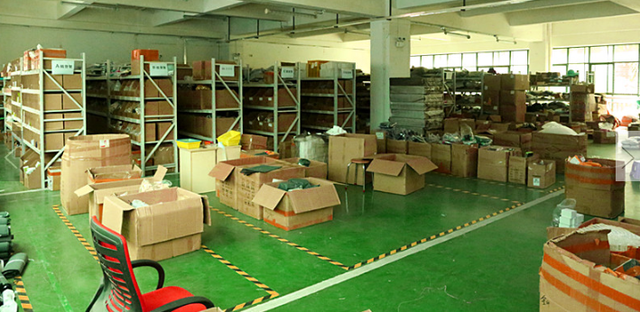
China remains the central hub for electronics and embedded systems manufacturing, with key production clusters in Guangdong, Zhejiang, and Jiangsu provinces. Shenzhen, located in Guangdong, serves as the epicenter of IoT hardware development, hosting over 70% of China’s electronics OEMs and offering seamless access to component sourcing, rapid prototyping, and low-volume to high-volume PCB assembly. The region’s vertically integrated supply chains enable fast iteration cycles—critical for IoT Arduino-based projects requiring sensor integration, wireless modules (Wi-Fi/Bluetooth/NB-IoT), and custom firmware deployment.
These industrial ecosystems support agile manufacturing through shared technical resources, including SMT lines, environmental testing labs, and open-source hardware communities. Suppliers benefit from proximity to semiconductor distributors, reducing material lead times by 25–40% compared to offshore alternatives. Buyers can expect standard production lead times of 15–30 days for assembled units, with prototype delivery within 7–10 days. Cost efficiencies stem from localized procurement of microcontrollers (e.g., ATmega328P, ESP32), sensors, and connectivity modules, yielding 20–35% lower unit costs than equivalent Western-assembled solutions.
How to Choose IoT Arduino Project Suppliers?
Implement structured evaluation criteria to ensure technical and operational reliability:
Technical Compliance
Confirm adherence to international electronics standards, including ISO 9001 for quality management and RoHS compliance for hazardous substance restrictions. For export-bound products, verify CE and FCC certifications where applicable, particularly for wireless-enabled devices. Request documentation on EMI/EMC testing, thermal stress validation, and PCB durability under real-world conditions.
Production Capability Audits
Assess core manufacturing competencies:
- Minimum 2,000m² facility with dedicated SMT and DIP assembly lines
- In-house PCB design and firmware development teams (minimum 8+ engineers)
- Automated optical inspection (AOI) and functional testing stations
Validate production scalability by reviewing monthly output capacity (target: ≥50,000 units) and cross-reference with defect rates (acceptable range: ≤0.3%).
Transaction Safeguards
Utilize secure payment structures such as third-party escrow or milestone-based disbursements tied to prototype approval and batch testing. Prioritize suppliers with documented export experience to North America, EU, or Japan, indicating familiarity with regulatory packaging, labeling, and customs documentation. Pre-shipment inspections should include firmware integrity checks, power consumption benchmarking, and I/O functionality verification.
What Are the Best IoT Arduino Project Suppliers?
No supplier data is currently available for this product category.
Performance Analysis
In the absence of specific supplier profiles, buyers should focus on regional capabilities. Shenzhen-based manufacturers typically offer superior responsiveness and technical agility due to dense supplier networks and engineering talent pools. Facilities with dual SMT and hand-soldering lines accommodate both mass production and small-batch customization. Emphasis should be placed on partners demonstrating proven experience in IoT-specific challenges—such as OTA update implementation, low-power optimization, and cloud API integration—with verifiable project portfolios.
FAQs
How to verify IoT Arduino project supplier reliability?
Request copies of ISO 9001 and RoHS certificates and validate through issuing bodies. Conduct virtual or on-site audits to assess production workflows, inventory management, and QC checkpoints. Evaluate technical competence through sample code reviews, schematic evaluations, and demonstration of past IoT deployments.
What is the average sampling timeline?
Prototype development typically takes 7–14 days, depending on complexity. Basic Arduino-compatible sensor nodes require approximately one week, while advanced configurations with GSM/LTE or LoRa modules extend to 18–25 days. Add 5–9 days for international express shipping.
Can suppliers ship IoT Arduino projects worldwide?
Yes, experienced manufacturers manage global logistics via air and sea freight. Confirm Incoterms (e.g., FOB Shenzhen, EXW, or DDP) during negotiation. Ensure proper ESD-safe packaging and compliance with destination-market import regulations for electronic assemblies.
Do manufacturers provide free samples?
Sample policies vary. Some suppliers offer one paid sample redeemable against bulk orders (MOQ 100+ units). Others charge full production cost for initial prototypes. Free samples are rare but may be available for high-potential volume contracts after technical validation.
How to initiate customization requests?
Submit detailed requirements including microcontroller type, power source (battery/solar/USB), communication protocols (MQTT, HTTP, BLE), and mechanical enclosure specifications. Reputable suppliers will return Gerber files, BOMs, and firmware architecture diagrams within 72 hours, followed by functional prototypes in 2–3 weeks.





