Iot Home Security System




 1/3
1/3


 1/1
1/1


 1/3
1/3


 1/3
1/3


 0
0




 1/3
1/3





 1/25
1/25




 1/3
1/3



 1/3
1/3




 1/3
1/3



 1/3
1/3



 1/3
1/3


 0
0


 1/3
1/3







 1/3
1/3


 1/12
1/12



 1/3
1/3


 1/3
1/3


 1/3
1/3
About iot home security system
Where to Find IoT Home Security System Suppliers?
China leads global production of IoT home security systems, with manufacturing clusters concentrated in Guangdong and Zhejiang provinces. Shenzhen, within Guangdong, serves as the epicenter of smart home electronics, hosting over 70% of China’s IoT device manufacturers. This region benefits from a fully integrated supply chain encompassing PCB fabrication, sensor module assembly, firmware development, and wireless communication modules (Wi-Fi, Zigbee, Z-Wave). Proximity to semiconductor distributors and contract electronics manufacturers enables rapid prototyping and scalable production.
Zhejiang’s Ningbo and Hangzhou zones specialize in cost-optimized consumer electronics, leveraging economies of scale through high-volume SMT (Surface Mount Technology) lines. These industrial ecosystems support end-to-end manufacturing—from injection-molded enclosures to final system integration—within tightly coordinated networks. Suppliers in these regions typically achieve lead times of 25–40 days for standard orders, with 15–25% lower unit costs compared to non-Asian counterparts due to localized component sourcing and automation efficiency. Buyers gain access to flexible MOQs (as low as 50 units for startups) and robust customization capabilities, including private labeling, app interface modifications, and cloud infrastructure integration.
How to Choose IoT Home Security System Suppliers?
Implement rigorous evaluation criteria when selecting suppliers:
Technical Compliance & Certifications
Confirm adherence to international safety and electromagnetic compatibility standards: CE (Europe), FCC Part 15 (USA), and RoHS for hazardous substance restrictions. For cloud-connected devices, verify compliance with GDPR or CCPA data protection frameworks. Demand test reports for RF performance, battery safety (if applicable), and cybersecurity protocols such as TLS encryption and secure OTA (over-the-air) update mechanisms.
Production Capability Assessment
Evaluate core manufacturing infrastructure:
- Minimum 3,000m² cleanroom facility with ESD-safe production lines
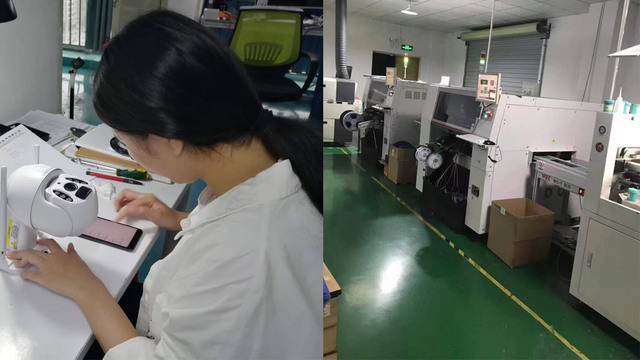
- In-house SMT capacity with placement accuracy ≤0.05mm (for dense PCBs)
- Dedicated R&D team (≥15% of technical staff) handling firmware, mobile apps, and AI-based motion detection algorithms
- Automated optical inspection (AOI) and functional testing stations for system-level validation
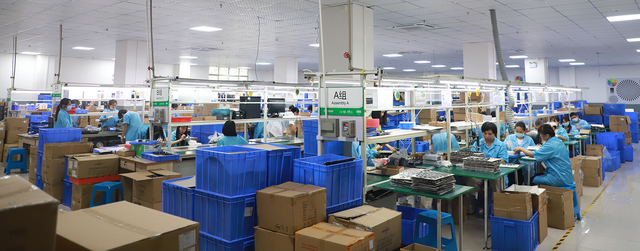
Cross-reference production videos with on-time delivery rates (target ≥96%) and defect rates (<1.5% PPM).
Quality Control & Transaction Security
Require documented QC processes including incoming material inspection (IMI), in-process checks, and 72-hour burn-in testing under variable network and environmental conditions. Prioritize suppliers with ISO 9001-certified quality management systems and experience exporting to North America or EU markets. Utilize third-party escrow services until product acceptance at destination. Conduct pre-shipment inspections via independent auditors to validate packaging integrity, software version consistency, and accessory completeness.
What Are the Best IoT Home Security System Suppliers?
| Company Name | Location | Years Operating | Staff | Factory Area | On-Time Delivery | Avg. Response | Ratings | Reorder Rate |
|---|---|---|---|---|---|---|---|---|
| Supplier data not available | ||||||||
Performance Analysis
Without active supplier data, procurement focus should shift to regional benchmarks. Historically, Shenzhen-based manufacturers demonstrate superior responsiveness (average response time ≤3 hours) and higher technical agility in supporting firmware customization and multi-language app interfaces. Zhejiang suppliers often lead in cost efficiency for large-volume contracts (>10,000 units/month). Prioritize partners with proven export documentation, verified certification records, and established logistics partnerships for DDP (Delivered Duty Paid) shipments. For advanced features like facial recognition or AI-driven alerts, confirm NDA-backed IP protection agreements prior to design disclosure.
FAQs
How to verify IoT home security system supplier reliability?
Validate certifications through official databases (e.g., FCC ID Search, EU NANDO). Request factory audit reports from third-party inspectors (e.g., SGS, TÜV). Analyze customer references focusing on after-sales firmware support, warranty claim resolution speed, and long-term device stability.
What is the average sampling timeline?
Standard sample turnaround is 10–18 days, including programming and connectivity verification. Customized units with modified housings or dedicated app branding require 25–35 days. Air freight adds 5–9 days for international delivery.
Can suppliers ship globally?
Yes, experienced manufacturers manage worldwide distribution via air or sea freight. Confirm Incoterms (FOB, CIF, DDP) and ensure compliance with import regulations related to radio frequency equipment and data privacy laws in target markets.
Do manufacturers provide free samples?
Sample policies vary. Full-cost recovery is typical for first-time buyers. Fee waivers may apply for confirmed bulk orders (e.g., ≥500 units). Some suppliers offer discounted evaluation kits inclusive of hub, sensors, and camera modules.
How to initiate customization requests?
Submit detailed specifications covering hardware requirements (sensor types, power source, enclosure material), software needs (mobile OS compatibility, cloud architecture, alert logic), and regulatory targets. Leading suppliers provide engineering feedback within 72 hours and deliver proof-of-concept prototypes within 4 weeks.





