Isupplier Tables In Oracle Apps R12

























 CN
CN









































About isupplier tables in oracle apps r12
Where to Source Oracle Apps R12 Tables Suppliers?
Global supplier activity for Oracle Applications R12-related development services is concentrated among specialized software firms in Asia, particularly in China and India, where cost-efficient technical talent and mature IT outsourcing ecosystems support scalable delivery. These regions host a high density of verified providers offering database configuration, customization, and integration services tied to Oracle E-Business Suite environments. Firms in Xiamen, Huizhou, and Bangalore leverage established software development clusters with access to certified Oracle professionals, enabling rapid deployment of table structures, custom views, and data migration frameworks within R12 instances.
These hubs benefit from integrated service models combining onshore project management with offshore development teams, ensuring alignment with enterprise requirements. Buyers gain access to agile workflows supported by version control systems, automated testing pipelines, and structured documentation practices. Key advantages include reduced labor costs (up to 40–60% lower than Western markets), flexible engagement models (fixed-price or time-and-materials), and the ability to scale teams rapidly for complex implementations involving financial modules, inventory tables, or HRMS schema extensions.
How to Evaluate Oracle Apps R12 Tables Suppliers?
Prioritize these evaluation criteria when selecting technical partners:
Technical Expertise Verification
Confirm demonstrable experience with Oracle E-Business Suite R12 architecture, particularly in APPS schema management, seeded vs. custom table design, and PL/SQL programming. Request documented case studies showing implementation of custom entities, interface tables (e.g., PO_HEADERS_INTERFACE, GL_INTERFACE), and conversion scripts. Validation of Oracle Certified Professional (OCP) credentials among core team members enhances assurance of technical rigor.
Service Delivery Capabilities
Assess operational infrastructure through objective indicators:
- Minimum 2-year track record in Oracle application development
- Proven project completion volume reflected in online revenue (e.g., >US $50,000+ annual digital transactions)
- Dedicated response time ≤4 hours and reorder rate >15% indicating client retention
Cross-reference product listings with actual service scope to ensure alignment with database modeling, API integrations, or extension table creation rather than generic app development.
Transaction Security & Quality Assurance
Utilize secure payment mechanisms that release funds upon milestone validation. Require detailed requirement analysis before quoting, including schema diagrams or entity-relationship models. Insist on test environment deployment, code review protocols, and post-implementation support windows. Verify adherence to software quality standards through documented testing procedures, including unit, regression, and performance testing of database objects under load.
What Are the Leading Oracle Apps R12 Tables Suppliers?
| Company Name | Location | Main Products | Response Time | On-Time Delivery | Reorder Rate | Online Revenue | Min. Order Value | Customization Scope |
|---|---|---|---|---|---|---|---|---|
| AABAN SOLUTIONS PRIVATE LIMITED | India | Software | ≤1h | - | - | - | $500 | Limited |
| Xiamen Huasheng Kaicheng Information Technology Co., Ltd. | Fujian, CN | Software | ≤2h | 98% | 17% | US $4,000+ | $55 | Limited |
| Huizhou Shanjing Technology Co., Ltd. | Guangdong, CN | Hardware/Tablets | ≤4h | 100% | <15% | US $50,000+ | $68.99 | Color, material, logo, packaging |
| Wise Hustlers Web & Mobile App Development Company | India | Software | ≤1h | - | - | - | $500 | Limited |
| PROTOLABZ ESERVICES | India | Software Development | ≤4h | - | - | - | $2 | Limited |
Performance Analysis
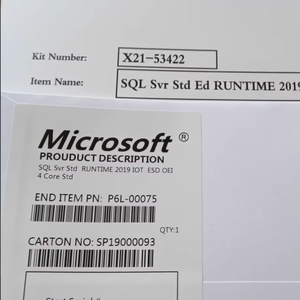
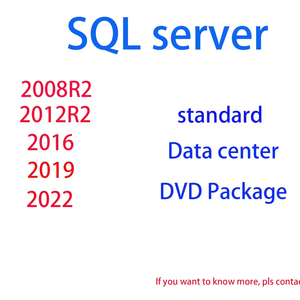
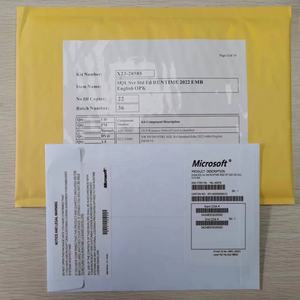
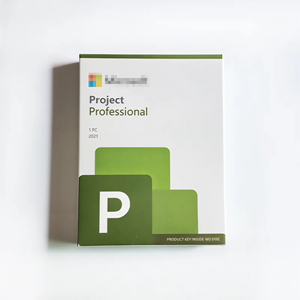
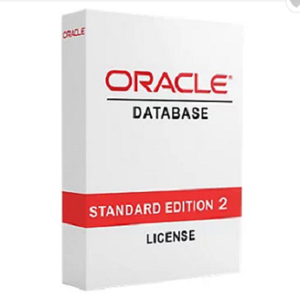
While multiple suppliers list "Oracle Apps R12" as a keyword, only a subset demonstrates direct relevance to database table design and customization. AABAN SOLUTIONS and Wise Hustlers focus on enterprise software development with minimum order values starting at $500, suggesting suitability for full-cycle application projects rather than discrete table configurations. Xiamen Huasheng offers consistent on-time delivery (98%) and competitive pricing ($55–60 per unit), though product links point to SQL Server licenses—indicating potential misalignment between keyword targeting and actual service offerings. Huizhou Shanjing specializes in Android tablets, revealing a hardware-centric model unrelated to Oracle schema work despite keyword usage. PROTOLABZ lists extremely low minimum orders ($2), typical of template-based app reselling, which may lack depth in Oracle backend development.
FAQs
How to verify supplier expertise in Oracle Apps R12 tables?
Request sample deliverables such as custom table definitions, concurrent program setups, or interface mapping documents. Validate understanding of key schemas (APPS, SYS, SYSTEM) and ownership of database objects. Conduct technical interviews focusing on AOL (Application Object Library) concepts, flexfields, and data lifecycle within R12 modules.
What is the typical lead time for custom table implementation?
Standard customization tasks take 10–20 business days depending on complexity. Simple value-set or descriptive flexfield extensions require 5–7 days, while multi-module integrations involving interface tables and workflow triggers may extend to 30 days. Allow additional time for UAT cycles and production migration planning.
Do suppliers offer post-implementation support?
Most reputable providers include 30–90 days of warranty support covering bug fixes and minor adjustments. Extended SLAs with 24/7 monitoring and response times under 4 hours are available at negotiated rates. Clarify support terms during contract finalization.
Can Oracle R12 table modifications be reversed?
Yes, all changes should be implemented using change control protocols including version backups, DDL scripts under revision control, and rollback plans. Ensure suppliers use non-invasive methods such as custom schema extensions instead of modifying seeded tables directly.
What are common risks in sourcing Oracle R12 development remotely?
Risks include inadequate documentation, poor code quality, and non-compliance with upgrade-safe practices. Mitigate through contractual stipulations requiring readable PL/SQL, commented triggers, and avoidance of direct CUSTOM.pll edits. Perform third-party code audits prior to go-live.





