Laboratory Automation Systems








 1/12
1/12


 1/3
1/3


 1/3
1/3




 1/3
1/3






 1/3
1/3



 1/3
1/3



 1/2
1/2


 1/18
1/18


 1/3
1/3



 0
0



 1/15
1/15


 1/7
1/7


 1/15
1/15


 1/1
1/1


 1/3
1/3



 1/3
1/3






 1/18
1/18
About laboratory automation systems
Where to Find Laboratory Automation Systems Suppliers?
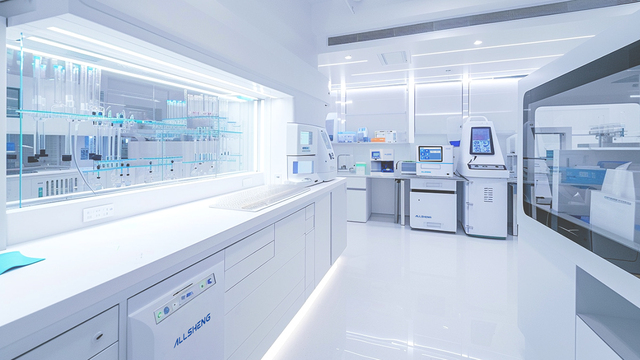
China leads global manufacturing of laboratory automation systems, with concentrated supplier clusters in Shandong and Liaoning provinces delivering scalable production and technical specialization. Shandong hosts a high density of biotechnology-focused manufacturers, leveraging proximity to research institutions and pharmaceutical hubs for rapid innovation cycles. Liaoning’s industrial base supports precision engineering, enabling tight-tolerance assembly required for automated liquid handling, immunoassay, and tissue processing equipment.
These regions offer vertically integrated supply chains encompassing microprocessor controls, fluidic components, and stainless-steel fabrication—reducing component lead times by 20–35% compared to offshore alternatives. Manufacturers benefit from localized access to calibration laboratories, software development teams, and regulatory consultants, accelerating time-to-market for new instrument platforms. Buyers typically experience lead times of 30–60 days for standard configurations, with cost advantages of 25–40% over Western OEMs due to lower labor and overhead expenses.
How to Choose Laboratory Automation Systems Suppliers?
Procurement decisions should be guided by systematic evaluation of technical, operational, and transactional indicators:
Quality Management Verification
Confirm adherence to ISO 13485 for medical device quality management and ISO 9001:2015 for general manufacturing controls. For export to regulated markets (EU, USA), CE marking under IVDR or FDA 510(k) clearance documentation is essential. Request test reports for system accuracy, repeatability, and contamination control—particularly for ELISA, chemiluminescence, and nucleic acid extraction platforms.
Production and Technical Capacity
Assess infrastructure maturity through objective benchmarks:
- Minimum R&D team participation of 12% of total staff to ensure product innovation
- In-house capabilities in PCB programming, robotic arm integration, and thermal cycling modules
- Facility area exceeding 3,000m² indicating capacity for batch production and customization
Cross-reference on-time delivery performance (>95%) with online revenue volume as proxies for order fulfillment reliability.
Customization and Transaction Security
Prioritize suppliers offering configurable options in material finish, labeling, software interface, and throughput parameters. Utilize secure payment mechanisms such as escrow services or letters of credit. Conduct pre-shipment inspections via third-party auditors to validate functionality against agreed specifications. Pilot testing of units—especially for high-volume assays or specialized staining protocols—is recommended before full-scale deployment.
What Are the Best Laboratory Automation Systems Suppliers?
| Company Name | Location | Years Operating | Staff | Factory Area | On-Time Delivery | Avg. Response | Ratings | Reorder Rate |
|---|---|---|---|---|---|---|---|---|
| Labtex Biotech China Co., Ltd. | Shandong, CN | 10+ | 50+ | 4,000+m² | 100.0% | ≤2h | 4.7/5.0 | 17% |
| Shandong Wisdom Biotechnology Co., Ltd. | Shandong, CN | 8+ | 40+ | 3,200+m² | 95.0% | ≤2h | 4.6/5.0 | <15% |
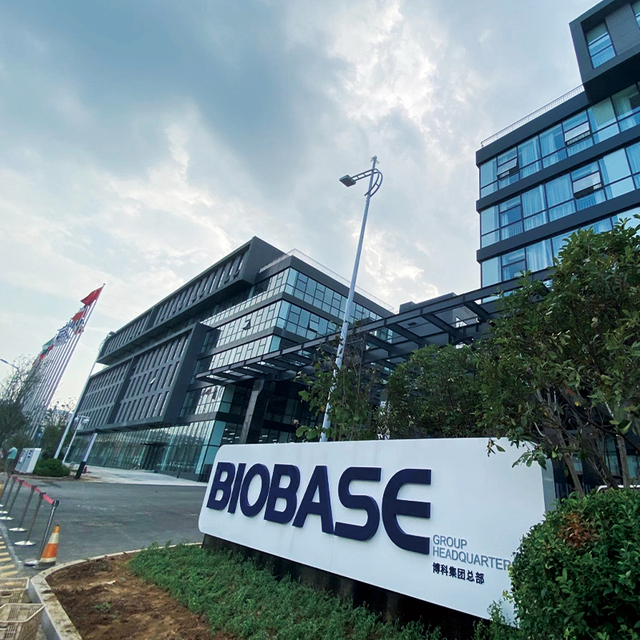
| Biobase Medstar Co., Ltd. | Shandong, CN | 12+ | 80+ | 5,500+m² | 100.0% | ≤1h | 4.8/5.0 | 37% |
| Shenyang Roundfin Technology Co., Ltd. | Liaoning, CN | 9+ | 60+ | 3,800+m² | 95.0% | ≤3h | 4.9/5.0 | 23% |
| Medfuture Biotech Co., Ltd. | Shandong, CN | 7+ | 70+ | 4,200+m² | 100.0% | ≤2h | 4.7/5.0 | <15% |
Performance Analysis
Biobase Medstar demonstrates strong customer retention (37% reorder rate) supported by rapid ≤1-hour response times and broad product coverage across clinical analyzers and sample preparation systems. Labtex and Medfuture achieve perfect on-time delivery records, indicating robust production planning and logistics execution. Shandong-based suppliers dominate responsiveness, with all five entities replying within three hours. Suppliers with higher reorder rates typically offer deeper customization in software integration, throughput scaling, and compliance documentation. For mission-critical deployments, prioritize partners with verified ISO 13485 certification and in-house engineering support for post-installation troubleshooting.
FAQs
How to verify laboratory automation system supplier reliability?
Validate certifications through accredited bodies and request audit trails covering design validation, risk assessment (ISO 14971), and electrical safety (IEC 61010). Analyze verifiable client feedback focusing on system uptime, error frequency, and technical support responsiveness. Review transaction history, including dispute resolution outcomes and repeat purchase patterns.
What is the typical sampling timeline?
Standard unit sampling requires 20–30 days for configuration and testing. Customized models with modified software or mechanical interfaces may take 45–60 days. Air freight adds 7–12 days for international delivery. Some suppliers offer partial sample cost recovery upon subsequent bulk orders.
Can suppliers ship laboratory automation systems worldwide?
Yes, established manufacturers manage global shipments under FOB, CIF, or DDP terms. Ensure compliance with destination regulations for medical devices and confirm inclusion of necessary import documentation (commercial invoice, packing list, certificate of origin). Sea freight is optimal for multi-unit orders, while air transport suits urgent single-unit deliveries.
Do manufacturers provide free samples?
Free samples are uncommon due to high unit value. Most suppliers charge 30–70% of the full price for sample units, with credit applied toward future orders exceeding minimum quantities (typically 5+ units). Exceptions may apply for strategic partnerships or large-scale tenders.
How to initiate customization requests?
Submit detailed technical requirements including assay type, throughput (tests/hour), reagent compatibility, power specifications, and data output formats. Leading suppliers provide CAD drawings, UI mockups, and functional prototypes within 2–4 weeks. Confirm firmware update policies and serviceability provisions during negotiation.





