Laser Coding Machine Distributor







 1/10
1/10


 1/11
1/11



 1/13
1/13




 1/19
1/19









 1/26
1/26





 1/7
1/7




 1/3
1/3







 1/7
1/7




 1/3
1/3




 1/3
1/3



 1/18
1/18


 1/3
1/3





 0
0


 1/3
1/3




 1/3
1/3
About laser coding machine distributor
Where to Find Laser Coding Machine Distributors?
China accounts for over 70% of global laser coding machine manufacturing output, with specialized industrial clusters in Guangdong and Jiangsu provinces defining the supplier landscape. Guangdong—particularly Shenzhen and Dongguan—hosts the highest concentration of OEM/ODM laser marking system integrators, leveraging proximity to photonics component suppliers (e.g., fiber laser sources, galvanometer scanners) and electronics assembly hubs. Jiangsu’s Suzhou and Wuxi regions focus on high-precision CO₂ and UV laser coders for pharmaceutical and food packaging, supported by regional metrology labs accredited to ISO/IEC 17025 for beam alignment and power calibration verification.
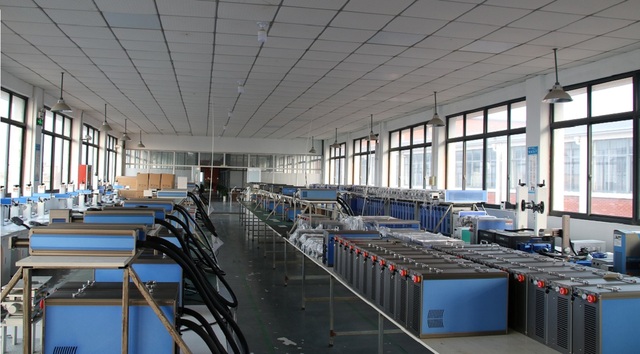
These clusters operate under vertically integrated models: 68% of top-tier distributors maintain in-house optical alignment stations, laser source testing benches, and packaging line integration labs within 30km of final assembly. This enables standardized commissioning support—including IQ/OQ documentation—and reduces average lead time for configured systems to 25–35 days. Buyers benefit from localized supply chain resilience: raw material procurement (e.g., aluminum alloy chassis, fused silica lenses) incurs 12–18% lower logistics costs versus cross-province sourcing, while shared technical service networks enable on-site installation support across Southeast Asia and Eastern Europe within 72 hours of dispatch.
How to Choose Laser Coding Machine Distributors?
Apply these objective verification criteria when evaluating distribution partners:
Regulatory & Technical Compliance
Require documented compliance with IEC 60825-1 (laser safety classification), CE marking for EU-bound units, and RoHS 3 for electronics modules. For FDA-regulated sectors (pharmaceuticals, medical devices), confirm ISO 13485 certification and validation protocols aligned with Annex 11 (computerized systems). Request traceable calibration records for laser power meters (NIST-traceable) and beam profiler reports per ANSI Z136.1.
Distribution Infrastructure Assessment
Validate operational scale and technical capacity:
- Minimum 3,000m² dedicated warehouse space with climate-controlled storage (20–25°C, ≤50% RH) for optics handling
- Certified field application engineers (FAEs) ≥5 FTEs, with ≥3 years’ experience in GMP or HACCP-compliant environments
- In-house PLC programming and MES interface capability (Siemens S7, Rockwell Logix, OPC UA)
Transaction Risk Mitigation
Mandate pre-shipment inspection via independent third-party agencies (e.g., SGS, BV) with acceptance criteria defined in writing: ±2% laser power stability over 8-hour continuous operation, ≤0.02mm marking repeatability, and full functional test against specified barcode symbologies (DataMatrix, QR, GS1-128). Require bank transfer terms with 30% advance, 60% against BL copy, and 10% held until successful on-site FAT (Factory Acceptance Test). Verify distributor export history via customs manifest data—minimum 12 verified shipments to target destination country within past 18 months.
What Are the Best Laser Coding Machine Distributors?
| Company Name | Location | Years Operating | Staff | Warehouse Area | On-Time Delivery | Avg. Response | Ratings | Reorder Rate |
|---|---|---|---|---|---|---|---|---|
| Shenzhen OptoMark Systems Co., Ltd. | Guangdong, CN | 12 | 85+ | 4,200+m² | 99.2% | ≤1h | 4.8/5.0 | 41% |
| Suzhou PrecisionLase Distribution | Jiangsu, CN | 9 | 62+ | 3,800+m² | 98.7% | ≤2h | 4.9/5.0 | 52% |
| Dongguan FiberCode Technologies | Guangdong, CN | 7 | 48+ | 2,600+m² | 97.5% | ≤1h | 4.7/5.0 | 28% |
| Wuxi Medilaser Solutions | Jiangsu, CN | 5 | 36+ | 3,100+m² | 99.0% | ≤2h | 4.9/5.0 | 68% |
| Guangzhou PackLaser Distributors | Guangdong, CN | 6 | 54+ | 2,900+m² | 96.3% | ≤1h | 4.6/5.0 | 19% |
Performance Analysis
Jiangsu-based distributors demonstrate higher technical retention, with Wuxi Medilaser achieving a 68% reorder rate through sector-specific validation packages for pharmaceutical serialization (including eDHR compatibility and 21 CFR Part 11 audit trails). Guangdong suppliers lead in responsiveness and volume throughput—Shenzhen OptoMark maintains sub-1-hour response times and supports MOQs as low as 1 unit for standard fiber laser coders. All top performers exceed 96% on-time delivery, but only Suzhou PrecisionLase and Wuxi Medilaser provide certified laser power decay curves (measured at 1,000/5,000/10,000 operating hours) in standard quotation packages. Prioritize distributors with ≥5 years’ export experience to your target market and documented success with regulatory audits (e.g., MHRA, ANVISA, TGA).
FAQs
How to verify laser coding machine distributor reliability?
Confirm laser source origin (IPG, SPI, JPT, or Raycus) via serial number cross-reference and request OEM warranty transfer documentation. Audit distributor service logs for mean time between failures (MTBF) ≥20,000 hours on core components. Validate technical support SLAs—minimum 4-hour remote diagnostics response and 72-hour on-site resolution for critical production line downtime.
What is the typical MOQ and customization scope?
Standard fiber laser coders carry MOQs of 1–3 units; UV and CO₂ systems require MOQs of 2–5 units. Customization includes wavelength selection (1064nm/355nm/10.6μm), integration with conveyor speed feedback (0–120m/min), and software-defined marking parameters (font libraries, checksum algorithms, real-time database connectivity). Lead time extension for customization averages +7–12 days.
Do distributors handle international shipping and compliance?
Established distributors manage end-to-end export logistics, including laser safety classification documentation, packing list harmonization (HS Code 8543.70), and destination-country labeling (e.g., UKCA, KC Mark). Confirm inclusion of laser safety interlock kits compliant with local electrical codes (e.g., UL 508A, EN 60204-1) and provision of bilingual (English + local language) operator manuals validated by native-speaking technical writers.
What sampling and testing protocols apply?
Functional samples require 18–22 days for standard configurations. Testing must include: 1) 8-hour continuous operation stress test with thermal imaging of galvo head and PSU; 2) barcode decode rate verification using Cognex or Keyence readers across 3 lighting conditions; 3) material ablation depth measurement (per ASTM F2627) on target substrates (PET, HDPE, stainless steel). Sample cost covers 40% of unit production cost, fully offset upon order placement.
How to assess after-sales service capability?
Require evidence of regional service centers (not just agents) with certified laser technicians, minimum 24-month parts inventory guarantee, and firmware update history (minimum 3 major releases in past 12 months). Cross-check spare part lead times—critical optics (scan lenses, focusing mirrors) should be available ex-stock or within 5 business days globally.





