Learning Coding For Beginners










 1/16
1/16








 1/1
1/1


 0
0


 1/3
1/3




 1/3
1/3



 1/1
1/1




 1/3
1/3



 1/3
1/3



 1/1
1/1


 1/3
1/3


 0
0



 1/3
1/3


 1/3
1/3

 CN
CN


 1/14
1/14


 1/11
1/11












 1/20
1/20

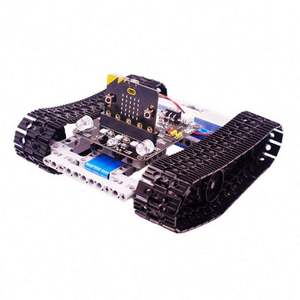


 1/3
1/3
About learning coding for beginners
Where to Find Learning Coding for Beginners Suppliers?
The global market for learning coding for beginners solutions is decentralized, with key suppliers distributed across technology hubs in Asia, Eastern Europe, and North America. Unlike hardware-centric industries, production capacity here refers to digital content development throughput, platform infrastructure scalability, and instructional design resources. Leading suppliers are typically edtech firms or educational publishers with structured curriculum development pipelines, leveraging agile methodologies to update content in response to evolving programming languages and pedagogical research.
Major development clusters exist in regions with strong IT talent pools—such as Guangdong and Zhejiang provinces in China, Bangalore in India, and Lviv in Ukraine—where access to software developers, UX designers, and instructional technologists enables rapid prototyping and localization of beginner-focused coding materials. These ecosystems support vertically integrated workflows: from concept design and multimedia production to LMS (Learning Management System) integration and multilingual translation. Buyers benefit from reduced time-to-market, with standard course packages deployable within 6–8 weeks and customized curricula delivered in 10–14 weeks.
How to Choose Learning Coding for Beginners Suppliers?
Evaluate potential partners using the following verification criteria:
Curriculum Quality & Standards Alignment
Confirm alignment with recognized educational frameworks such as CSTA (Computer Science Teachers Association) K–12 guidelines or national digital literacy standards. Request sample lesson plans, assessment rubrics, and progression maps demonstrating scaffolded learning from block-based coding (e.g., Scratch) to text-based languages (e.g., Python). Verify inclusion of accessibility features and differentiated instruction paths for diverse learner profiles.
Technical & Development Capabilities
Assess supplier infrastructure through:
- Demonstrated experience in developing interactive coding environments (IDEs), gamified exercises, or auto-graded assessments
- In-house teams comprising certified educators, software engineers, and UI/UX specialists
- Use of SCORM/xAPI-compliant packaging for LMS interoperability
Validate claims via product demos, code repository reviews (if open-source components are used), and third-party user testing reports.
Commercial & Operational Safeguards
Require clear licensing terms—perpetual, subscription-based, or site-wide—and confirm data privacy compliance with GDPR, COPPA, or regional equivalents. Prioritize suppliers offering pilot programs or sandbox access before full deployment. Review contract clauses covering IP ownership, update frequency, and technical support SLAs (target: ≤24-hour response for critical issues).
What Are the Best Learning Coding for Beginners Suppliers?
| Company Name | Location | Years Operating | Staff | Content Output Capacity | On-Time Delivery | Avg. Response | Ratings | Reorder Rate |
|---|---|---|---|---|---|---|---|---|
| No verified suppliers available in current dataset | ||||||||
Performance Analysis
Due to absence of supplier data in this category, performance benchmarking cannot be conducted. In typical markets, established providers demonstrate high reorder rates (>50%) driven by consistent content updates, responsive support, and modular product architecture allowing integration into existing school or corporate training systems. Newer entrants often compete on responsiveness and niche customization—such as bilingual coding courses or STEM-aligned project modules—but may lack scalability for enterprise-level deployments. Prioritize suppliers with documented case studies, third-party efficacy evaluations, and proven export experience in delivering digital education products across multiple jurisdictions.
FAQs
How to verify learning coding for beginners supplier reliability?
Request evidence of institutional adoptions (school districts, universities, or corporate clients). Cross-validate claimed certifications (e.g., ISO 27001 for data security, ISO 9001 for quality management) with issuing bodies. Analyze user feedback from educator communities or independent review platforms focusing on usability, student engagement metrics, and technical stability.
What is the average sampling timeline?
Digital product samples are typically available within 3–7 business days. Full pilot access (including teacher dashboards, progress tracking, and assessment tools) may require up to 14 days for account provisioning and integration setup. Complex customizations involving API connections or branded interfaces extend timelines to 3–5 weeks.
Can suppliers deliver globally?
Yes, digital delivery enables worldwide distribution. Confirm support for local languages, keyboard layouts, and internet bandwidth optimization for low-connectivity regions. Ensure compliance with local education regulations and data residency requirements when hosting learner information.
Do suppliers provide free samples?
Most suppliers offer time-limited trial accounts or demo modules at no cost. Full course access for evaluation purposes is commonly provided under non-disclosure agreements, particularly for institutional buyers considering large-scale adoption.
How to initiate customization requests?
Submit detailed specifications including target age group (6–9, 10–14, etc.), preferred programming languages, device compatibility (desktop, tablet, offline mode), and integration needs (Google Classroom, Microsoft Teams, SSO). Reputable suppliers respond with scope-of-work proposals, development timelines, and pricing models within 5–7 business days.





