Led Rgb Arduino










 Top sponsor listing




 1/3
1/3



 1/22
1/22

 1/3
1/3


 1/3
1/3


 1/3
1/3


 1/3
1/3


 1/3
1/3



 1/1
1/1



 1/3
1/3





 1/19
1/19




 0
0



 1/3
1/3


 1/3
1/3



 1/3
1/3




 1/3
1/3






 0
0






 0
0
About led rgb arduino
Where to Find LED RGB Arduino-Compatible Lighting Suppliers?
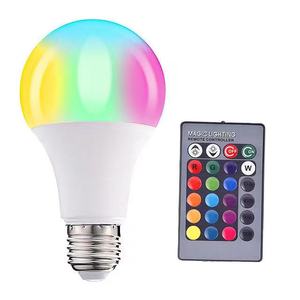
China remains the global hub for manufacturing LED lighting solutions compatible with Arduino platforms, with key production clusters concentrated in Shenzhen and Guangzhou. These regions host vertically integrated supply chains spanning semiconductor packaging, PCB assembly, and optical engineering, enabling rapid prototyping and scalable production. Shenzhen alone accounts for over 70% of China’s programmable LED exports, supported by its dense network of electronics component suppliers and logistics infrastructure.
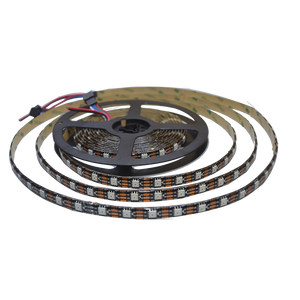
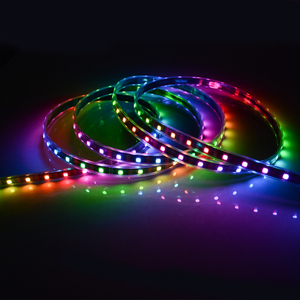
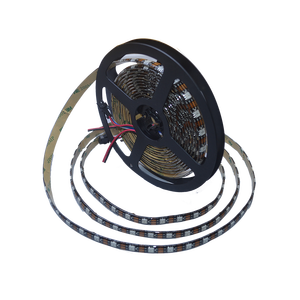
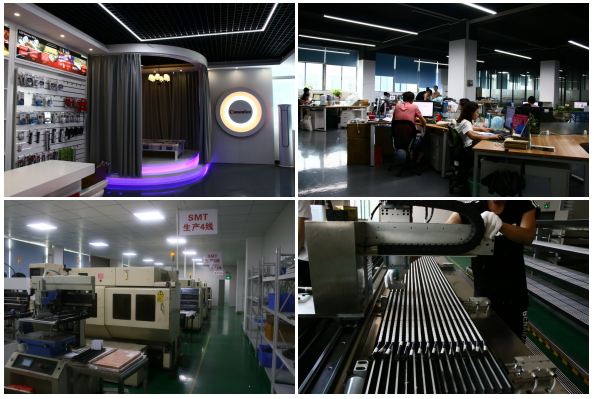
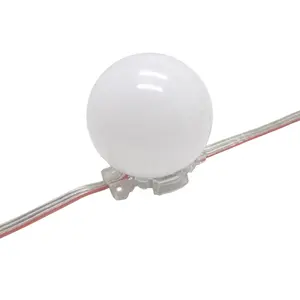
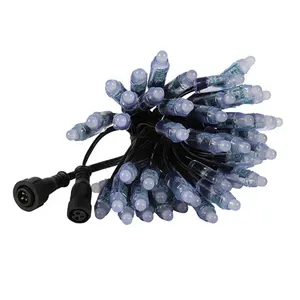
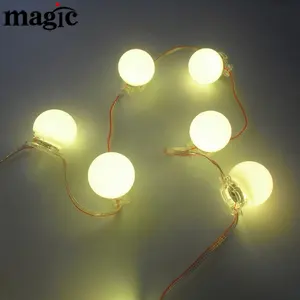
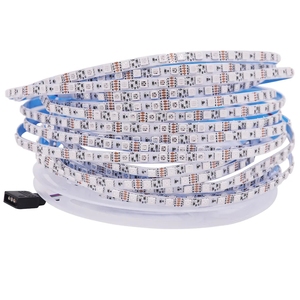
The industrial ecosystem allows for tight coordination between design, fabrication, and testing phases, reducing time-to-market for addressable RGB strips, pixel modules, and smart light strings. Suppliers leverage automated SMT lines and in-house silicone encapsulation facilities to maintain consistency across high-volume orders. Buyers benefit from localized sourcing of critical components such as WS2812B, SK6812, and WS2815 ICs, which reduces lead times to 15–25 days for standard configurations. Cost efficiencies are further enhanced by access to bulk raw materials, including 5050 SMD LEDs, flexible FPC substrates, and IP-rated silicone jackets, resulting in production cost advantages of 20–35% compared to Western or Southeast Asian alternatives.
How to Choose LED RGB Arduino-Compatible Lighting Suppliers?
Selecting reliable suppliers requires systematic evaluation across technical, operational, and transactional dimensions:
Technical Compatibility & Product Range
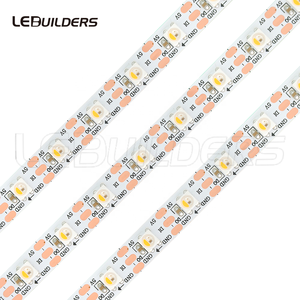
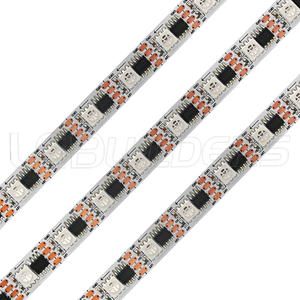
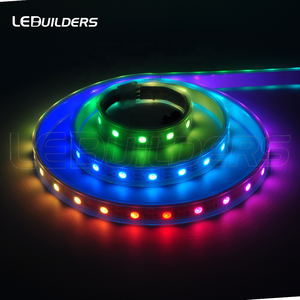
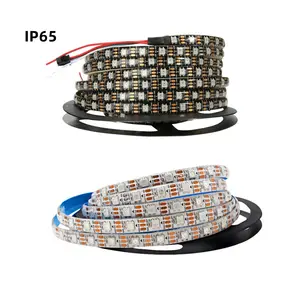
Confirm supplier expertise in producing addressable LED formats (e.g., WS2812B, WS2813, SK6812) designed for seamless integration with Arduino microcontrollers. Verify availability of data sheets, pinout diagrams, and library compatibility (e.g., FastLED, Adafruit NeoPixel). Suppliers should offer standardized voltage options (DC5V/DC12V/DC24V) and densities (30–144 LEDs/meter) to support diverse project requirements.
Production and Quality Assurance
Assess manufacturing infrastructure through the following indicators:
- In-house PCB and FPC production lines for strip customization
- Automated soldering and reflow processes ensuring consistent electrical performance
- Environmental testing capabilities (IP65/IP67 waterproofing validation, thermal cycling, humidity resistance)
- Compliance with RoHS, CE, and ISO 9001 standards—where documented
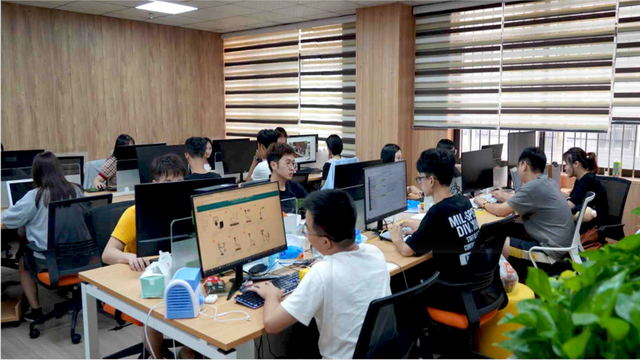
Cross-reference on-time delivery rates (target ≥94%) and response times (ideally ≤2 hours) as proxies for operational reliability. Prioritize suppliers with dedicated R&D teams capable of supporting firmware-level integration guidance.
Customization and Transaction Security
Evaluate flexibility in color temperature tuning, length segmentation, connector types, and labeling. Many leading suppliers support OEM branding, custom packaging, and graphic design modifications. Utilize secure payment mechanisms such as escrow services and insist on sample validation before full production. Request product-specific test reports or video demonstrations of PWM control, color rendering accuracy, and signal stability over extended runs.
What Are the Leading LED RGB Arduino-Compatible Lighting Suppliers?
| Company Name | Main Products | On-Time Delivery | Response Time | Reorder Rate | Online Revenue | Customization Options | Verified Type |
|---|---|---|---|---|---|---|---|
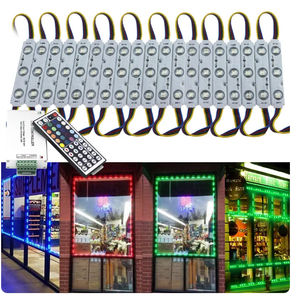
| Shenzhen Aglare Lighting Co., Ltd. | Point Lights, Flood Lights, Smart Outdoor Lights, LED Modules, Neon Lights | 96% | ≤2h | <15% | US $720,000+ | Color, material, size, logo, packaging, label, graphic | Custom Manufacturer |
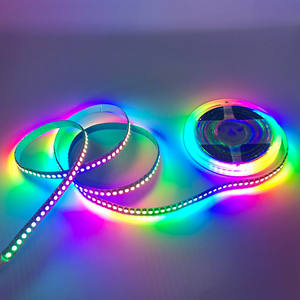
| Shenzhen Shiji Lighting Co., Ltd. | LED Strips, Light Strings, Smart Strip Lights, Stage Lights | 88% | ≤4h | 28% | US $380,000+ | Not specified | - |
| Guangzhou Houde Lighting Appliance Co., Ltd. | RGBIC Strips, Smart Tubes, WS2813/WS2815 Modules | 100% | ≤1h | <15% | US $470,000+ | Color, material, size, logo, packaging, label, graphic | Multispecialty Supplier |
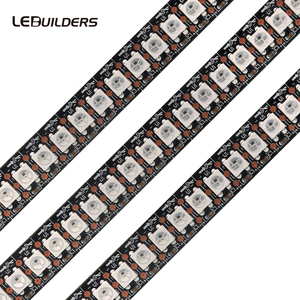
| Shenzhen Ledbuilders Optoelectronic Technology Co., Ltd. | Smart Strip Lights, LED Modules, Cabinet Lights | 94% | ≤1h | 22% | US $200,000+ | Not specified | - |
| Shenzhen FlyFun Technology Co.,Ltd. | LED Rings, Addressable Pixels, Electronic Components | 100% | ≤7h | 20% | US $150,000+ | Not specified | - |
Performance Analysis
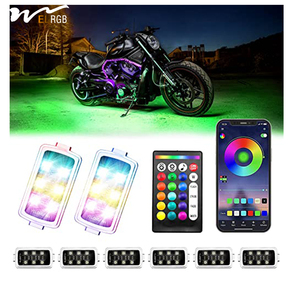
Shenzhen Aglare leads in revenue scale and customization breadth, making it suitable for large-volume OEM contracts requiring branded packaging and multi-format output. Guangzhou Houde and Shenzhen FlyFun achieve perfect on-time delivery records, indicating strong production discipline despite moderate reorder rates—suggesting competitive pricing or niche positioning. Shenzhen Shiji stands out with a 28% reorder rate, reflecting customer retention likely driven by specialized stage and amusement lighting offerings. While formal certifications are not explicitly listed, consistent online transaction volumes and delivery performance serve as indirect indicators of operational maturity. For projects demanding low-latency communication and stable data transmission, prioritize suppliers offering WS2813 dual-signal redundancy or SK6812 RGBW chips.
FAQs
How to verify LED RGB Arduino-compatible supplier reliability?
Request evidence of quality management practices, including batch testing logs, solder joint inspections, and ESD-safe production environments. Validate product specifications against independent benchmarks (e.g., signal propagation delay, forward voltage tolerance). Analyze historical order fulfillment data and customer feedback focusing on product consistency and technical responsiveness.
What is the typical minimum order quantity (MOQ)?
MOQ varies by form factor: LED strips typically require 1–5 meters for samples and 50–100 meters for bulk orders. Individual modules or rings may have MOQs of 20–50 pieces. Some suppliers waive MOQ for prototype development at premium per-unit pricing.
Do suppliers support Arduino integration testing?
Top-tier suppliers provide basic code examples, wiring schematics, and library compatibility notes. However, direct firmware debugging or hardware-level Arduino testing is rarely offered unless part of a custom development agreement. Buyers should conduct independent validation using standard development boards (e.g., Arduino Uno, ESP32).
What are common customization options?
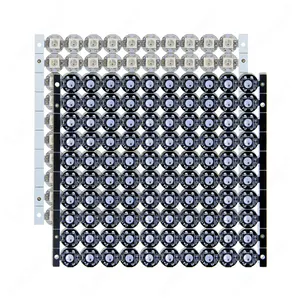
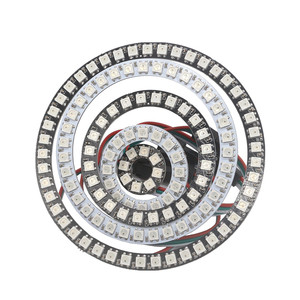
Available modifications include cut-point intervals, connector types (JST, 2.54mm pitch), silicone profile thickness, color mixing ratios, and labeled polarity. OEM branding extends to reel packaging, user manuals, and QR-linked documentation. Custom PCB layouts for non-linear arrays (rings, matrices) are available from manufacturers with in-house design capabilities.
How long does sampling and production take?
Sample processing typically takes 7–14 days, depending on complexity. Standard production lead time ranges from 15–25 days post-confirmation. Air freight adds 5–10 days for international delivery, while sea shipping requires 25–40 days but offers lower costs for containerized orders.





