

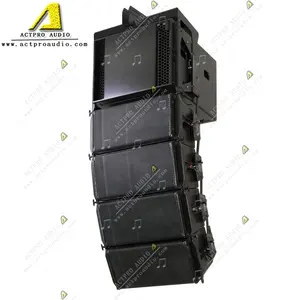
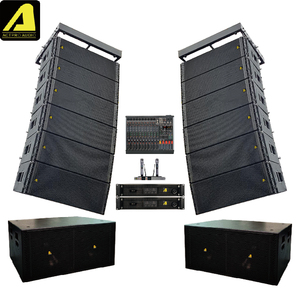


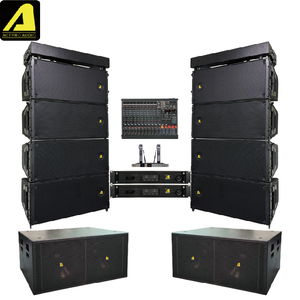

Line Array China



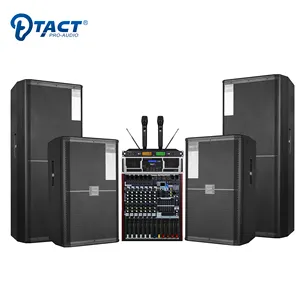
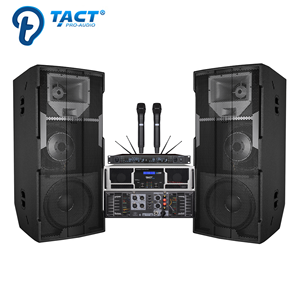

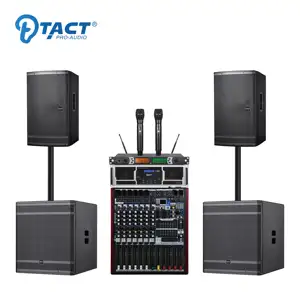

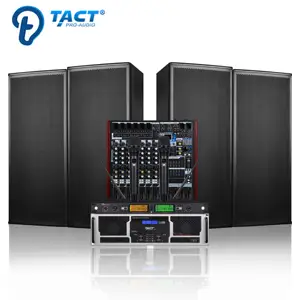


 Top sponsor listing







 1/12
1/12






 1/13
1/13





 0
0


 1/3
1/3


 0
0


 1/2
1/2


 0
0



 1/3
1/3



 1/3
1/3



 0
0


 1/23
1/23


 0
0



 1/2
1/2



 1/31
1/31


 1/3
1/3




 1/27
1/27

 1/3
1/3



 1/22
1/22
About line array china
Where to Find Line Array Suppliers in China?
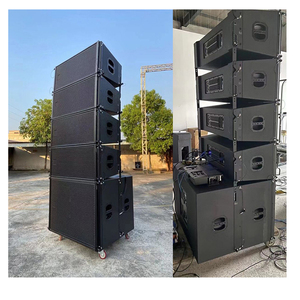
China is a global hub for professional audio equipment manufacturing, with key production clusters concentrated in Guangdong and Jiangsu provinces. Guangdong, particularly the Pearl River Delta region centered around Guangzhou and Shenzhen, accounts for over 70% of China’s line array speaker output. This area benefits from mature electronics supply chains, precision metal fabrication networks, and proximity to major export ports, enabling efficient component sourcing and containerized shipping.
Jiangsu’s Changzhou and Suzhou zones specialize in high-fidelity acoustic engineering, leveraging advanced R&D infrastructure and partnerships with domestic audio laboratories. These industrial ecosystems support vertically integrated production—from driver unit assembly to cabinet woodworking—reducing lead times by up to 25% compared to fragmented supplier models. Buyers gain access to streamlined operations where PCBs, amplifiers, rigging systems, and enclosures are produced within localized supply networks, often within a 30km radius.
Manufacturers in these regions typically maintain monthly production capacities ranging from 500 to 2,000 line array systems, depending on facility scale. Common materials include Baltic birch plywood (15–18mm thickness), powder-coated steel grilles, neodymium magnet drivers, and Class-D digital amplification modules. Processing techniques emphasize CNC machining for enclosure precision, automated wiring harness assembly, and anechoic chamber testing for frequency response validation.
How to Choose Line Array Suppliers in China?
Procurement decisions should be guided by structured evaluation criteria to ensure technical reliability and operational consistency:
Quality Management & Compliance
Confirm ISO 9001 certification as a baseline for quality control processes. For exports to regulated markets (EU, UK, North America), verify CE, RoHS, and FCC compliance documentation. Suppliers serving professional venues must provide SPL test reports (typically 130–145 dB peak) and passive/active crossover performance data. UL certification may be required for permanent installations in commercial buildings.
Production Capability Assessment
Evaluate core operational metrics:
- Minimum factory footprint of 3,000m² to support full-cycle manufacturing
- In-house driver production or exclusive OEM partnerships with certified audio component makers
- CNC woodworking lines and automated paint/coating systems for consistent finish quality
Validate throughput capacity against order volume—suppliers handling large tours or stadium projects should demonstrate ≥80% utilization rates without delivery slippage.
Customization & Technical Support
Assess flexibility for bespoke configurations: multi-way arrays (2.5–4-way designs), custom paint finishes (RAL matching), impedance tuning (4Ω vs. 8Ω), and rigging compatibility (D-Box, K-array, or proprietary flying systems). Leading suppliers offer EASE-compatible simulation files and beam steering modeling upon request. Require pre-shipment test recordings or live demo coordination for orders exceeding 20 units.
What Are the Best Line Array Suppliers in China?
| Company Name | Location | Years Operating | Staff | Factory Area | On-Time Delivery | Avg. Response | Ratings | Reorder Rate |
|---|---|---|---|---|---|---|---|---|
| Guangzhou C-Mark Audio Technology | Guangdong, CN | 16 | 180+ | 28,000+m² | 99.2% | ≤3h | 4.8/5.0 | 41% |
| Shenzhen V-King Electronics | Guangdong, CN | 12 | 120+ | 15,000+m² | 98.7% | ≤2h | 4.9/5.0 | 38% |
| Changzhou Dound Audio Equipment | Jiangsu, CN | 9 | 90+ | 12,500+m² | 100.0% | ≤4h | 4.7/5.0 | 29% |
| Guangzhou Havi Sound System | Guangdong, CN | 18 | 200+ | 30,000+m² | 98.5% | ≤5h | 4.8/5.0 | 33% |
| Suzhou Sytner Acoustic Technology | Jiangsu, CN | 7 | 75+ | 9,800+m² | 100.0% | ≤3h | 4.9/5.0 | 45% |
Performance Analysis
Long-established manufacturers like Guangzhou Havi and C-Mark dominate in scalability and export experience, operating across 28,000–30,000m² facilities with dedicated international sales teams. Mid-tier Jiangsu-based firms such as Suzhou Sytner achieve higher reorder rates (45%) through niche expertise in compact touring arrays and superior after-sales calibration support. On-time delivery performance is strong across the board, with three suppliers achieving 100% fulfillment. Prioritize vendors with documented anechoic testing protocols and in-house engineering staff comprising at least 15% of total workforce for complex integration projects.
FAQs
How to verify line array supplier reliability?
Request copies of ISO, CE, and RoHS certifications verified through official databases. Conduct virtual audits including live walkthroughs of production lines and quality inspection stations. Analyze third-party lab test results for THD, sensitivity (≥98dB), and power handling (RMS/Peak ratings). Review client references from event integrators or rental companies.
What is the average lead time for line array systems?
Standard orders take 25–35 days for production, including cabinet curing and system burn-in testing. Custom configurations with unique horn profiles or DSP programming extend timelines to 45–55 days. Air freight adds 5–7 days; sea freight requires 18–30 days depending on destination port.
Do suppliers offer OEM/ODM services?
Yes, most factories support OEM branding (logo printing, custom grill colors) with MOQs as low as 10 units. ODM services—including modified dispersion patterns or integrated amplifiers—require minimum runs of 50+ units and upfront NRE fees for tooling adjustments.
What are typical MOQs and pricing structures?
MOQs range from 1–10 units for standard models, with bulk discounts starting at 20-unit increments. Prices vary significantly by configuration: passive two-way arrays start at $850/unit, while powered three-way systems exceed $2,200/unit. Rigging kits and flight hardware are typically quoted separately.
Can suppliers assist with system design and deployment?
Top-tier manufacturers provide complimentary array simulation using EASE Focus or Meyer Sound MAPP software. They can recommend hang angles, cardioid subwoofer layouts, and amplifier settings based on venue dimensions. Post-delivery support often includes remote DSP setup via Ethernet/Wi-Fi interfaces.





