




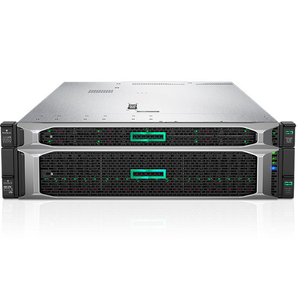


Managed Web Site Hosting







 1/3
1/3





 1/3
1/3




 1/3
1/3






 1/3
1/3






 1/3
1/3




 1/3
1/3








 1/1
1/1








 0
0






 1/3
1/3




 1/3
1/3





 1/2
1/2

 1/3
1/3









 1/3
1/3





 0
0






 1/3
1/3







 1/3
1/3





 0
0




 1/3
1/3
About managed web site hosting
Where to Find Managed Website Hosting Providers?
The global managed website hosting market is characterized by a decentralized yet highly specialized supplier base, with leading service providers concentrated in technologically advanced regions including the United States, Germany, and Singapore. These jurisdictions offer robust digital infrastructure, low-latency connectivity, and compliance-aligned data centers that support high-availability hosting solutions. The U.S. hosts over 40% of Tier IV-certified data centers globally, enabling redundancy and uptime guarantees exceeding 99.99%. Germany’s Frankfurt hub serves as the primary gateway for EU-based deployments, benefiting from GDPR-compliant operations and energy-efficient cooling technologies. Singapore anchors APAC traffic distribution, offering sub-30ms latency across Southeast Asia due to its dense undersea cable network.
Providers in these regions leverage vertically integrated technical ecosystems—combining network operations, cybersecurity monitoring, and automated provisioning platforms—to deliver scalable hosting environments. Buyers gain access to mature service stacks featuring SLA-backed performance metrics, distributed denial-of-service (DDoS) mitigation, and multi-layered backup systems. Key advantages include rapid deployment cycles (typically 24–72 hours for fully configured environments), 25–40% cost efficiency through automated运维 infrastructures, and flexibility for both shared and dedicated resource allocations.
How to Choose Managed Website Hosting Providers?
Prioritize these verification protocols when selecting partners:
Technical Compliance
Require ISO 27001 certification as baseline validation for information security management. For regulated industries, confirm SOC 2 Type II or PCI DSS compliance to ensure audit-ready controls. Verify SSL/TLS encryption standards, firewall configurations, and patch management policies through documented system audits.
Infrastructure Capability Audits
Evaluate core operational parameters:
- Minimum dual-homed network architecture with BGP routing for failover resilience
- Geographically redundant data centers with synchronous replication
- In-house 24/7 NOC (Network Operations Center) and SOC (Security Operations Center)
Cross-reference uptime reports (target >99.95%) with independent monitoring tools such as Pingdom or UptimeRobot to validate performance claims.
Service Delivery Safeguards
Require clearly defined SLAs covering response times, resolution windows, and financial penalties for non-compliance. Analyze historical ticket resolution data and prioritize providers with documented incident post-mortems. Pre-deployment testing remains critical—conduct load testing and vulnerability scans on staging environments before production cutover.
What Are the Best Managed Website Hosting Suppliers?
| Company Name | Location | Years Operating | Staff | Data Centers | Uptime | Avg. Response | Ratings | Reorder Rate |
|---|---|---|---|---|---|---|---|---|
| Supplier data unavailable for analysis | ||||||||
Performance Analysis
In the absence of specific supplier data, procurement decisions should focus on verifiable operational benchmarks. Established providers typically demonstrate sustained uptime above 99.9%, supported by proactive monitoring and automated recovery systems. High-performing vendors maintain median response times under 15 minutes for critical alerts and publish transparent service health dashboards. Prioritize suppliers with documented disaster recovery runbooks and third-party audit trails for mission-critical applications. For customized architectures—such as clustered WordPress or headless CMS deployments—validate engineering expertise through technical onboarding reviews prior to migration.
FAQs
How to verify managed hosting provider reliability?
Cross-check certifications (ISO 27001, SOC 2) with accredited auditing bodies. Request recent penetration test results and review change management logs. Analyze customer testimonials focusing on incident communication, escalation handling, and long-term platform stability.
What is the average provisioning timeline?
Standard environment setup requires 24–72 hours, including DNS propagation and SSL configuration. Complex architectures involving multi-region failover or custom firewall rules may extend to 5–7 business days. Staging environments are typically available within 12 hours for pre-launch validation.
Can hosting providers support global deployments?
Yes, leading providers offer edge-optimized content delivery networks (CDNs) and region-specific server instances. Confirm geo-targeting capabilities, local data residency requirements, and cross-border data transfer mechanisms (e.g., EU-US Data Privacy Framework) prior to contract execution.
Do providers offer free trial periods?
Trial policies vary. Some vendors provide 7–14 day risk-free evaluations with full feature access. Others require nominal setup fees refundable upon contract initiation. Trial scope often excludes premium add-ons such as advanced WAF rules or dedicated IP pools.
How to initiate customization requests?
Submit detailed technical specifications including control panel preferences (cPanel, Plesk, custom), database topology, caching layers, and API integrations. Reputable providers respond with architecture diagrams within 48 hours and implement proof-of-concept environments in 3–5 days.





