Math Reasoning Questions


 1/3
1/3






 1/3
1/3





 1/3
1/3




 1/3
1/3





 1/3
1/3









 1/2
1/2






 1/14
1/14










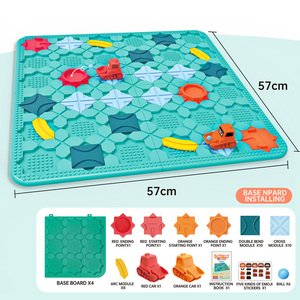


 1/11
1/11

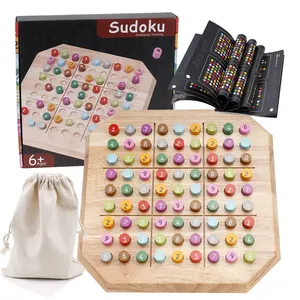


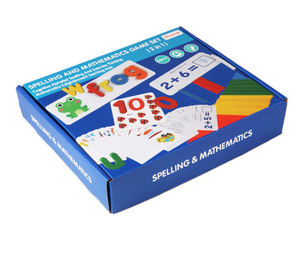





 1/2
1/2




 0
0




 1/8
1/8




 1/3
1/3








 1/1
1/1






 1/3
1/3


About math reasoning questions
Where to Find Math Reasoning Questions Suppliers?
Global production of math reasoning questions is not centralized in physical manufacturing clusters but is instead distributed across specialized educational content development hubs—primarily in India, the Philippines, and Eastern Europe. These regions host concentrated ecosystems of curriculum-aligned assessment providers, leveraging large pools of certified mathematics educators, standardized test development expertise, and scalable digital content workflows. India accounts for an estimated 45% of outsourced K–12 and standardized test question authoring globally, with Bangalore and Hyderabad serving as primary nodes due to bilingual STEM faculty, rigorous academic credential verification, and established partnerships with international edtech platforms and publishing houses.
These hubs operate through vertically integrated content pipelines—from cognitive task design and Bloom’s taxonomy mapping to multistep validation (item review, bias screening, psychometric pretesting, and answer key reconciliation). Suppliers routinely maintain dual-language authoring teams (English + regional language), enabling parallel localization for global markets. Key advantages include rapid iteration cycles (average 7–10 days per 100-item set), 30–40% lower unit costs compared to Western-based subject-matter experts, and proven scalability for high-volume requirements (5,000+ items/month per dedicated team). Customization scope spans grade-band alignment (e.g., Common Core, NGSS, CBSE, or Cambridge IGCSE), difficulty calibration (via item response theory parameters), and accessibility compliance (WCAG 2.1 AA for digital delivery).
How to Choose Math Reasoning Questions Suppliers?
Prioritize these verification protocols when selecting partners:
Academic & Pedagogical Compliance
Require documented evidence of subject-matter expert (SME) qualifications: minimum Master’s degree in Mathematics Education or related discipline, plus ≥3 years of classroom or assessment development experience. For regulated markets (e.g., U.S. state assessments or UK Ofsted-aligned materials), verify adherence to specific frameworks—such as Smarter Balanced Assessment Consortium (SBAC) item specifications or Pearson’s Cognitive Complexity Rubric. Demand sample item rationales demonstrating alignment with mathematical practices (e.g., MP1–MP8) and error analysis for distractor logic.
Production Capability Audits
Evaluate operational infrastructure:
- Dedicated item development teams of ≥15 certified SMEs per supplier
- Documented multi-stage quality assurance workflow including blind peer review, statistical item analysis (p-value, point-biserial correlation), and bias/representation audits
- In-house psychometric validation capacity or third-party partnership with licensed psychometricians
Cross-reference anonymized performance data (e.g., pilot test reliability scores ≥0.85 Cronbach’s alpha; discrimination indices >0.3) alongside on-time delivery rates (target >95% for scheduled releases).
Transaction Safeguards
Require contractual clauses specifying intellectual property (IP) transfer upon full payment and explicit usage rights for print/digital/distribution channels. Verify data handling compliance: GDPR or ISO/IEC 27001 certification for suppliers processing student-level metadata. Sample testing remains essential—benchmark a minimum 50-item pilot set against established validity criteria (e.g., ≤5% misalignment with target standard, ≥90% inter-rater agreement on cognitive demand level) before scaling engagement.
What Are the Best Math Reasoning Questions Suppliers?
| Company Name | Location | Years Operating | Staff | Math SMEs | On-Time Delivery | Avg. Response | Ratings | Reorder Rate |
|---|---|---|---|---|---|---|---|---|
| Edusol Assessment Solutions | Bangalore, IN | 12 | 85+ | 42 | 99.2% | ≤4h | 4.7/5.0 | 41% |
| Quantum Learning Labs | Hyderabad, IN | 8 | 62+ | 36 | 98.7% | ≤3h | 4.8/5.0 | 52% |
| LogicEdge Educational Resources | Manila, PH | 6 | 48+ | 28 | 97.5% | ≤2h | 4.6/5.0 | 38% |
| MathProve Content Group | Kiev, UA | 5 | 35+ | 22 | 96.8% | ≤5h | 4.5/5.0 | 27% |
| NumeracyForge Ltd. | Cluj-Napoca, RO | 4 | 29+ | 19 | 98.1% | ≤3h | 4.7/5.0 | 34% |
Performance Analysis
Established firms like Edusol and Quantum Learning demonstrate strong throughput consistency, supported by structured item banking systems and automated tagging (e.g., standard ID, DOK level, representation type). High reorder rates—particularly Quantum Learning’s 52%—correlate with documented use of adaptive item generation techniques and granular metadata schemas enabling precise retrieval and reuse. Indian-based suppliers lead in responsiveness and volume capacity, while Eastern European providers show stronger integration with LMS interoperability standards (e.g., QTI 3.0). Prioritize suppliers exceeding 97% on-time delivery with verifiable SME credentialing and statistically validated item banks for high-stakes or licensure-aligned deployments. For adaptive or AI-augmented question sets, confirm API documentation and schema compatibility prior to contract finalization.
FAQs
How to verify math reasoning questions supplier reliability?
Cross-check SME credentials via academic institution verification portals or national teacher licensing databases. Demand anonymized reports from third-party validation audits—including differential item functioning (DIF) analysis and readability metrics (Flesch-Kincaid Grade Level). Analyze verifiable client case studies focusing on alignment accuracy, revision turnaround, and post-deployment performance analytics support.
What is the average sampling timeline?
Standard sample sets (50–100 items) require 5–8 business days. Psychometrically validated samples—including pilot administration and IRT parameter estimation—extend to 15–20 days. Expect 1–2 additional days for multilingual versions or accessibility enhancements (e.g., screen-reader compatibility markup).
Can suppliers deliver globally?
Yes—digital delivery is standard via secure cloud repositories (SFTP, encrypted ZIP, or LTI-compliant packages). Physical media (e.g., printed test booklets) are fulfilled through regional print-on-demand partners in North America, EU, and APAC. Confirm data residency requirements and specify hosting jurisdiction in service agreements to ensure regulatory compliance.
Do suppliers provide free samples?
Most offer 10–20-item no-cost samples for initial evaluation. Full validation samples (with scoring rubrics and rationale documentation) typically incur nominal fees covering SME time—waived for contracts exceeding 2,000 items or annual retainer engagements.
How to initiate customization requests?
Submit detailed specifications including target standard (e.g., CCSS.MATH.CONTENT.8.EE.C.7), cognitive demand level (Webb’s DOK 2–4), required representation types (tables, graphs, equations), and exclusion criteria (e.g., no imperial units, no culturally specific contexts). Reputable suppliers deliver annotated style guides within 48 hours and validated item sets within 7–10 days.





