Mathematical Reasoning Questions




 1/3
1/3


 1/3
1/3





 1/3
1/3










 1/3
1/3



 1/3
1/3





 1/3
1/3


 1/3
1/3





 1/3
1/3





 1/3
1/3


 1/3
1/3




 1/3
1/3



 1/3
1/3



 1/2
1/2


 1/3
1/3




 1/3
1/3


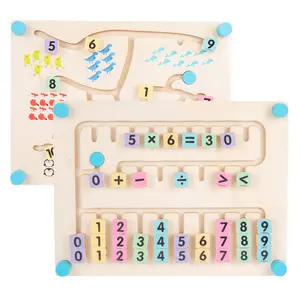
 1/15
1/15


 1/17
1/17





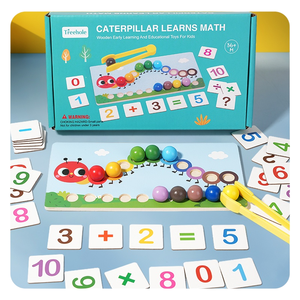



About mathematical reasoning questions
Where to Find Mathematical Reasoning Questions Suppliers?
The global market for mathematical reasoning questions is primarily driven by educational technology firms, assessment developers, and curriculum publishers, with production and content development concentrated in regions possessing strong academic infrastructure and cost-efficient skilled labor. India and Southeast Asia have emerged as key hubs for content creation, leveraging large pools of STEM-qualified professionals and established outsourcing ecosystems for educational material development. These regions support scalable question banks through structured authoring workflows and quality-controlled editorial processes.
Content clusters in cities such as Bangalore, Chennai, and Ho Chi Minh City offer integrated teams of subject matter experts, instructional designers, and psychometricians operating within managed facilities. This enables standardized output across difficulty levels and cognitive domains—such as deductive logic, quantitative inference, and pattern recognition. Buyers benefit from mature project management frameworks that ensure version control, plagiarism screening, and alignment with international standards like Common Core, Cambridge Assessment, or PISA frameworks. Typical advantages include 40–60% cost efficiency compared to Western-developed content, lead times of 10–20 days per 1,000-item batch, and adaptability for digital formats including API integration and LMS compatibility.
How to Choose Mathematical Reasoning Questions Suppliers?
Prioritize these verification protocols when selecting partners:
Academic and Technical Compliance
Verify alignment with recognized educational frameworks (e.g., Bloom’s Taxonomy, Webb’s Depth of Knowledge). For standardized testing applications, confirm involvement in validated assessment design and familiarity with item response theory (IRT). Suppliers should provide documentation on question validation procedures, including peer review cycles and pilot testing data.
Production Capability Audits
Evaluate operational scale and workflow maturity:
- Minimum team size of 15 subject specialists with advanced degrees in mathematics or education
- Demonstrated capacity to produce 5,000+ vetted questions per month
- In-house editorial and quality assurance pipelines, including plagiarism detection and bias review
Cross-reference sample outputs with delivery timelines to assess consistency and accuracy rates (target error rate <2%).
Transaction Safeguards
Require contractual IP ownership transfer and non-disclosure agreements. Use milestone-based payments tied to delivery and acceptance of reviewed batches. Conduct sample audits using third-party educators or internal validators to benchmark clarity, grade-level appropriateness, and cognitive rigor before full-scale procurement.
What Are the Best Mathematical Reasoning Questions Suppliers?
No supplier data available for comparative analysis.
Performance Analysis
In the absence of verified supplier profiles, procurement focus should remain on process transparency and content governance. Prioritize vendors who disclose authorship qualifications, revision histories, and alignment matrices with curriculum standards. Established suppliers typically maintain traceability logs for each question, enabling audit trails from concept to final use. For high-stakes assessments, verify experience in secure item banking and encrypted content delivery to mitigate leakage risks.
FAQs
How to verify mathematical reasoning questions supplier reliability?
Request documented evidence of prior projects, including client references from educational boards, edtech platforms, or testing agencies. Audit sample sets for logical consistency, solution accuracy, and language clarity. Confirm compliance with accessibility standards (e.g., WCAG) if intended for digital deployment.
What is the average sampling timeline?
Standard sample batches (50–100 questions) are typically delivered within 5–7 business days. Complex items involving diagrams, multi-step reasoning, or adaptive logic may require up to 14 days for development and review.
Can suppliers deliver content worldwide?
Yes, digital delivery enables global distribution. Ensure suppliers support required file formats (e.g., QTI, XML, JSON) and can localize content for linguistic and cultural relevance. Confirm data security protocols for cross-border transfers, particularly under GDPR or FERPA requirements.
Do suppliers provide free samples?
Most suppliers offer limited free samples (10–20 questions) to demonstrate style and rigor. Full trial sets may require nominal evaluation fees, which are often waived upon contract signing for large-volume engagements.
How to initiate customization requests?
Submit detailed specifications including target grade band, cognitive level, topic distribution (e.g., algebra, geometry, number theory), and format requirements (multiple choice, constructed response). Reputable suppliers will respond with content blueprints, writer qualifications, and estimated timelines within 72 hours.





