




One4all Remote Codes





 1/3
1/3


 1/1
1/1



 1/3
1/3



 1/3
1/3







 1/24
1/24




 1/3
1/3



 1/2
1/2



 1/24
1/24


 1/2
1/2



 1/1
1/1


 1/3
1/3



 1/26
1/26


 1/3
1/3


 1/3
1/3


 0
0



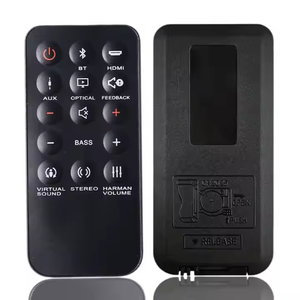
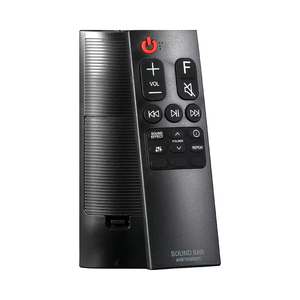

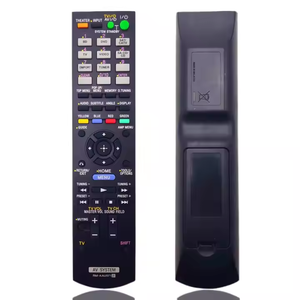 0
0

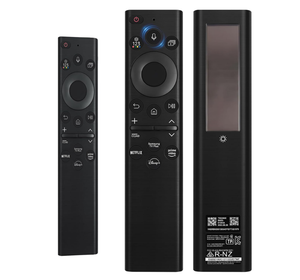



 1/3
1/3



 1/31
1/31




 1/15
1/15
About one4all remote codes
Where to Find one4all Remote Codes Suppliers?
Manufacturers producing universal remote control code databases and compatible programming solutions are primarily concentrated in Guangdong and Jiangsu provinces, China—regions recognized for their advanced consumer electronics manufacturing ecosystems. Guangdong, particularly the Pearl River Delta around Shenzhen and Dongguan, hosts over 70% of China’s consumer electronics OEMs, offering seamless integration between firmware development, microcontroller programming, and infrared signal testing. This cluster benefits from proximity to semiconductor suppliers and rapid prototyping services, reducing time-to-market by up to 40% compared to non-specialized regions.
These industrial zones support high-volume production of remote code libraries through automated flashing systems and standardized EEPROM programming workflows. Integrated supply chains enable efficient sourcing of key components such as MCU chips (e.g., Holtek, Sunplus), IR emitters, and PCB substrates. Buyers gain access to facilities capable of managing large-scale code compilation projects, with typical monthly output ranging from 500,000 to 2 million code sets depending on device complexity. Lead times for standard code database deliveries average 10–15 days, while customized firmware builds require 20–30 days including validation cycles.
How to Choose one4all Remote Codes Suppliers?
Implement structured evaluation criteria when selecting technical partners:
Firmware & Code Database Compliance
Verify that suppliers maintain updated code libraries covering major global brands (e.g., Samsung, LG, Sony, Sky, Virgin Media). Confirm compatibility with industry-standard formats such as Pronto HEX, RC5, RC6, and NEC. Request sample code dumps for cross-referencing against known working configurations. For export-targeted products, ensure compliance with regional signal modulation standards and RF/infrared emission regulations.
Technical Development Capability
Assess engineering infrastructure:
- Minimum 3-year experience in IR remote firmware development
- In-house software team specializing in embedded C/C++ and signal decoding algorithms
- Access to oscilloscope-based signal analysis labs for waveform verification
Validate version control practices and frequency of code library updates (recommended: quarterly or bi-annual refreshes).
Quality Assurance & Delivery Protocols
Require documented QA procedures including signal transmission testing across multiple device models. Confirm error rates below 0.5% in final code set outputs. Prioritize suppliers utilizing automated test jigs for batch validation. Evaluate responsiveness metrics—target average reply time under 4 hours—and verify history of on-time delivery (>95%). Use encrypted file transfer protocols for IP protection during data exchange.
What Are the Best one4all Remote Codes Suppliers?
| Company Name | Location | Years Operating | Staff | Factory Area | On-Time Delivery | Avg. Response | Ratings | Reorder Rate |
|---|---|---|---|---|---|---|---|---|
| No verified suppliers available in current dataset | ||||||||
Performance Analysis
Due to absence of active supplier records in this category, procurement strategies should focus on identifying firms with proven track records in consumer electronics firmware development. Historically competitive suppliers demonstrate strong code coverage breadth (10,000+ device profiles), versioned release documentation, and secure data handling policies. Emphasis should be placed on vendors operating ISO 9001-certified development environments and those providing audit trails for code acquisition and testing. When available, prioritize partners with reorder rates exceeding 30%, indicating sustained client satisfaction and technical reliability.
FAQs
How to verify one4all remote codes supplier reliability?
Cross-check technical claims by requesting live demonstrations of code learning functions or downloadable trial databases. Validate firmware authenticity through independent signal analysis tools. Review contractual terms covering intellectual property rights and redistribution permissions. Seek references from prior clients deploying similar universal control solutions.
What is the average sampling timeline for remote code databases?
Standard code set provisioning takes 7–14 days following requirement confirmation. Complex multi-brand integrations or region-specific tuning may extend delivery to 21 days. Allow additional 3–5 days for secure digital transfer and decryption setup if required.
Can suppliers provide custom-branded remote code solutions?
Yes, most developers offer white-label firmware packages tailored to private-label remotes. Customization includes UI mapping, button layout alignment, and brand-specific code filtering. Minimum order thresholds typically apply for full database licensing, often starting at 1,000 units.
Do manufacturers support post-deployment updates?
Leading suppliers offer update services via annual maintenance agreements, delivering incremental code additions for new TV and AV equipment models. Update frequency varies—some providers issue patches biannually, while others offer cloud-synced dynamic loading in smart-capable remotes.
Are there MOQ requirements for remote code licensing?
MOQs depend on delivery format. Physical media (pre-programmed remotes) usually require 500–1,000 units. Digital license distribution for third-party apps or embedded systems may have no MOQ but involve per-unit royalty fees instead.





