


Open Source Order Management System

















































 CN
CN



























About open source order management system
Where to Source Open Source Order Management System Providers?
The global supply base for open source order management systems is concentrated among specialized software development firms in China and India, with emerging capabilities in API integration, cloud deployment, and sector-specific customization. These regions host a high density of IT service providers offering scalable development resources at competitive cost structures—enabling tailored solutions for e-commerce, restaurant operations, logistics, and enterprise resource planning (ERP). Firms in Shenzhen and Taizhou, China, demonstrate strong vertical integration in business application ecosystems, while Indian suppliers in Hyderabad and Pune leverage multilingual technical teams to support international clients.
Supplier clusters benefit from mature digital infrastructure and deep pools of full-stack developers, allowing rapid prototyping and agile deployment. Buyers gain access to modular architectures built on frameworks like Laravel, Django, and Node.js, often compatible with existing CRM, POS, and warehouse management systems. Key advantages include low minimum order quantities (frequently starting at one unit), lead times averaging 15–30 days for custom builds, and flexibility in licensing models. Cost efficiencies stem from localized talent networks, with development rates 40–60% lower than Western counterparts without compromising technical rigor.
How to Evaluate Open Source Order Management System Suppliers?
Adopt the following evaluation criteria to ensure technical reliability and transaction security:
Technical Validation
Confirm expertise in open-source stack implementation (e.g., Odoo, ERPNext, or custom-built platforms). Require documented proof of version control practices, code modularity, and compatibility with RESTful APIs. For integrations involving payment gateways, shipping carriers (e.g., FedEx, Temu), or marketplaces, verify prior project experience through case studies or sandbox demonstrations.
Development Capacity Assessment
Analyze operational scale and specialization depth:
- Minimum portfolio of 5+ completed order management projects
- Demonstrated capability in both desktop and web/mobile applications
- Active involvement in APIs & integrations, AI functionalities, or cloud-hosted deployments
Cross-reference response time metrics (target ≤10 hours) with on-time delivery performance to assess project management discipline.
Procurement Safeguards
Utilize milestone-based payment structures tied to deliverables such as requirement finalization, UI/UX approval, backend completion, and testing phases. Prioritize suppliers with verifiable transaction histories indicating consistent revenue generation (e.g., >US$2,000 online revenue). Conduct code audits post-delivery to validate ownership, absence of obfuscated scripts, and adherence to open-source licensing terms. Pilot testing in staging environments remains critical before production rollout.
What Are the Leading Open Source Order Management System Suppliers?
| Company Name | Location | Main Products | Project Range | Min. Order | On-Time Delivery | Avg. Response | Online Revenue | Specializations |
|---|---|---|---|---|---|---|---|---|
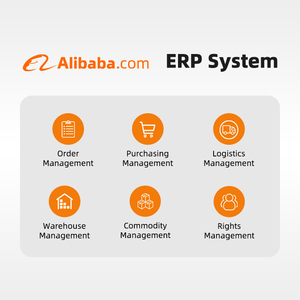
| Taizhou Le Yi Software Co., Ltd. | Zhejiang, CN | Desktop Applications, ERP, CRM | $5,000 | 1 piece | 100% | ≤10h | Not disclosed | Integrated ERP, warehouse & production management |
| Shenzhen Douples Technology Co., Ltd. | Guangdong, CN | API Integrations, E-commerce Services | $2,000–30,000 | 1 unit | 100% | ≤7h | Not disclosed | FedEx, Temu, Target API integrations |
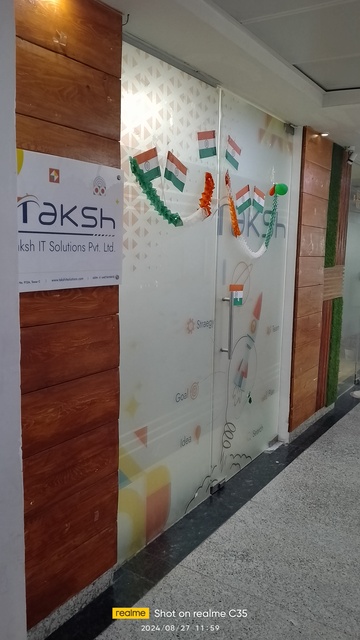
| TAKSH IT SOLUTIONS PRIVATE LIMITED | Karnataka, IN | AI Apps, Web & Mobile Development | $5,000–6,000 | 1 unit | 75% | ≤1h | US $2,000+ | E-commerce tracking, restaurant OMS, CRM |
| INNOJS INFOTECH PRIVATE LIMITED | Telangana, IN | Software Development, CRM Systems | $999–3,490 | 2 units | Not disclosed | ≤10h | Not disclosed | Customizable restaurant ordering, stock management |
| KAEM SOFTWARES PRIVATE LIMITED | Kerala, IN | Software, POS Solutions | $95–595 | 1–2 units | Not disclosed | ≤2h | US $8,000+ | Billing systems, laundry management, OEM customization |
Performance Analysis
Chinese suppliers like Taizhou Le Yi and Shenzhen Douples focus on higher-value enterprise implementations, with pricing reflecting complex system integration and robust backend architecture. Indian firms offer greater price segmentation, with KAEM Software providing entry-level solutions from $95, ideal for SMEs seeking basic functionality. TAKSH IT stands out for responsiveness (≤1h average) and diversified product output across AI and mobile platforms, despite a lower on-time delivery rate. Shenzhen Douples demonstrates niche strength in third-party marketplace connectivity, critical for cross-border e-commerce operators. Buyers prioritizing speed should consider vendors with sub-10-hour response times and proven API integration portfolios. For mission-critical deployments, select partners with transparent development workflows and structured release cycles.
FAQs
How to verify open source order management system supplier credibility?
Review published project portfolios, GitHub repositories (if shared), and client testimonials. Validate company registration details and request references from past clients in similar industries. Assess code quality through technical due diligence or third-party review services.
What is the typical development timeline?
Standard implementations require 3–6 weeks depending on scope. Basic systems (e.g., food ordering apps) may deploy in 15 days, while integrated ERP-CRM-OMS suites take 6–8 weeks. Add 1–2 weeks for user acceptance testing and training.
Can these systems be customized for specific industries?
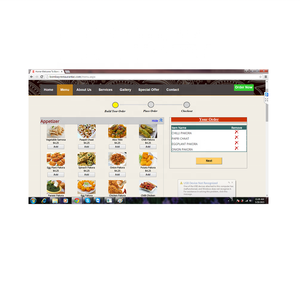
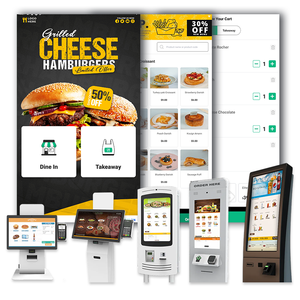
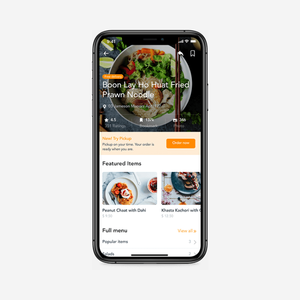
Yes, most suppliers specialize in vertical adaptations including restaurants, e-commerce, manufacturing, and service booking. Custom features include tableside ordering, inventory sync, multi-channel fulfillment, and automated invoicing.
Do suppliers provide post-deployment support?
Support policies vary. Some include 3–6 months of free maintenance; others offer paid SLAs covering bug fixes, updates, and feature enhancements. Clarify service level agreements before contract signing.
Are open source licenses transferable and modifiable?
Most delivered systems are based on permissive open-source frameworks allowing modification and redistribution. However, confirm license type (e.g., MIT, GPL) and any restrictions on commercial use or derivative works.





