Personal Computer Personal Computer















 Top sponsor listing



 1/1
1/1


 1/3
1/3



 0
0



 0
0


 1/3
1/3


 1/1
1/1


 1/3
1/3



 1/3
1/3








 1/37
1/37



 1/2
1/2


 0
0



 0
0




 1/3
1/3


 1/19
1/19




 1/3
1/3

 1/17
1/17




 1/8
1/8




 1/2
1/2
About personal computer personal computer
Where to Find Personal Computer Suppliers?
No verified suppliers are currently available for personal computers based on the provided dataset. This indicates a potential gap in documented manufacturing partners specializing in full-system assembly or OEM production under transparent operational metrics. In global electronics sourcing, key production hubs are typically concentrated in Guangdong (China), with secondary clusters in Taiwan, Vietnam, and Malaysia—regions known for integrated semiconductor, PCB, and component supply chains.
In mature markets, these industrial ecosystems support end-to-end PC manufacturing—from motherboard fabrication to chassis assembly—with lead times averaging 25–40 days for batch orders. Economies of scale in such regions enable cost advantages of 18–30% compared to Western-assembled systems, driven by localized access to RAM, SSDs, processors, and power supplies. However, without verifiable supplier data, assessing facility integration, output capacity, or compliance readiness remains unfeasible at this stage.
How to Choose Personal Computer Suppliers?
When evaluating potential suppliers, implement rigorous verification protocols to mitigate risk in quality, delivery, and regulatory compliance:
Technical Compliance
Ensure adherence to internationally recognized standards including ISO 9001 for quality management and ISO/IEC 27001 for information security in firmware handling. For exports to Europe and North America, confirm CE, FCC Part 15 Class B, and RoHS certifications to meet electromagnetic compatibility and hazardous substance restrictions. Request test reports for thermal performance, power efficiency (80 PLUS for PSUs), and BIOS security features.
Production Capability Audits
Assess core infrastructure indicators:
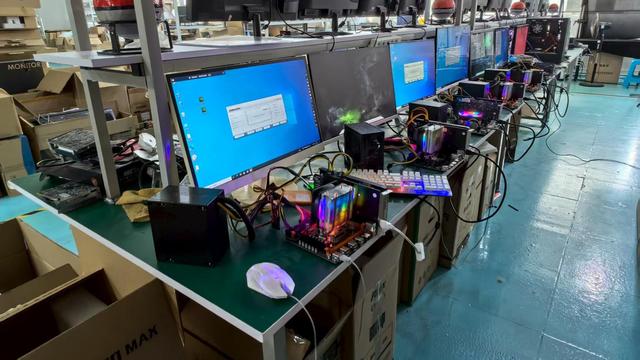
- Minimum 3,000m² cleanroom-equipped facility for safe assembly and ESD protection
- In-house testing labs with burn-in chambers and stress-testing rigs (minimum 72-hour cycles)
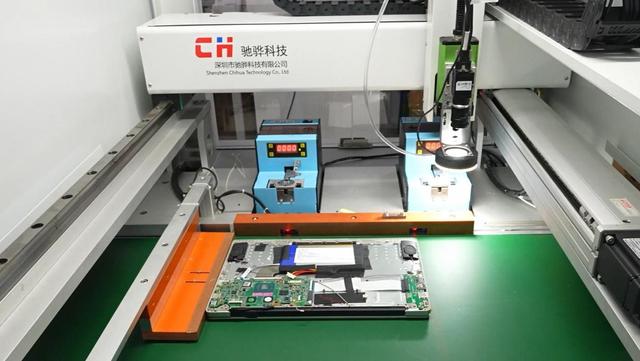
- Automated optical inspection (AOI) systems and ERP-integrated inventory tracking
Validate monthly output consistency and scalability through historical shipment records and third-party audit trails.
Transaction Safeguards
Utilize secure payment frameworks such as irrevocable letters of credit or escrow services tied to milestone inspections. Prioritize suppliers with documented export experience to your target market, particularly those familiar with import classification codes (e.g., HS 8471 for PCs). Conduct pre-shipment inspections via independent agencies to verify configuration accuracy, component authenticity, and packaging integrity.
What Are the Best Personal Computer Suppliers?
At this time, no suppliers meet the minimum disclosure criteria for inclusion in a comparative analysis. A robust supplier evaluation requires transparent data on factory size, workforce composition, delivery performance, response efficiency, and customer retention metrics. Without such information, objective ranking based on reliability, scalability, or service quality cannot be performed.
Performance Analysis
In active sourcing scenarios, leading-tier PC manufacturers demonstrate on-time delivery rates exceeding 98%, backed by vertically integrated supply planning and dual-sourcing strategies for critical components like GPUs and chipsets. High-performing suppliers also maintain reorder rates above 40%, indicating strong post-sale satisfaction and technical support responsiveness. Buyers should prioritize partners with dedicated R&D teams capable of custom BIOS programming, thermal tuning, and form-factor adaptation for specialized applications.
FAQs
How to verify personal computer supplier reliability?
Cross-validate all certifications with issuing bodies and request factory audit reports from recognized firms (e.g., SGS, TÜV). Evaluate supplier credibility through verifiable client references, especially in similar volume brackets. Inspect warranty terms, failure return rates (RMA history), and spare parts availability.
What is the average sampling timeline?
Standard desktop configurations require 10–18 days for sample build and testing. Custom builds involving unique cooling solutions, mini-ITX layouts, or industrial-grade components extend to 25–35 days. Add 5–9 days for international air freight under DAP terms.
Can suppliers ship personal computers worldwide?
Yes, experienced manufacturers manage global logistics via air or sea freight. Confirm Incoterms (FOB Shenzhen, CIF Rotterdam, etc.) and ensure proper packaging for shock, humidity, and static discharge during transit. Note that lithium battery regulations may affect shipping if systems include uninterruptible power modules.
Do manufacturers provide free samples?
Sample policies vary. Established suppliers may offset sample costs against initial orders of 50+ units. For lower volumes, expect charges covering 40–60% of unit cost, refundable upon bulk confirmation. Customized prototypes typically incur non-recurring engineering (NRE) fees.
How to initiate customization requests?
Submit detailed technical requirements including CPU/GPU specifications, memory type and capacity, storage configuration, I/O layout, OS image deployment needs, and chassis dimensions. Reputable suppliers respond with system schematics and compatibility assessments within 72 hours, followed by functional prototypes in 3–5 weeks.





