Pivot Joints Examples








 1/14
1/14


 1/3
1/3


 1/26
1/26



 1/27
1/27



 1/3
1/3




 1/32
1/32



 1/3
1/3






 CN
CN


 1/30
1/30



 1/3
1/3


 1/31
1/31



 1/16
1/16



 1/2
1/2




 1/3
1/3


 1/25
1/25



 1/36
1/36


 1/1
1/1


 1/29
1/29




 1/31
1/31
About pivot joints examples
Where to Find Pivot Joints Suppliers?
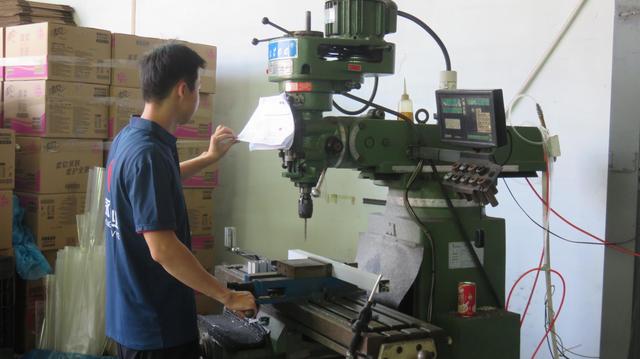
China remains the central hub for pivot joint manufacturing, with concentrated production clusters in Zhejiang and Jiangsu provinces driving efficiency and specialization. Zhejiang’s Ningbo and Wenzhou regions account for over 50% of China’s precision mechanical components output, supported by advanced CNC machining infrastructure and proximity to major ports like Shanghai and Shenzhen. These logistical advantages enable streamlined export operations, reducing shipping lead times by 10–15 days compared to inland regions.
Jiangsu’s Changzhou and Suzhou zones focus on high-tolerance engineering parts, leveraging localized access to aerospace-grade alloys and stainless steel suppliers. This integration reduces raw material procurement cycles by up to 20%, while clustered heat treatment, surface finishing, and testing facilities support rapid prototyping and batch processing. Buyers benefit from vertically integrated supply chains where casting, forging, turning, milling, and assembly occur within compact industrial networks—typically within a 30km radius—ensuring tighter quality control and faster turnaround for both standard and custom configurations.
How to Choose Pivot Joints Suppliers?
Effective supplier selection requires systematic evaluation across technical, operational, and transactional criteria:
Quality Management Standards
Confirm ISO 9001 certification as a baseline for process consistency. For applications in automotive, medical, or aerospace sectors, verify additional compliance with IATF 16949, AS9100, or RoHS directives. Request test reports for load capacity, rotational torque, corrosion resistance (e.g., salt spray testing per ASTM B117), and dimensional accuracy (±0.01mm tolerance).
Manufacturing Capability Assessment
Evaluate key production parameters:
- Minimum factory size of 2,000m² to ensure scalable output
- In-house CNC machining centers (≥4-axis) and automated assembly lines
- Dedicated metrology labs with CMM (Coordinate Measuring Machine) verification
Cross-reference equipment lists with monthly production capacity (target: 50,000+ units for high-volume needs) and confirm minimum order quantities (MOQs) below 500 pieces for flexibility.
Procurement Risk Mitigation
Utilize third-party inspection services (e.g., SGS, TÜV) for pre-shipment audits. Prioritize suppliers offering sample validation under real operating conditions. Implement staged payment terms tied to production milestones and require material traceability documentation for critical alloys such as 304/316 stainless steel, 4140 chrome-molybdenum, or brass-C360.
What Are the Best Pivot Joints Suppliers?
No supplier data is currently available for pivot joints. Procurement professionals are advised to conduct direct audits or request verified referrals through industry associations and trade exhibitions such as Canton Fair or Bauma China. When engaging new manufacturers, initiate with small trial orders to assess conformance to specifications, packaging integrity, and communication responsiveness before scaling commitments.
Performance Analysis
In absence of specific supplier profiles, emphasis should be placed on verifying documented production capabilities rather than relying solely on self-reported metrics. Historical performance indicators—such as on-time delivery rates exceeding 97%, customer reorder rates above 30%, and average response times under 4 hours—are strong proxies for operational reliability. For customized pivot joints requiring non-standard materials or sealing solutions (e.g., PTFE, silicone, or Viton O-rings), confirm in-house engineering support and design-for-manufacturability reviews prior to tooling investment.
FAQs
How to verify pivot joints supplier reliability?
Audit quality management systems through certified third parties. Request evidence of recurring client engagements, particularly in regulated industries. Validate facility claims via video walkthroughs showing active production lines, inventory management, and QC stations.
What is the typical sampling timeline for pivot joints?
Standard samples take 7–14 days to produce, depending on complexity. Custom designs with specialized coatings or tight tolerances may require 20–28 days. Add 5–10 days for international express delivery.
Can pivot joints be customized for specific load and motion requirements?
Yes, reputable manufacturers offer customization in bore diameter, shank dimensions, lubrication type (grease-fitted, self-lubricating bushings), and mounting interfaces. Provide detailed CAD files and load specifications to facilitate feasibility assessment and FEA simulation.
What are common materials used in pivot joint fabrication?
Stainless steel (SS304, SS316) dominates corrosive environments; alloy steels (4140, 4340) are preferred for high-stress applications. Bronze and polymer composites are used for low-friction, maintenance-free operation in agricultural and off-road machinery.
Do suppliers support dropshipping or just bulk shipments?
Most pivot joint manufacturers operate under B2B models focused on bulk procurement. Dropshipping is uncommon; however, some exporters partner with regional distributors to enable smaller lot deliveries. Confirm logistics terms (FOB, CIF, DDP) and warehouse availability during negotiation.





