Py Notebook










 Top sponsor listing



 0
0





 1/28
1/28




 1/2
1/2



 1/26
1/26


 1/3
1/3


 1/3
1/3




 1/1
1/1




 1/22
1/22




 1/24
1/24



 1/3
1/3


 0
0




 1/3
1/3




 1/62
1/62



 1/3
1/3


 1/3
1/3


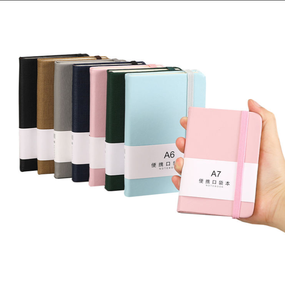

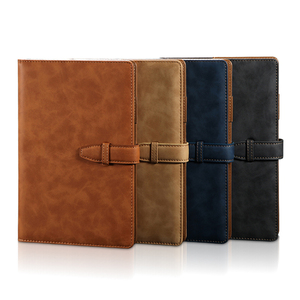 0
0

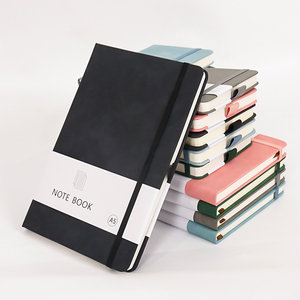
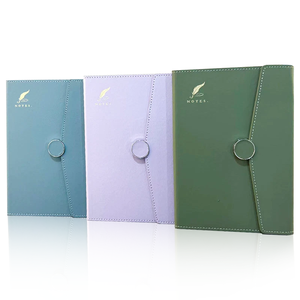


 1/7
1/7



 1/3
1/3
About py notebook
Where to Find Py Notebook Suppliers?
No verified suppliers for py notebooks are currently identified in major manufacturing regions. Unlike established industrial equipment categories, the production of specialized notebooks—particularly those tailored for programming or scientific computing—remains decentralized and underrepresented in traditional hardware sourcing ecosystems. While China dominates global stationery and electronics manufacturing, with clusters in Guangdong and Zhejiang provinces known for high-volume consumer goods, no concentrated industrial base has emerged specifically for py notebooks.
The absence of dedicated production facilities limits economies of scale, integration of technical components (e.g., embedded code templates, durable binding for field use), and standardized material sourcing. Buyers may encounter general notebook manufacturers offering customization, but these lack domain-specific expertise in developer workflows or data science applications. As a result, lead times and quality consistency vary significantly, with limited access to vertically integrated supply chains that ensure rapid fulfillment and cost efficiency.
How to Choose Py Notebook Suppliers?
In the absence of established manufacturers, procurement strategies must emphasize due diligence and functional validation:
Technical Compliance
Verify that any supplier claiming specialization in py notebooks adheres to ISO 9001 standards for quality management. For buyers in regulated industries, confirm compatibility with document durability requirements (e.g., ANSI/NISO Z39.75 for paper permanence). If notebooks include digital elements (QR codes, companion apps), assess data security practices and software update support.
Production Capability Audits
Evaluate minimum operational thresholds:
- Facility size exceeding 2,000m² to support batch production
- In-house design and prototyping teams for layout customization
- Access to synthetic papers or water-resistant coatings for ruggedized versions
Cross-reference sample output with industry-use benchmarks, such as page tear resistance and ink bleed testing, to validate performance claims.
Transaction Safeguards
Utilize secure payment mechanisms, including third-party escrow services, until product inspection is completed. Prioritize suppliers with verifiable transaction histories and documented export experience. Sampling remains critical—request physical units to evaluate paper weight (recommended: 80–100 gsm), binding integrity under repeated flipping, and usability in coding environments before bulk ordering.
What Are the Best Py Notebook Suppliers?
At this time, no suppliers meet the minimum criteria for inclusion in a comparative analysis. The provided dataset contains no entries for companies producing py notebooks, preventing performance benchmarking based on factory area, delivery reliability, response time, or customer retention metrics. This reflects a broader market gap: while demand exists among developers, engineers, and educators for purpose-built notebooks featuring syntax-highlighted layouts, grid structures, or version-controlled paper-digital sync, commercial supply remains fragmented and largely unverified.
Performance Analysis
Without active suppliers in the category, procurement decisions should focus on adjacent capabilities. Consider repurposing offerings from technical notebook manufacturers (e.g., lab notebooks, engineering field logs) with proven track records in durability and standardization. Alternatively, explore print-on-demand partners capable of executing small-batch runs with custom formatting. Until dedicated py notebook producers emerge, buyers must balance specificity of design against scalability and long-term availability.
FAQs
How to verify py notebook supplier reliability?
Since no recognized suppliers exist, verification relies on assessing general stationery manufacturers’ capacity to meet technical specifications. Request audit reports covering raw material sourcing, production line controls, and environmental compliance (e.g., FSC certification for paper). Scrutinize sample books for layout accuracy, margin consistency, and compatibility with common programming languages.
What is the average sampling timeline?
For customized technical notebooks, expect 10–20 days for sample production depending on complexity. Add 5–10 days for international shipping via express courier. Expedited processing may reduce timelines by 3–5 days at additional cost.
Can suppliers ship py notebooks worldwide?
General printing and stationery manufacturers typically support global logistics. Confirm Incoterms (FOB, CIF) and packaging standards suitable for moisture and impact protection during transit. Sea freight is economical for orders exceeding 500 units; air freight preferred for prototypes and urgent deliveries.
Do manufacturers provide free samples?
Most require payment for initial samples, refundable against future orders above agreed quantities (typically MOQ ≥ 100 units). Fully free samples are rare unless part of an established partnership or promotional campaign.
How to initiate customization requests?
Submit detailed specifications including page count, paper type, cover material, binding method (spiral, stitched, glued), and interior layout (e.g., monospace grids, function reference sections). Suppliers should return mockups within 72 hours and revised proofs within one week. Minimum order quantities typically range from 50 to 500 units, depending on customization level.





