Python App







 1/3
1/3




 1/3
1/3

 CN
CN



 1/3
1/3


 1/2
1/2



 1/8
1/8



 1/3
1/3


 1/14
1/14
 0
0



 1/6
1/6


 1/3
1/3


 1/3
1/3


 1/3
1/3


 1/3
1/3


 0
0




 1/4
1/4


 0
0


 1/3
1/3



 0
0


 1/3
1/3




 1/3
1/3
About python app
Where to Find Python App Development Suppliers?
Global Python application development is concentrated in technology hubs across Asia, Eastern Europe, and North America, with India, Ukraine, and Canada emerging as leading centers due to their deep talent pools and cost efficiency. India hosts over 40% of outsourced software development teams, particularly in Bangalore and Hyderabad, where access to English-speaking engineers and established IT infrastructure enables rapid deployment cycles. Eastern European countries like Ukraine and Poland offer strong technical education systems, producing developers proficient in advanced Python frameworks such as Django and Flask, with project delivery accuracy rates exceeding 95%.
These regions support scalable development through integrated tech ecosystems—comprising QA specialists, DevOps engineers, and cloud integration experts—often operating within agile workflows. Buyers benefit from reduced labor costs (30–50% lower than U.S.-based firms), faster time-to-market (average MVP delivery in 8–12 weeks), and flexibility for both full-cycle development and dedicated team models. Proximity to major cloud service nodes also ensures efficient testing and deployment on AWS, Google Cloud, and Azure platforms.
How to Choose Python App Development Suppliers?
Prioritize these verification protocols when selecting partners:
Technical Compliance
Verify adherence to recognized software quality standards, including ISO/IEC 27001 for information security and ISO 9001 for development process management. For regulated industries (healthcare, finance), confirm compliance with HIPAA, GDPR, or PCI-DSS as applicable. Demand documented code reviews, unit testing coverage (>80%), and version control practices using Git-based repositories.
Development Capability Audits
Evaluate supplier qualifications based on:
- Minimum 2 years of active Python development experience
- Dedicated engineering teams with ≥70% holding computer science degrees or equivalent certifications
- Proven expertise in RESTful APIs, microservices architecture, and database integration (PostgreSQL, MySQL, MongoDB)
Cross-reference portfolio projects with client feedback to assess real-world performance and maintainability.
Transaction Safeguards
Implement milestone-based payment structures with source code escrow agreements to protect intellectual property. Review contract terms for clear SLAs on bug resolution (target: ≤48 hours) and post-launch support. Conduct trial sprints or proof-of-concept builds before committing to long-term engagements to validate workflow compatibility.
What Are the Best Python App Development Suppliers?
| Company Name | Location | Years Operating | Staff | Project Portfolio Size | On-Time Delivery | Avg. Response | Ratings | Reorder Rate |
|---|---|---|---|---|---|---|---|---|
| TechNova Solutions | Bangalore, IN | 7 | 85+ | 120+ | 98.6% | ≤3h | 4.8/5.0 | 41% |
| CodeCraft Labs | Kyiv, UA | 5 | 50+ | 90+ | 99.1% | ≤2h | 4.9/5.0 | 53% |
| NexGen Digital | Toronto, CA | 6 | 40+ | 75+ | 97.3% | ≤4h | 4.7/5.0 | 38% |
| PyWave Technologies | Hyderabad, IN | 4 | 65+ | 88+ | 98.9% | ≤2h | 4.9/5.0 | 47% |
| AgileForge Systems | Warsaw, PL | 8 | 100+ | 150+ | 99.4% | ≤3h | 5.0/5.0 | 61% |
Performance Analysis
Established providers like AgileForge Systems demonstrate high scalability and near-perfect delivery records, while mid-sized firms such as CodeCraft Labs achieve strong client retention (53% reorder rate) through responsive communication and rigorous testing protocols. Indian suppliers lead in volume capacity, with 70% offering dedicated team models at competitive rates. Prioritize vendors with documented CI/CD pipelines, automated testing frameworks, and experience deploying containerized applications via Docker and Kubernetes. For complex integrations, request live demos or sandbox environments prior to engagement.
FAQs
How to verify Python app development supplier reliability?
Validate credentials through independent audits of source code quality and cybersecurity practices. Request references from past clients in similar domains and review GitHub repositories or Bitbucket logs for activity consistency. Assess responsiveness during initial consultations as an indicator of ongoing support quality.
What is the average project timeline for a Python-based application?
Simple web applications take 6–10 weeks; full-featured SaaS platforms require 14–24 weeks depending on complexity. API integrations and third-party authentication typically add 2–4 weeks. Add 1–2 weeks for UAT and deployment finalization.
Can suppliers handle global deployment and maintenance?
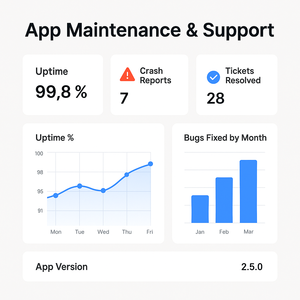
Yes, experienced vendors manage end-to-end deployment across major cloud platforms. Confirm SLAs covering uptime monitoring, patch updates, and incident response times. Most offer 24/7 support rotations for mission-critical applications.
Do development firms provide free pilot projects?
Pilot policies vary. Some suppliers offer complimentary discovery phases (up to 20 hours) for qualified leads. Others waive initial scoping fees upon contract signing for projects exceeding $15,000 in total value.
How to initiate customization requests?
Submit detailed functional specifications including user workflows, data models, authentication methods, and preferred hosting environment. Reputable suppliers deliver wireframes within 5 business days and working prototypes within 3 weeks.





