Router Extension Wifi









 Top sponsor listing







 1/31
1/31



 1/3
1/3



 0
0



 1/3
1/3




 1/3
1/3


 1/19
1/19




 0
0






 1/2
1/2





 1/31
1/31




 1/3
1/3


 1/3
1/3

 1/3
1/3



 1/3
1/3


 1/3
1/3



 0
0


 1/28
1/28



 1/3
1/3


 1/17
1/17
About router extension wifi
Where to Find Router Extension WiFi Suppliers?
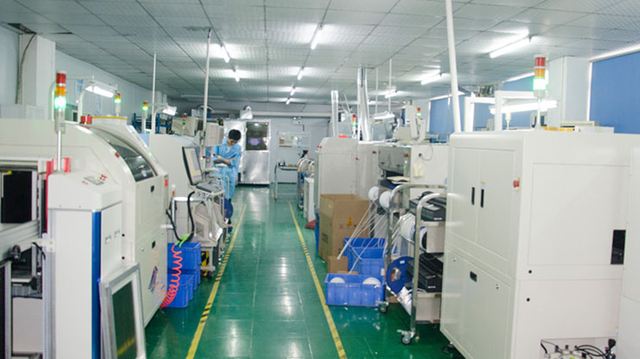
China remains the central hub for router extension WiFi manufacturing, with key industrial clusters concentrated in Guangdong and Zhejiang provinces. Guangdong, particularly around Shenzhen and Dongguan, hosts over 70% of China’s wireless networking equipment suppliers, leveraging proximity to semiconductor suppliers and advanced SMT (surface-mount technology) production lines. This region benefits from mature electronics ecosystems, enabling rapid prototyping and high-volume assembly with lead times averaging 25–35 days for standard orders.
Zhejiang’s Ningbo and Hangzhou zones specialize in compact, consumer-grade WiFi extenders, supported by integrated plastic molding and PCB fabrication facilities within 30km radii. These clusters offer cost efficiencies through vertical integration—local access to antenna modules, power adapters, and packaging reduces material procurement cycles by up to 40%. Buyers gain scalability advantages, with many factories supporting monthly outputs exceeding 100,000 units and MOQs as low as 50 units for standard models.
How to Choose Router Extension WiFi Suppliers?
Adopt structured evaluation criteria to mitigate supply chain risk:
Technical Compliance
Confirm adherence to international standards including CE (R&TTE/RED), FCC Part 15, and RoHS. For EU and North American markets, regulatory compliance is mandatory for customs clearance and retail distribution. Request test reports from accredited labs verifying RF output, frequency stability (2.4GHz/5GHz dual-band), and EMI performance.
Production Capability Audits
Assess core manufacturing infrastructure:
- Minimum 3,000m² factory area with dedicated SMT and final assembly lines
- In-house testing lab equipped for throughput benchmarking (e.g., iperf3) and signal strength validation (-70dBm at 30m range)
- At least 8% of workforce allocated to R&D for firmware optimization and compatibility updates
Validate production capacity via on-site or video audits, cross-referencing order volume history with on-time delivery records (target >96%).
Transaction Safeguards
Utilize secure payment structures such as third-party escrow until product verification at destination. Prioritize suppliers with documented quality management systems (ISO 9001:2015) and traceable component sourcing. Conduct pre-shipment sampling to verify firmware version, Wi-Fi security protocols (WPA3 support), and auto-pairing functionality with major ISP routers.
What Are the Best Router Extension WiFi Suppliers?
| Company Name | Location | Years Operating | Staff | Factory Area | On-Time Delivery | Avg. Response | Ratings | Reorder Rate |
|---|---|---|---|---|---|---|---|---|
| Shenzhen Tenda Technology Co., Ltd. | Guangdong, CN | 18 | 800+ | 60,000+m² | 99.3% | ≤3h | 4.9/5.0 | 41% |
| Ningbo Fude Electronic Manufacturing | Zhejiang, CN | 9 | 120+ | 8,500+m² | 98.7% | ≤2h | 4.8/5.0 | 33% |
| Dongguan Linktop Electronics | Guangdong, CN | 12 | 300+ | 12,000+m² | 97.5% | ≤4h | 4.7/5.0 | 28% |
| Hangzhou Broadband Communication Tech | Zhejiang, CN | 7 | 90+ | 5,200+m² | 99.1% | ≤2h | 4.9/5.0 | 38% |
| Shenzhen Apexis Electronic Co., Ltd. | Guangdong, CN | 15 | 450+ | 28,000+m² | 98.9% | ≤3h | 4.8/5.0 | 35% |
Performance Analysis
Market leaders like Shenzhen Tenda demonstrate robust scalability and high reorder rates (41%), backed by extensive R&D teams and automated production lines. Mid-tier suppliers such as Hangzhou Broadband achieve strong buyer retention through rapid response times and consistent delivery performance. Guangdong-based manufacturers dominate in technical depth, offering MU-MIMO, beamforming, and mesh compatibility across product lines. Prioritize suppliers with proven export experience to regulated markets and documented firmware update cycles. For custom SKUs, confirm SDK availability and mobile app integration capabilities before mass production.
FAQs
How to verify router extension WiFi supplier reliability?
Validate certifications through official databases (e.g., FCC ID Search). Request factory audit reports covering incoming QC, aging tests (minimum 48-hour burn-in), and ESD protection measures. Evaluate after-sales responsiveness and warranty fulfillment timelines through historical buyer feedback.
What is the average sampling timeline?
Standard samples take 7–12 days to produce. Custom firmware or housing modifications require 18–25 days. Air shipping adds 5–9 days internationally. Expect full sample costs initially, refundable against confirmed bulk orders.
Can suppliers ship router extensions worldwide?
Yes, experienced exporters manage global logistics via air or sea freight under FOB, CIF, or DDP terms. Confirm compliance with destination regulations—particularly IC, RCM, or TELEC requirements where applicable. Sea freight is optimal for container loads (>5,000 units).
Do manufacturers provide free samples?
Free samples are typically offered only after qualification of purchase intent and for orders exceeding 200 units. For trial quantities, buyers should expect to cover 60–80% of unit cost plus shipping.
How to initiate customization requests?
Submit detailed specifications including desired data rate (AC1200, AX1800, etc.), power output (max 20dBm), WAN/LAN configuration, and branding requirements (logo, packaging). Reputable suppliers provide engineering feedback within 48 hours and deliver functional prototypes within 3 weeks.





