Sensors For Arduino Distributor






 1/1
1/1


 0
0



 0
0


 0
0






 1/5
1/5


 0
0


 1/2
1/2




 1/2
1/2


 1/8
1/8



 1/3
1/3






 1/2
1/2







 1/20
1/20




 1/15
1/15


 1/56
1/56


 1/4
1/4




 1/3
1/3


 0
0



 1/3
1/3


 1/3
1/3
About sensors for arduino distributor
Where to Find Sensors for Arduino Distributors?
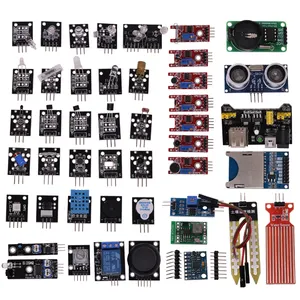
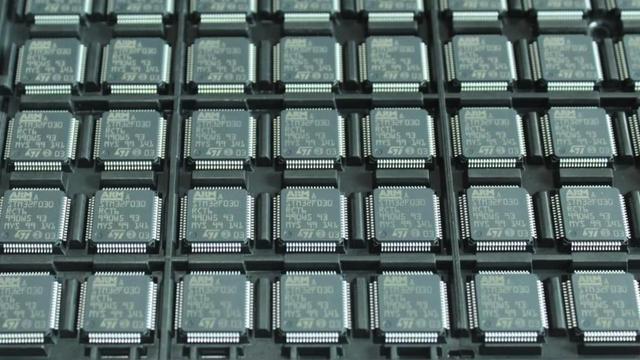
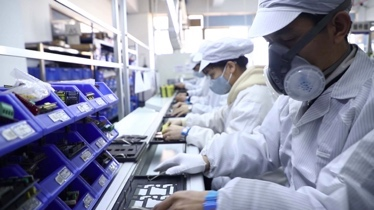
China remains the central hub for electronics component manufacturing, with Shenzhen emerging as a dominant cluster for sensors and development board ecosystems. This region hosts a dense network of suppliers specializing in Arduino-compatible sensor modules, benefiting from proximity to semiconductor foundries, PCB fabrication facilities, and logistics gateways. The integration of vertical supply chains enables rapid prototyping and scalable production, with many suppliers offering both individual sensors and bundled kits.
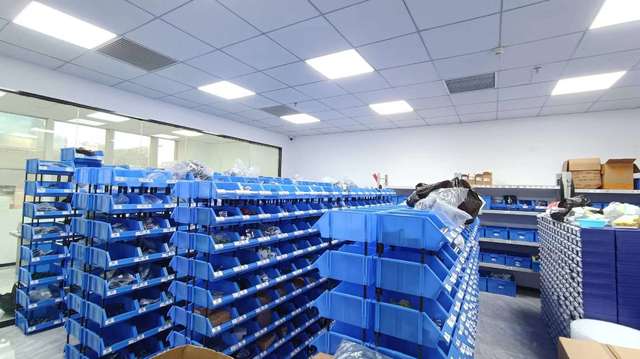
These industrial clusters support high-volume output and low per-unit costs due to localized sourcing of microcontrollers, passive components, and packaging materials. Buyers gain access to streamlined operations where design, testing, and assembly occur within compact geographic zones—reducing lead times and enabling agile fulfillment. Key advantages include MOQs as low as 1 piece, competitive pricing (as low as $0.10 per unit for basic modules), and fast response cycles, often under 6 hours. Most suppliers operate within ISO-aligned quality frameworks and comply with RoHS standards for environmental safety.
How to Choose Sensors for Arduino Distributors?
Procurement decisions should be guided by structured evaluation criteria to ensure reliability, scalability, and technical compatibility:
Quality Assurance & Compliance
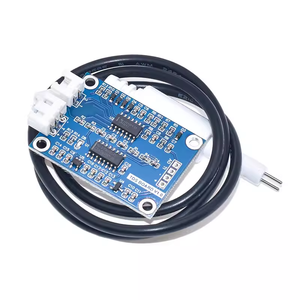
Verify adherence to international standards such as RoHS and ISO 9001. While not always explicitly stated, most reputable suppliers implement internal QC protocols including automated optical inspection (AOI) and functional testing. For applications requiring environmental resilience, confirm waterproofing ratings (e.g., IP67 for DS18B20 variants) and signal stability under variable loads.
Production and Technical Capabilities
Assess supplier infrastructure through available performance metrics:
- On-time delivery rate exceeding 95% indicates reliable logistics execution
- Response time under 6 hours reflects operational responsiveness
- Reorder rates above 25% suggest customer satisfaction and product consistency
Cross-reference these indicators with product diversity—suppliers listing multiple sensor types (temperature, ultrasonic, infrared, sound, etc.) typically maintain broader inventory and R&D capabilities.
Transaction and Sourcing Security
Prioritize suppliers with verifiable transaction histories and transparent pricing structures. Evaluate minimum order quantities (MOQs) against project scale—some vendors offer single-piece sampling, while others require 10–20 units. Confirm packaging methods and export readiness, especially for sensitive components like laser receivers or magnetic sensors. Use secure payment mechanisms and request sample units before bulk ordering to validate performance specifications.
What Are the Best Sensors for Arduino Distributors?
| Company Name | Main Products | Online Revenue | On-Time Delivery | Avg. Response | Reorder Rate | Min. Order | Price Range (USD) |
|---|---|---|---|---|---|---|---|
| Lixinc Electronics Co., Limited | Other ICs, Development Boards, Transistors | US $10,000+ | 86% | ≤1h | 25% | 10 pcs | $0.40–4.50 |
| Shenzhen YTF Technology Co., Limited | Electronic Modules, Power Drivers, Other Sensors | US $30,000+ | 100% | ≤10h | <15% | 1 pc | $1.14–9.50 |
| Shenzhen Hengxinkang Technology Co., Ltd. | Discrete Semiconductors, Development Boards, Transformers | US $20,000+ | 100% | ≤6h | 33% | 1–10 pcs | $0.10–4.13 |
| Shenzhen Shilian Xinye Technology Co., Ltd. | Microcontrollers, PMIC, FPGA, Networks | US $1,000+ | 100% | ≤14h | <15% | 1–10 pcs | $0.71–14.97 |
| Shenzhen Kaisheng Century Electronics Co., Ltd. | Multispecialty Supplier | US $160,000+ | 100% | ≤2h | <15% | 1–10 pcs | $0.35–165.96 |
Performance Analysis
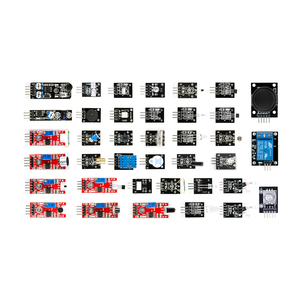
Shenzhen Hengxinkang stands out with a 33% reorder rate and highly competitive pricing, indicating strong buyer retention despite moderate revenue volume. Shenzhen YTF Technology offers flexibility with 1-piece MOQs across diverse sensor types, including precision magnetic and pH monitoring modules. Lixinc Electronics provides cost-effective options for entry-level sensors but has a lower on-time delivery rate (86%), which may impact time-sensitive projects. Shenzhen Kaisheng Century leads in transaction volume (US $160,000+ online revenue) and maintains a 100% on-time delivery record with sub-2-hour response times, making it a scalable partner for large-scale procurement. Suppliers with multisensor kits (e.g., 45-in-1 sets) cater to educational and prototyping markets, while specialized offerings like CO₂ or TDS sensors serve industrial IoT applications.
FAQs
How to verify sensors for Arduino distributor reliability?
Cross-check delivery performance, response times, and reorder rates from verified transaction data. Request product datasheets and test reports for critical parameters such as voltage tolerance (3.3V/5V), signal accuracy, and operating temperature ranges. Evaluate seller communication clarity and technical support depth during pre-purchase inquiries.
What is the typical lead time for sensor orders?
Standard orders are typically fulfilled within 7–15 days after payment confirmation. Express shipping adds 3–7 days for international delivery. Custom configurations or large-volume batches may extend lead times to 25 days, depending on component availability and testing requirements.
Can suppliers provide samples before bulk orders?
Yes, most suppliers offer sample units with MOQs as low as 1 piece. Sample costs generally reflect full unit pricing, though some vendors waive fees for subsequent bulk purchases. Expect pricing transparency for samples, particularly for common modules like DHT11, BME280, or KY-series sensors.
Are Arduino sensors RoHS compliant?
The majority of listed suppliers adhere to RoHS directives, particularly those exporting to EU and North American markets. While not always explicitly certified, standard manufacturing practices in Shenzhen include lead-free soldering and compliant material sourcing. Buyers should request compliance documentation for regulated applications.
Do distributors support customization?
Yes, several suppliers offer PCB labeling, firmware loading, or packaging modifications for orders exceeding 100 units. Custom sensor integration (e.g., multi-sensor boards or protocol adjustments) requires technical drawings and may involve NRE fees. Lead time for prototypes ranges from 10–20 days based on complexity.





