Software Scm













 CN
CN



 CN
CN

























































About software scm
Where to Find Software SCM Suppliers?
Global sourcing for supply chain management (SCM) software is increasingly concentrated among specialized technology providers in Asia, particularly in China and Vietnam, where mature IT ecosystems support rapid development and deployment. These regions host a high density of software development firms with expertise in enterprise resource planning (ERP), logistics optimization, and supplier integration platforms. Proximity to hardware manufacturing hubs enables seamless integration between physical operations and digital management systems, reducing implementation timelines by up to 40% compared to standalone Western vendors.
Suppliers in this sector leverage vertically integrated development environments—combining front-end interfaces, cloud infrastructure, and database architecture—allowing for scalable deployments across multinational enterprises. Buyers benefit from access to consolidated service networks featuring dedicated R&D teams, multilingual support staff, and compliance specialists. Key advantages include reduced licensing costs (20–35% below North American benchmarks), agile customization capabilities, and faster time-to-deployment for complex enterprise solutions. Typical lead times range from 60 to 90 days for fully customized implementations, with modular configurations available in as little as 30 days.
How to Choose Software SCM Suppliers?
Prioritize these verification protocols when evaluating potential partners:
Technical Expertise & Product Scope
Assess the supplier’s core competencies through product listing diversity and specialization depth. Firms offering over 250 software listings demonstrate established market presence and technical maturity. Confirm experience in SCM-specific modules such as procurement automation, inventory forecasting, vendor performance tracking, and order lifecycle management.
Development Capacity & Responsiveness
Evaluate operational efficiency using response time and delivery reliability metrics:
- Target suppliers with average response times ≤2 hours for timely communication
- Prioritize companies maintaining on-time delivery rates ≥80%
- Verify sustained online transaction volume (e.g., >US$8,000 annual revenue) as an indicator of active customer engagement
Cross-reference responsiveness with reorder rates to assess client retention and satisfaction.
Customization & Transaction Assurance
Require evidence of end-to-end solution design capability, including requirement analysis, system integration, testing, and post-deployment support. Use secure payment mechanisms that release funds upon successful software validation. Request detailed project plans outlining milestone deliverables, data migration strategies, and user training protocols before contract finalization.
What Are the Best Software SCM Suppliers?
| Company Name | Location | Main Products (Listings) | On-Time Delivery | Avg. Response | Reorder Rate | Online Revenue | Min. Order Value | Unit MOQ |
|---|---|---|---|---|---|---|---|---|
| STEPMEDIA SOFTWARE VIET NAM COMPANY LIMITED | Vietnam | Software (251) | - | ≤2h | - | - | $5,000 | 1 unit |
| Shenzhen Hong Telecom Equipment Service Limited | Shenzhen, CN | Fiber Optic Equipment (3,970) | 100% | ≤8h | - | - | $300 | 2 pieces |
| Xiamen Maikang Network Technology Co., Ltd. | Xiamen, CN | Enterprise Routers (38,276) | 80% | ≤1h | <15% | US $8,000+ | $300 | 2 pieces |
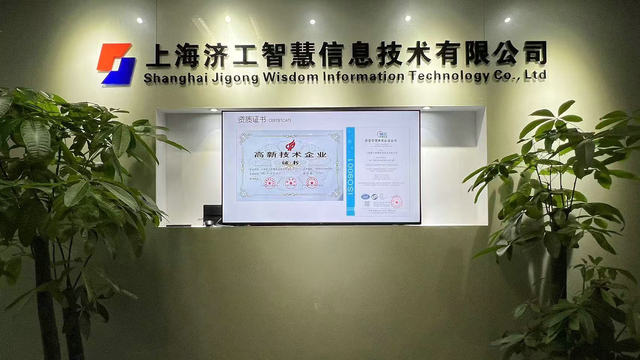
| Shanghai Jigong Intelligent Information Technology Co., Ltd. | Shanghai, CN | Not specified | 100% | ≤11h | - | - | $1,000 | 1 piece |
| Shanghai Honghuan Network Technology Co., Ltd. | Shanghai, CN | Not specified | 100% | ≤2h | - | - | $504 | 4 sets |
Performance Analysis
STEPMEDIA stands out for its focus on comprehensive enterprise software, offering flexible entry points starting at $5,000 with low minimum order quantities. Shenzhen Hong Telecom and Shanghai Jigong achieve perfect on-time delivery records, indicating strong project execution discipline despite broader hardware-focused portfolios. Xiamen Maikang leads in responsiveness (≤1h) and demonstrates measurable market traction with verified annual revenue exceeding US$8,000, though its reorder rate suggests room for improvement in long-term client retention. Shanghai-based suppliers offer competitive pricing models with MOQs accessible to mid-sized businesses. For mission-critical deployments, prioritize vendors combining proven delivery performance with dedicated software development capacity and rapid communication cycles.
FAQs
How to verify software SCM supplier reliability?
Cross-check technical claims with documented case studies and client references. Request demonstrations of live or sandbox environments to evaluate interface usability, reporting functionality, and integration readiness. Analyze support structures, including availability of API documentation, SLA-backed maintenance, and multi-language assistance.
What is the typical customization timeline?
Standard configuration takes 30–45 days. Fully customized SCM systems with third-party integrations (e.g., ERP, CRM, WMS) require 60–90 days depending on complexity. Expect additional time for data migration, user acceptance testing, and staff training.
Can suppliers integrate SCM software with existing enterprise systems?
Yes, reputable developers provide API-based connectivity for ERP, accounting, logistics, and e-commerce platforms. Confirm compatibility with your current stack (e.g., SAP, Oracle, Microsoft Dynamics) and request proof of prior integration projects in similar industry verticals.
Do suppliers offer trial versions or demos?
Most suppliers provide free system demonstrations. Trial access may be available upon submission of business requirements. Full test environments are typically offered under non-disclosure agreements for qualified buyers considering large-scale deployment.
How are software updates and maintenance handled?
Maintenance terms vary; common models include annual subscription packages covering bug fixes, security patches, and minor feature upgrades. Clarify whether updates are automated or require manual installation, and confirm backup and disaster recovery procedures during service negotiations.





