Stackable Containers Producer








 1/17
1/17

 1/3
1/3



 1/3
1/3




 1/7
1/7


 1/11
1/11





 1/21
1/21



 1/3
1/3




 1/1
1/1






 1/23
1/23

 1/2
1/2


 1/3
1/3


 1/21
1/21




 1/21
1/21


 1/2
1/2



 1/3
1/3


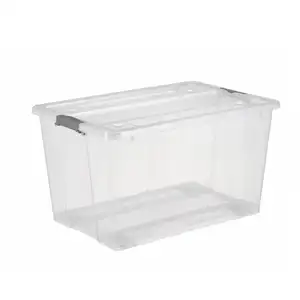


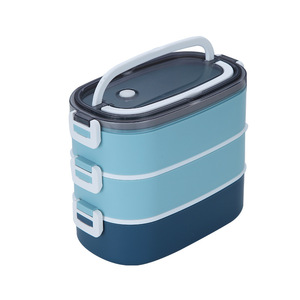
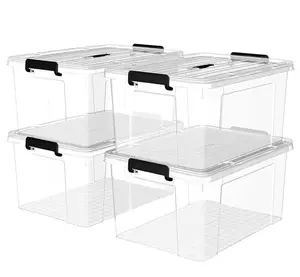
About stackable containers producer
Where to Find Stackable Containers Producers?
China leads global production of stackable containers, with manufacturing hubs concentrated in Guangdong, Zhejiang, and Jiangsu provinces. These regions host integrated plastic and metal fabrication ecosystems, enabling high-volume output and rapid prototyping. Guangdong alone accounts for over 45% of China’s industrial container exports, supported by Shenzhen and Dongguan’s advanced injection molding infrastructure and proximity to major ports.
Suppliers in these clusters benefit from vertically aligned supply chains—raw material sourcing (polypropylene, HDPE, stainless steel), mold development, and automated assembly are typically co-located within 30–60km. This integration reduces component lead times by 20–35% compared to decentralized markets. Buyers gain access to facilities capable of monthly outputs exceeding 100,000 units, with standard lead times averaging 25–35 days for bulk orders. Cost advantages range from 18–28% due to localized tooling, energy-efficient production lines, and economies of scale.
How to Choose Stackable Containers Producers?
Implement structured evaluation criteria to ensure supplier reliability and product consistency:
Quality Management Systems
Confirm ISO 9001 certification as a baseline for process control. For food-grade or pharmaceutical applications, demand compliance with FDA 21 CFR Part 177, EU 10/2011, or RoHS directives. Request test reports for material composition, load-bearing capacity (static/dynamic), and stacking strength under ASTM D6055 or ISTA 3A protocols.
Production Capacity Assessment
Evaluate key operational metrics:
- Minimum factory footprint of 3,000m² to support continuous molding lines
- In-house mold design and CNC machining units for customization agility
- Automated blow or injection molding lines with monthly capacity >50,000 units
Validate throughput claims via production line videos and historical shipment records. Target suppliers with on-time delivery performance exceeding 97%.
Procurement Risk Mitigation
Utilize secure payment structures such as letter of credit or escrow arrangements until post-arrival inspection clearance. Prioritize producers with verifiable export experience to your target market—documentation should include past bills of lading, import compliance records, and customer references. Pre-shipment sampling is critical; assess dimensional accuracy, lid fit, corner durability, and labeling precision before full-scale production.
What Are the Key Considerations for Stackable Containers Sourcing?
| Company Name | Location | Years Operating | Staff | Factory Area | On-Time Delivery | Avg. Response | Ratings | Reorder Rate |
|---|---|---|---|---|---|---|---|---|
| No supplier data available | - | - | - | - | - | - | - | - |
Market Insight
In absence of specific supplier data, procurement focus should shift to capability verification through audit documentation and sample validation. Regional specialization remains a strategic factor: Zhejiang excels in precision plastic molding for logistics and retail sectors, while Jiangsu offers hybrid solutions combining metal frames with polyethylene bodies for heavy-duty industrial use. Emphasis should be placed on mold ownership terms—ensure buyers retain intellectual property rights for custom designs. Suppliers offering modular configurations (nesting variants, foldable options, RFID integration) demonstrate higher engineering maturity and adaptability for complex supply chains.
FAQs
What certifications should stackable container producers have?
Core certifications include ISO 9001 for quality management. Additional standards depend on application: FDA or EU 10/2011 for food contact, ISO 22000 for hygiene-sensitive environments, and RoHS for electronics logistics. Structural performance should align with ASTM or ISTA testing benchmarks.
What is the typical MOQ and lead time?
Standard MOQ ranges from 500–1,000 units for stock models. Custom designs may require 2,000+ units depending on complexity. Lead time averages 25–35 days post-sample approval, including production and pre-shipment preparation.
Can stackable containers be customized?
Yes, reputable producers support dimensional adjustments, color coding, branding (debossed logos, labels), and functional modifications such as ventilation slots, dividers, or castor fittings. Full customization requires CAD specifications and mold development timelines of 10–18 days.
Do manufacturers provide load and stacking test data?
Established suppliers provide structural test reports, including static load capacity (typically 2,000–4,000kg per unit), dynamic load during transport, and safe stacking height under long-term storage conditions. Third-party lab verification enhances credibility.
How to handle international shipping and customs?
Most producers offer FOB or CIF shipping terms with coordination of sea freight consolidation. Confirm HS codes (e.g., 3923.10 for plastic containers) and destination-specific import requirements. Palletization and container loading plans should be reviewed pre-shipment to optimize space utilization.





