Table Of Elements List





 1/3
1/3


 1/3
1/3




 1/3
1/3




 1/3
1/3


 1/34
1/34



 0
0







 1/3
1/3




 1/15
1/15


 1/3
1/3


 0
0


 1/3
1/3


 1/3
1/3


 1/3
1/3




 0
0






 1/3
1/3


 1/3
1/3




 0
0


 1/3
1/3


 1/3
1/3





 1/3
1/3
About table of elements list
Where to Find Table of Elements List Suppliers?
No active industrial suppliers are currently identified for the production or distribution of physical "table of elements list" products in major manufacturing regions. Unlike machinery or material goods, periodic table displays—commonly used in educational, laboratory, and institutional settings—are typically categorized as informational or printed materials rather than industrial commodities. As such, they are often produced by specialized printing firms, educational equipment providers, or digital content developers rather than traditional manufacturing suppliers.
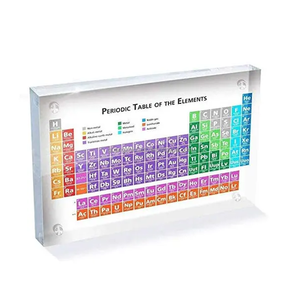
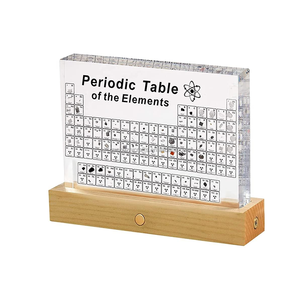
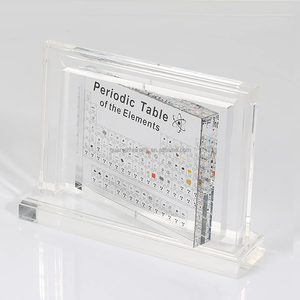
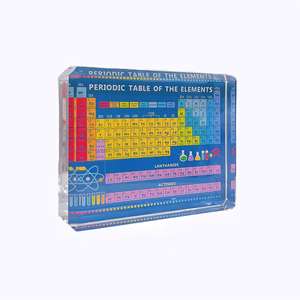
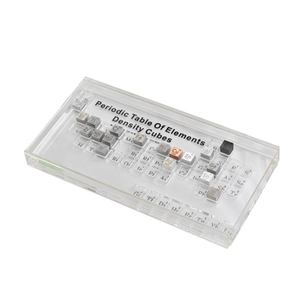
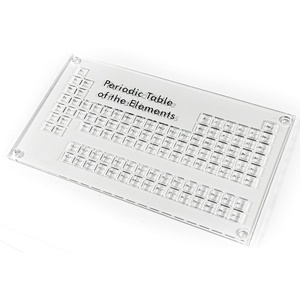
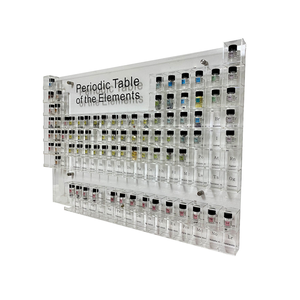
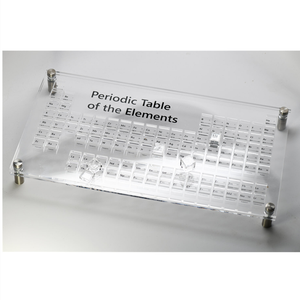
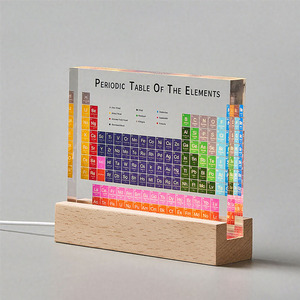
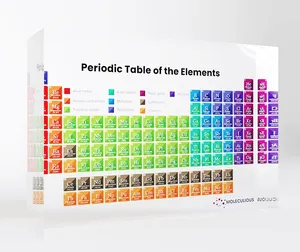
These items may be fabricated using laminated paper, PVC, aluminum composite, or acrylic substrates, with printing techniques including UV flatbed, screen, or digital offset methods. Production is frequently integrated into broader educational product lines, with minimal dedicated supply chain infrastructure. Lead times for standard formats average 5–10 days, with customization options limited to size, language, and design layout. MOQs vary widely, ranging from single-unit orders to bulk batches of 100+ units depending on format and supplier policy.
How to Choose Table of Elements List Suppliers?
Given the absence of verified industrial manufacturers, procurement focus should shift toward product specifications and vendor reliability in delivering accurate, durable, and compliant materials:
Material and Durability Standards
Specify substrate type based on application environment—laminated paper for indoor classrooms, PVC or polycarbonate for labs requiring chemical resistance. For wall-mounted installations, aluminum-backed panels offer enhanced rigidity. Verify UV resistance and anti-yellowing properties for long-term display integrity.
Content Accuracy and Compliance
Confirm that the periodic table adheres to the latest IUPAC (International Union of Pure and Applied Chemistry) standards, including atomic numbers, symbols, electron configurations, and updated atomic weights. For EU markets, ensure compliance with REACH and RoHS directives if plastic components are used. Educational institutions may require alignment with national curriculum frameworks.
Customization and Logistics
Assess supplier capability to modify language, add annotations (e.g., electronegativity trends), or integrate QR codes linking to interactive digital versions. Evaluate packaging methods for safe international shipping, particularly for rigid formats. Digital delivery options (print-ready PDFs or SVG files) may reduce lead times and shipping costs for global buyers.
What Are the Best Table of Elements List Suppliers?
No industrial-grade suppliers are currently documented in the provided dataset for this product category. The absence of structured manufacturing entities indicates a fragmented market dominated by small-format printers, educational catalog vendors, and online retailers rather than scalable industrial producers. Buyers should prioritize vendors offering verifiable material certifications, high-resolution print specifications (minimum 300 DPI), and traceable quality control processes.
Performance Analysis
In the absence of measurable factory data, performance evaluation must rely on product-level verification. Request physical or digital samples to assess color accuracy, text legibility, and material finish. Cross-reference vendor claims with independent reviews, focusing on shipment consistency and adherence to specified dimensions and content. Institutions procuring at scale should consider partnering with certified educational equipment distributors who maintain audit trails and after-sales support channels.
FAQs
How to verify table of elements list supplier reliability?
Evaluate suppliers through sample testing, review of material safety data sheets (MSDS) for printed components, and validation of claimed certifications. For digital files, confirm compatibility with local printing standards and resolution adequacy for large-format reproduction.
What is the average sampling timeline?
Physical samples typically ship within 3–7 business days; digital proofs can be delivered within 24–48 hours. Custom designs may require an additional 3–5 days for layout approval.
Can suppliers ship table of elements lists worldwide?
Yes, most vendors support international shipping. Rigid formats are usually shipped via express courier or consolidated freight depending on volume. Digital versions eliminate shipping constraints entirely.
Do manufacturers provide free samples?
Some suppliers offer free digital samples or low-cost printed versions, especially for institutional buyers. Physical samples may incur nominal fees, which are sometimes waived upon order confirmation.
How to initiate customization requests?
Submit detailed requirements including preferred layout (long-form, wide-form, spiral), language, font size, and any supplementary data fields (e.g., oxidation states, isotopes). Reputable vendors will return proof drafts within 72 hours for approval prior to production.





