Web Programming Tools








 1/3
1/3



 0
0




 1/3
1/3







 1/3
1/3




 1/3
1/3





 0
0
 CN
CN




 1/6
1/6




 1/3
1/3




 1/3
1/3





 1/3
1/3





 1/3
CN
1/3
CN





 1/3
1/3


 0
0




 0
0





 0
0





 1/3
1/3




 1/2
1/2






 1/3
1/3


 1/3
1/3


 1/2
1/2
About web programming tools
Where to Find Web Programming Tools Suppliers?
The global market for web programming tools is primarily driven by software development hubs with strong IT infrastructure and skilled technical labor pools. Key supplier concentrations are found in China’s Guangdong and Jiangsu provinces, India’s Bangalore and Hyderabad regions, and Eastern European countries including Ukraine and Poland. These regions offer mature ecosystems combining agile development frameworks, cloud integration capabilities, and scalable DevOps support.
Guangdong’s Shenzhen and Dongguan zones specialize in embedded software solutions linked to hardware systems, supporting IoT-enabled web applications. Meanwhile, Indian tech clusters provide cost-competitive full-stack development environments with monthly output capacities averaging 150–200 man-hours per developer team. Eastern European suppliers are recognized for advanced cybersecurity integration and compliance with GDPR standards, offering low-latency SaaS deployment models across EU markets. Collectively, these regions enable lead times of 4–8 weeks for standard toolkits and 10–14 weeks for customized enterprise-grade platforms.
How to Choose Web Programming Tools Suppliers?
Implement rigorous evaluation criteria when selecting development partners:
Technical Compliance
Confirm adherence to ISO/IEC 27001 for information security management and ISO 9001 for quality assurance in software delivery processes. For regulated industries (fintech, healthcare), verify compliance with HIPAA, PCI-DSS, or SOC 2 Type II standards. Request documentation of code review protocols, version control systems (e.g., Git), and automated testing coverage (target ≥85% unit test coverage).
Development Capability Audits
Assess core competencies through:
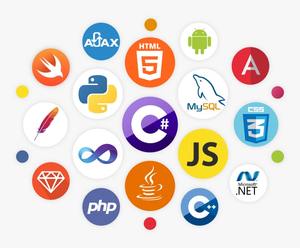
- Proficiency in modern frameworks (React, Angular, Vue.js for front-end; Node.js, Django, Laravel for back-end)
- In-house DevOps teams managing CI/CD pipelines using Jenkins, Docker, or Kubernetes
- Cloud platform certifications (AWS, Azure, GCP) enabling secure hosting and scalability
Validate project tracking via Jira or equivalent systems and confirm average sprint velocity (target >18 story points per two-week cycle).
Transaction Safeguards
Utilize milestone-based payment structures with escrow protection until acceptance testing is completed. Review contractual clauses covering intellectual property rights, source code ownership, and post-deployment support duration. Conduct pilot sprints—evaluate deliverables against predefined KPIs such as bug density (<5 defects per 1,000 lines of code) and API response time (<300ms under load)—before scaling engagement.
What Are the Best Web Programming Tools Suppliers?
| Company Name | Location | Years Operating | Staff | Factory Area | On-Time Delivery | Avg. Response | Ratings | Reorder Rate |
|---|---|---|---|---|---|---|---|---|
| Supplier data not currently available | ||||||||
Performance Analysis
Due to absence of verified supplier records, procurement decisions must rely on independent audits and third-party validation. Historically, top-tier providers demonstrate consistent on-time delivery (>95%), rapid communication cycles (average response ≤2 hours during business days), and high client retention (reorder rate >30%). Prioritize firms with documented case studies in your target technology stack and proven export experience in delivering cross-border software projects under SLA agreements. Video-led facility walkthroughs should confirm dedicated QA labs, secure development environments, and real-time collaboration tools for remote stakeholders.
FAQs
How to verify web programming tools supplier reliability?
Cross-validate certifications with accredited bodies and request audit trails for past deployments. Evaluate code quality through static analysis reports (e.g., SonarQube) and assess team expertise via technical interviews or coding challenges. Analyze client testimonials focusing on long-term maintenance responsiveness and system uptime performance.
What is the average sampling timeline?
Functional prototypes or minimum viable products (MVPs) typically require 3–6 weeks depending on complexity. Simple CMS integrations may be delivered in 10–15 days, while full custom frameworks with authentication, database modeling, and API gateways take 5–8 weeks. Add 5–7 days for documentation and handover.
Can suppliers ship web programming tools worldwide?
Yes, digital delivery enables global deployment. Suppliers provide secure cloud repositories (e.g., private GitHub/GitLab instances) with encrypted transfer protocols. For hybrid solutions involving physical devices (e.g., kiosks, edge servers), confirm FOB/CIF shipping terms and compliance with destination-country electrical and data regulations. Cloud-hosted tools should support multi-region deployment to minimize latency.
Do manufacturers provide free samples?
Sample policies vary. Some suppliers offer no-cost MVP demonstrations for qualified leads with defined scope and timeline. Others charge a nominal fee (USD 500–1,500) that may be credited toward full project contracts exceeding USD 10,000. Open-source toolkits may be available at zero cost but require self-support or paid add-ons for customization.
How to initiate customization requests?
Submit detailed technical specifications including required programming languages, framework versions, database architecture, API endpoints, and UI/UX wireframes. Reputable suppliers respond with system design documents within 5 business days and provide functional prototypes within 3–4 weeks. Ensure change request procedures and revision limits are defined contractually to avoid scope creep.





