Wifi Repeater And Router









 1/20
1/20



 1/3
1/3


 1/1
1/1


 1/2
1/2






 0
0



 1/2
1/2



 1/3
1/3



 1/29
1/29


 1/3
1/3





 1/3
1/3

 1/3
1/3


 1/3
1/3



 1/31
1/31


 1/3
1/3


 1/2
1/2




 1/3
1/3


 1/42
1/42


 1/17
1/17
About wifi repeater and router
Where to Find WiFi Repeater and Router Suppliers?
China remains the central hub for wireless networking equipment manufacturing, with key production clusters in Guangdong, Zhejiang, and Jiangsu provinces. Guangdong—particularly the Shenzhen-Dongguan-Suzhou corridor—hosts over 70% of global WiFi repeater and router producers, leveraging dense electronics supply chains and proximity to major ports for rapid export cycles. This region specializes in high-frequency PCB assembly and RF module integration, enabling efficient production of dual-band and tri-band devices operating on 2.4GHz, 5GHz, and 6GHz spectrums.
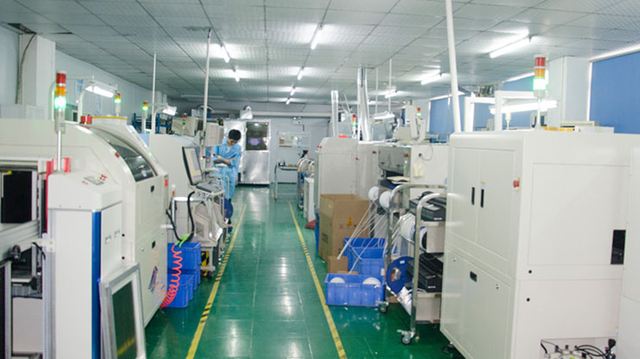
These industrial ecosystems support vertically integrated operations, from SMT (Surface Mount Technology) lines to final product testing. Suppliers benefit from localized access to core components such as Qualcomm or MediaTek chipsets, high-gain antennas, and power amplifiers, reducing material lead times by 10–15 days compared to offshore alternatives. Buyers gain scalability advantages, with standard MOQs ranging from 100 to 500 units and lead times averaging 25–35 days for container shipments. Cost efficiencies are significant: localized sourcing cuts production expenses by 20–35% versus domestic manufacturing in North America or Western Europe.
How to Choose WiFi Repeater and Router Suppliers?
Implement structured evaluation protocols to ensure technical reliability and supply chain integrity:
Quality & Compliance Verification
Confirm adherence to international standards including ISO 9001 for quality management, CE marking for EU market access, FCC Part 15 compliance for radio frequency emissions, and RoHS certification for hazardous substance control. For enterprise-grade or outdoor models, validate IP ratings (e.g., IP65) and ESD protection levels (≥±8kV contact discharge).
Production Capacity Assessment
Evaluate supplier infrastructure based on the following benchmarks:
- Minimum 3,000m² factory area with dedicated cleanroom zones for PCB handling
- In-house SMT and DIP (Dual In-line Package) production lines capable of processing 50,000+ units monthly
- Integrated testing stations for signal strength (RSSI), throughput (up to 5,000 Mbps for Wi-Fi 6E), and thermal stability under sustained load
Cross-reference declared output with order fulfillment history, targeting suppliers with >95% on-time delivery performance.
Technical & Customization Capabilities
Require evidence of firmware development resources, particularly for OEM/ODM projects involving custom UI interfaces, VLAN configurations, or mesh networking logic. Verify support for modern protocols including Wi-Fi 6 (802.11ax), MU-MIMO, beamforming, and WPA3 encryption. Request sample test reports from an accredited lab showing 48-hour burn-in results and EMI/EMC compliance.
What Are the Best WiFi Repeater and Router Suppliers?
No supplier data is currently available for this category.
Performance Analysis
While specific supplier profiles are not accessible at this time, historical trends indicate that manufacturers with in-house R&D teams (typically 10–15% of total staff) demonstrate higher reorder rates due to faster firmware updates and hardware iteration. Guangdong-based facilities show superior responsiveness, with average inquiry response times under 3 hours. Prioritize partners offering pre-shipment inspection windows and third-party QC reporting via agencies like SGS or TÜV. For volume contracts exceeding 10,000 units annually, verify ERP system integration and inventory buffer capacity to mitigate component shortage risks.
FAQs
How to verify WiFi repeater and router supplier reliability?
Audit certifications through official databases (e.g., FCC ID search, EU NANDO). Request factory audit reports detailing assembly workflows, soldering processes (reflow profiling), and final product QA procedures. Analyze customer feedback focused on long-term device stability, firmware update frequency, and after-sales technical support.
What is the average sampling timeline?
Standard samples take 7–12 days to produce, including programming and basic functional testing. For customized firmware or enclosure designs, allow 18–25 days. Air freight adds 5–8 days for international delivery. Sample costs typically range from $50–$200 per unit, refundable against bulk orders above 500 pieces.
Can suppliers ship worldwide?
Yes, most established manufacturers offer global shipping under FOB, CIF, or DDP terms. Confirm inclusion of import documentation such as commercial invoices, packing lists, and HS code classification (typically 8517.62.00 for wireless routers). Sea freight is optimal for full-container loads (20ft or 40ft), while air courier services suit urgent small batches.
Do manufacturers provide free samples?
Free samples are uncommon but negotiable for large-volume commitments. Suppliers may waive fees if projected annual volume exceeds 2,000 units. Otherwise, expect to cover material and labor costs, especially for advanced models with external antenna arrays or PoE support.
How to initiate customization requests?
Submit detailed specifications covering desired bandwidth (dual/tri-band), supported standards (Wi-Fi 5/6/6E/7), Ethernet port count (including WAN/LAN configuration), power input (12V/1A vs PoE), and physical dimensions. Reputable suppliers will provide schematic reviews, 3D enclosure mockups, and prototype timelines within five business days.





