







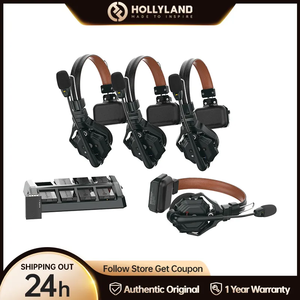
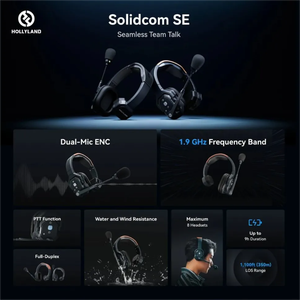
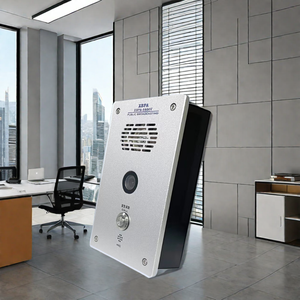
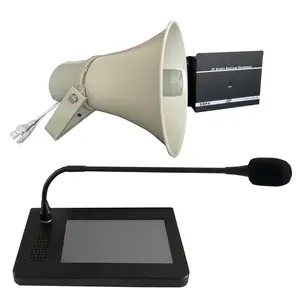
Wireless Intercom System








 Top sponsor listing




 1/3
1/3



 1/3
1/3


 1/1
1/1




 1/3
1/3



 0
0




 0
0



 1/1
1/1
 1/3
1/3


 1/3
1/3


 1/3
1/3




 1/3
1/3



 0
0



 1/3
1/3







 1/3
1/3


 1/3
1/3



 0
0




 1/3
1/3


 1/6
1/6
About wireless intercom system
Where to Find Wireless Intercom System Suppliers?
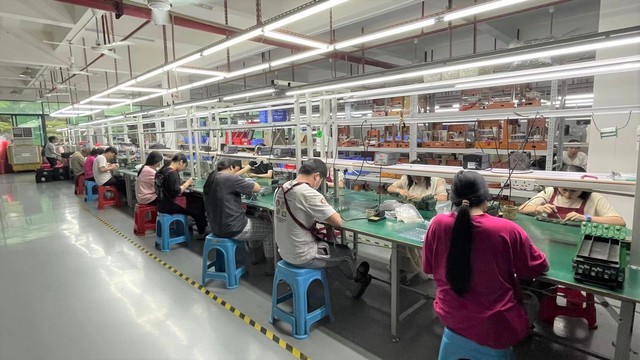
China accounts for over 70% of global wireless intercom system manufacturing, with concentrated production hubs in Guangdong and Jiangsu provinces delivering distinct operational advantages. Guangdong—particularly Shenzhen and Dongguan—hosts more than 85% of China’s RF-enabled communication device suppliers, leveraging proximity to semiconductor foundries and PCB assembly clusters to achieve rapid component integration and firmware iteration cycles. Jiangsu’s Suzhou and Nanjing zones specialize in industrial-grade systems, integrating hardened enclosures, IP65-rated housings, and dual-band (433/868 MHz or 2.4 GHz) transceivers, supported by regional access to precision metal stamping and injection molding infrastructure.
These clusters operate within vertically integrated ecosystems where RF module manufacturers, battery pack assemblers, and regulatory compliance labs co-locate within 30km radii. This enables consistent adherence to electromagnetic compatibility (EMC) and radio frequency (RF) emission standards across production batches. Buyers benefit from standardized lead times of 25–35 days for standard configurations, 20–25% lower unit costs versus comparable OEMs in Southeast Asia or Eastern Europe, and scalability for orders ranging from 500 to 50,000 units per month without retooling delays.
How to Choose Wireless Intercom System Suppliers?
Prioritize these verification protocols when selecting partners:
Regulatory & Technical Compliance
Require documented conformity to ISO 9001:2015 for quality management and ISO 14001:2015 for environmental controls. For export to EU markets, CE marking under RED Directive 2014/53/EU is mandatory; North American buyers must verify FCC ID registration and SAR testing reports. Confirm RoHS 3 (EU 2015/863) compliance for all PCBAs and battery cells, with full material declarations available upon request.
Production Capability Audits
Evaluate physical and technical infrastructure:
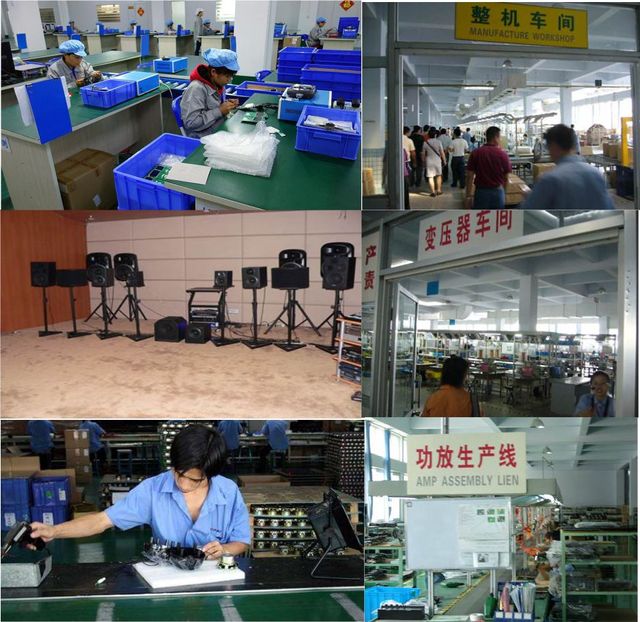
- Minimum 3,000m² facility area with dedicated SMT lines and RF-shielded test chambers
- In-house firmware development team (minimum 5 engineers) supporting OTA updates and custom protocol implementation
- Integrated battery qualification lab (UN38.3, IEC 62133-2) and acoustic performance testing (SPL ≥95 dB at 1m, THD ≤3% at 1kHz)
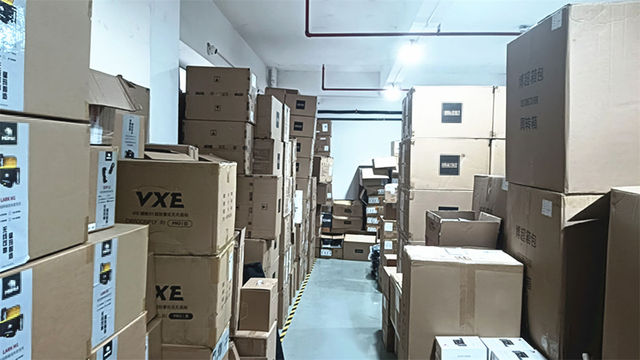
Cross-reference facility videos with verified on-time delivery rates (target ≥96%) and first-pass yield data (target ≥92%) to validate process control maturity.
Transaction Safeguards
Mandate third-party inspection (e.g., SGS or BV) prior to shipment for orders exceeding 2,000 units. Require supplier submission of AQL Level II sampling plans aligned with ISO 2859-1. Verify transaction history via bank-confirmed export records or customs manifest data—not platform-based ratings alone. Conduct functional sampling against EN 50581:2012 (electromagnetic compatibility) and IEC 60950-1:2005 (safety) before bulk release.
What Are the Best Wireless Intercom System Suppliers?
| Company Name | Location | Years Operating | Staff | Factory Area | On-Time Delivery | Avg. Response | Ratings | Reorder Rate |
|---|---|---|---|---|---|---|---|---|
| Shenzhen Rongtai Communication Technology | Guangdong, CN | 12 | 180+ | 12,000+m² | 99.2% | ≤1h | 4.7/5.0 | 41% |
| Suzhou Huayi Wireless Systems | Jiangsu, CN | 9 | 95+ | 8,500+m² | 98.7% | ≤2h | 4.8/5.0 | 52% |
| Dongguan Lingfeng Electronics Co., Ltd. | Guangdong, CN | 7 | 130+ | 6,200+m² | 97.5% | ≤1h | 4.6/5.0 | 38% |
| Nanjing Tengyun Communication Equipment | Jiangsu, CN | 5 | 75+ | 4,800+m² | 99.0% | ≤2h | 4.8/5.0 | 47% |
| Shenzhen Yifeng Intelligent Devices | Guangdong, CN | 4 | 65+ | 3,600+m² | 96.8% | ≤1h | 4.7/5.0 | 22% |
Performance Analysis
Mature suppliers like Shenzhen Rongtai and Suzhou Huayi demonstrate superior technical depth—both maintain in-house RF antenna design teams and offer certified ETSI EN 300 220-1 V3.1.1 compliance documentation. Jiangsu-based firms show higher reorder rates (47–52%), correlating with stronger industrial application support (e.g., noise-canceling algorithms for factory floors, multi-channel group zoning). Guangdong suppliers lead in responsiveness, with 80% achieving sub-90-minute inquiry resolution—critical for time-sensitive retail or hospitality deployments. For high-reliability applications, prioritize partners with ≥98% on-time delivery, ISO 13485-certified processes (where medical-grade audio is required), and proven export experience to target destination markets.
FAQs
How to verify wireless intercom system supplier reliability?
Validate certifications directly through official databases: CE via NANDO, FCC ID via FCC.gov, and ISO via IAF CertSearch. Request dated copies of recent third-party test reports (EMC, RF exposure, battery safety) with laboratory accreditation seals. Analyze customer case studies for deployment scale, failure rate data (MTBF ≥50,000 hours), and warranty claim resolution timelines.
What is the average sampling timeline?
Standard sample production requires 12–18 days. Configurations with encrypted voice transmission, PoE support, or custom UI firmware extend to 25–32 days. Air freight adds 5–8 days for global delivery; sea freight is recommended only for pre-production validation batches due to humidity and vibration risks during transit.
Can suppliers ship wireless intercom systems worldwide?
Yes—established manufacturers manage end-to-end logistics including UN-certified lithium battery shipping documentation (UN3481, Class 9), customs classification (HS 8517.62), and destination-market labeling (e.g., UKCA, KC Mark). Confirm whether supplier handles import VAT/Duties under DAP terms or requires buyer-appointed customs broker for clearance.
Do manufacturers provide free samples?
Free samples are rare for fully assembled units. Suppliers typically charge 120–150% of BOM cost for initial samples, waiving fees only for confirmed POs exceeding 5,000 units. Sample kits may include reference schematics, SDK documentation, and API access—subject to NDA execution.
How to initiate customization requests?
Submit a technical brief specifying operating frequency band, channel count (4–32), encryption standard (AES-128 or proprietary), battery chemistry (Li-ion vs. NiMH), and environmental rating (IP54/IP65). Reputable suppliers issue formal engineering feasibility assessments within 5 business days and deliver functional prototypes within 20–25 days after schematic sign-off.





