
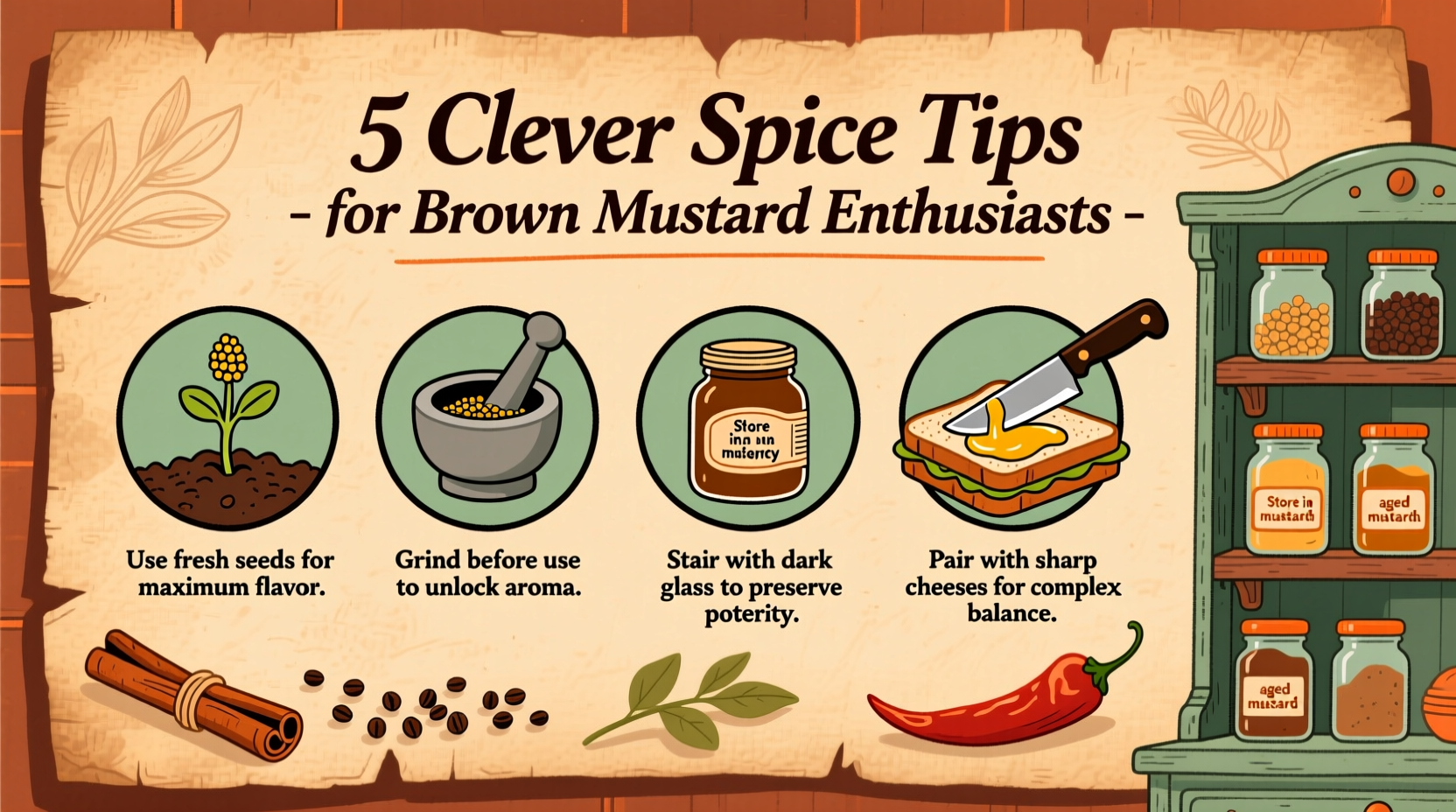
Brown mustard (Brassica juncea) is more than just a pungent seed tucked into spice jars—it’s a cornerstone of global flavor systems, from Indian curries to French vinaigrettes. While many home cooks treat it as a background note, seasoned culinary practitioners know that mastering brown mustard unlocks layers of complexity: sharp heat, nutty depth, and aromatic volatility that can elevate or ruin a dish in seconds. For those who appreciate its bold character, understanding how to manipulate its chemistry and application is essential. This guide delivers five expert-level techniques that go beyond basic toasting and grinding—revealing how temperature, timing, pairing, and preparation transform brown mustard from a simple spice into a precision tool in the kitchen.
Definition & Overview
Brown mustard refers to the small, round seeds of the Brassica juncea plant, native to the Himalayan region of northern India and now cultivated across South Asia, Canada, and Eastern Europe. It belongs to the Brassicaceae family, which includes cabbage, radish, and horseradish—all known for their glucosinolate compounds that generate pungency when activated. Unlike yellow mustard (Brassica alba), which is milder and often used in American-style condiments, brown mustard packs a sharper, spicier bite with a deeper earthiness and subtle bitterness. Its flavor unfolds dynamically during cooking, making it a favorite in tempering (tadka), pickling, spice blends, and fermented sauces. In both whole and ground forms, it plays dual roles—as a textural element and a volatile flavor catalyst.
Key Characteristics
| Characteristic | Description |
|---|---|
| Flavor Profile | Sharp, pungent, slightly bitter, with warm nuttiness and a lingering sinus-clearing heat. |
| Aroma | Peppery and sulfurous when raw; becomes roasted, nutty, and aromatic when heated in oil. |
| Color/Form | Small, spherical seeds ranging from dark brown to reddish-brown; also available as coarse or fine powder. |
| Heat Level | Moderate to high—activates upon hydration or heating; significantly hotter than yellow mustard but less intense than black mustard (B. nigra). |
| Culinary Function | Used for tempering, pickling, spice blending (e.g., panch phoron), emulsified sauces, and fermentation. |
| Shelf Life | Whole seeds: 3–4 years in cool, dark storage. Ground form: 6–12 months due to rapid oxidation of volatile oils. |
Practical Usage
Brown mustard’s power lies not just in its presence, but in *how* and *when* it's introduced to a dish. Because its pungency stems from an enzymatic reaction—myrosinase breaking down sinigrin into allyl isothiocyanate (the same compound in wasabi)—its behavior changes dramatically based on moisture, heat, and pH. Understanding this allows precise control over flavor development.
In Indian cuisine, brown mustard seeds are commonly used in tempering: heated in oil until they pop, releasing a smoky, toasted aroma that infuses the entire dish. This technique, known as tadka, is foundational in dals, chutneys, and vegetable stir-fries. The popping signals the moment when internal moisture turns to steam, rupturing the seed coat and dispersing flavor. However, underheating leaves them raw and overly harsh; overheating burns them, introducing acrid bitterness. The ideal window is brief—about 30 to 45 seconds in medium-hot oil.
For wet applications like pickles or marinades, brown mustard behaves differently. When combined with cold liquid—especially vinegar or water—the myrosinase enzyme activates fully, producing maximum heat. This is why uncooked mustard pastes can be explosively sharp. To moderate this effect, use warm (not boiling) liquid, which denatures the enzyme gradually, yielding a rounded, complex pungency rather than a nasal punch.
Pro Tip: For balanced heat in homemade mustard sauce, mix brown mustard powder with warm water (around 140°F / 60°C), let sit for 10 minutes, then stir in vinegar. The warmth tames the enzyme without killing it entirely, resulting in layered heat that builds slowly.
Variants & Types
Brown mustard appears in several forms, each suited to specific culinary uses. Choosing the right variant ensures optimal texture, shelf life, and flavor delivery.
- Whole Seeds: Ideal for tempering, pickling, and slow-cooked dishes. Retain freshness longest and provide audible/textural feedback during cooking (the \"pop\"). Common in South Indian sambar, Bengali shukto, and German sauerkraut.
- Cracked Seeds: Mechanically broken to increase surface area. Used in rubs, bread coatings, and quick-pickles where faster flavor release is desired without full grinding.
- Coarse Ground (Rai Powder): Offers rustic texture in spice blends and doughs (e.g., stuffed parathas). More stable than fine powder but still degrades within a year.
- Fine Powder: Maximizes enzymatic activity and dissolves easily in liquids. Best for emulsified sauces, dressings, and commercial condiments. Highly perishable—store in the freezer for longevity.
- Defatted Meal: Used industrially in mustard production; lacks oil content but retains pungency. Rare in home kitchens but found in some artisanal spice mixes.
Additionally, regional cultivars influence performance. Indian-grown brown mustard tends to be smaller, darker, and hotter than Canadian or Russian varieties, which are often larger and slightly milder due to cooler growing climates. For authentic South Asian flavors, seek out imported Indian rai.
Comparison with Similar Ingredients
Brown mustard is frequently confused with yellow and black mustard, but each has distinct properties that affect usage and outcome.
| Feature | Brown Mustard | Yellow Mustard | Black Mustard |
|---|---|---|---|
| Botanical Name | Brassica juncea | Brassica alba | Brassica nigra |
| Heat Level | High | Low to moderate | Very high (most pungent) |
| Flavor Notes | Nutty, sharp, earthy | Mild, tangy, slightly sweet | Intense, fiery, floral |
| Common Use | Tadka, pickles, hot mustards | American yellow mustard, mild dressings | Traditional European mustards, ancient recipes |
| Oil Content | ~35% | ~30% | ~38% |
| Stability in Heat | Good (withstands tempering) | Poor (loses flavor quickly) | Fragile (burns easily) |
While substitutions are possible, they alter the final profile. Replacing brown mustard with yellow in a Bengali fish curry, for example, eliminates the characteristic heat bloom. Conversely, using black mustard in place of brown may overwhelm delicate ingredients. When substituting, adjust quantity by 25–30%: use less black mustard, more yellow.
Practical Tips & FAQs
How do I maximize flavor when tempering brown mustard seeds?
Use a heavy-bottomed pan and neutral oil with a high smoke point (like peanut or sunflower). Heat the oil to around 350°F (175°C)—test by dropping in one seed; it should sizzle and pop within seconds. Add the seeds in a single layer and cover with a splatter screen. Once 80% have popped (about 30 seconds), immediately add cumin or asafoetida if using, then pour over the dish. Delaying this step risks burning.
Can I toast brown mustard seeds before grinding?
Yes—and doing so transforms their character. Dry-toast in a skillet over medium heat for 2–3 minutes, stirring constantly, until fragrant and slightly darker. This enhances nuttiness and reduces raw bite. Grind while warm for maximum aroma retention. Store the powder in an airtight container in the freezer to preserve volatile oils.
Why does my homemade mustard get milder over time?
The pungency of mustard is unstable. Allyl isothiocyanate dissipates within 1–2 days at room temperature. To prolong heat, store mustard in a sealed jar in the refrigerator and acidify adequately with vinegar (minimum 5% acidity). Adding a thin layer of oil on top creates a barrier against oxidation.
What are the best pairings for brown mustard?
Brown mustard complements ingredients that balance or contrast its heat:
- Dairy: Yogurt, paneer, and ghee soften its sharpness (e.g., in raita or kadhi).
- Sweet Vegetables: Beets, carrots, and onions caramelize beautifully alongside tempered mustard.
- Legumes: Lentils and chickpeas absorb its flavor deeply, especially in slow-simmered dals.
- Acids: Vinegar, tamarind, and lemon juice highlight its brightness while stabilizing pH-sensitive enzymes.
- Spice Synergy: Combines well with turmeric, fenugreek, cumin, and chili for layered complexity.
Is brown mustard safe for long-term consumption?
Yes, in culinary amounts. However, excessive intake of raw mustard seeds may interfere with thyroid function due to goitrin, a breakdown product of glucosinolates. Cooking deactivates most of these compounds. Those with hypothyroidism should consume raw preparations sparingly.
Can I grow my own brown mustard for fresher spice?
Absolutely. Brassica juncea grows rapidly in temperate climates, maturing in 6–8 weeks. Harvest leaves early for salad greens (known as mustard greens); allow plants to bolt and produce seed pods for drying. Thresh by crushing pods and winnowing chaff. Freshly harvested seeds have superior oil content and pungency compared to store-bought.
Case Study: Fermented Mustard Paste from Assam
In northeastern India, traditional kashundi-style ferments combine brown mustard powder, water, salt, and green chilies, left to culture for 3–7 days. Natural lactic acid bacteria lower the pH, enhancing both preservation and flavor complexity. The result is a tangy, spicy condiment with umami depth—proof that microbial action can refine even the harshest spices.
“Brown mustard isn’t just heat—it’s timing. A second too soon, and it’s raw. A second too late, and it’s gone. Mastery is in the pause.”
— Chef Anjali Pathak, Culinary Instructor, Institute of Indian Culinary Arts
Summary & Key Takeaways
Brown mustard is a dynamic, chemically active spice whose impact depends on preparation method, timing, and context. To wield it effectively:
- Control activation through temperature: Use cold liquid for maximum heat, warm liquid for balanced pungency, and oil heat for nutty depth.
- Prefer whole seeds for longevity: Grind only what you need, and freeze excess powder to prevent rancidity.
- Master the tempering window: Pop the seeds in hot oil, but remove from heat the instant they swell and darken slightly.
- Pair strategically: Balance heat with dairy, sweetness, or acidity to create harmony in bold dishes.
- Respect regional differences: Choose Indian brown mustard for authenticity in South Asian cuisine; consider milder variants for subtler applications.
These five tips move beyond basic usage to reveal brown mustard as a responsive, intelligent ingredient—one that rewards attention and experimentation. Whether crafting a fiery pickle, a soothing dal, or a complex fermented sauce, understanding its science and tradition empowers better, bolder cooking. Keep a fresh jar of whole seeds on hand, experiment with hydration methods, and listen to the pop: that sound is the voice of flavor being released.




 浙公网安备
33010002000092号
浙公网安备
33010002000092号 浙B2-20120091-4
Comments
No comments yet. Why don't you start the discussion?