
In a world where personal style often collides with practical needs, the debate between chain bags and backpacks isn’t just about fashion—it’s about function. One dangles elegantly from your shoulder, turning heads at a café; the other carries your entire workday on your back without breaking a sweat. But when push comes to shove, which truly serves you better? And perhaps more importantly—does this choice even need to be so definitive?
The answer isn’t binary. It depends on your lifestyle, priorities, and what “useful” means to you. For some, usefulness is measured in carrying capacity and comfort. For others, it's confidence, versatility, or social context. Let’s examine both options not as rivals, but as tools designed for different jobs.
Defining Usefulness: What Are You Actually Carrying?
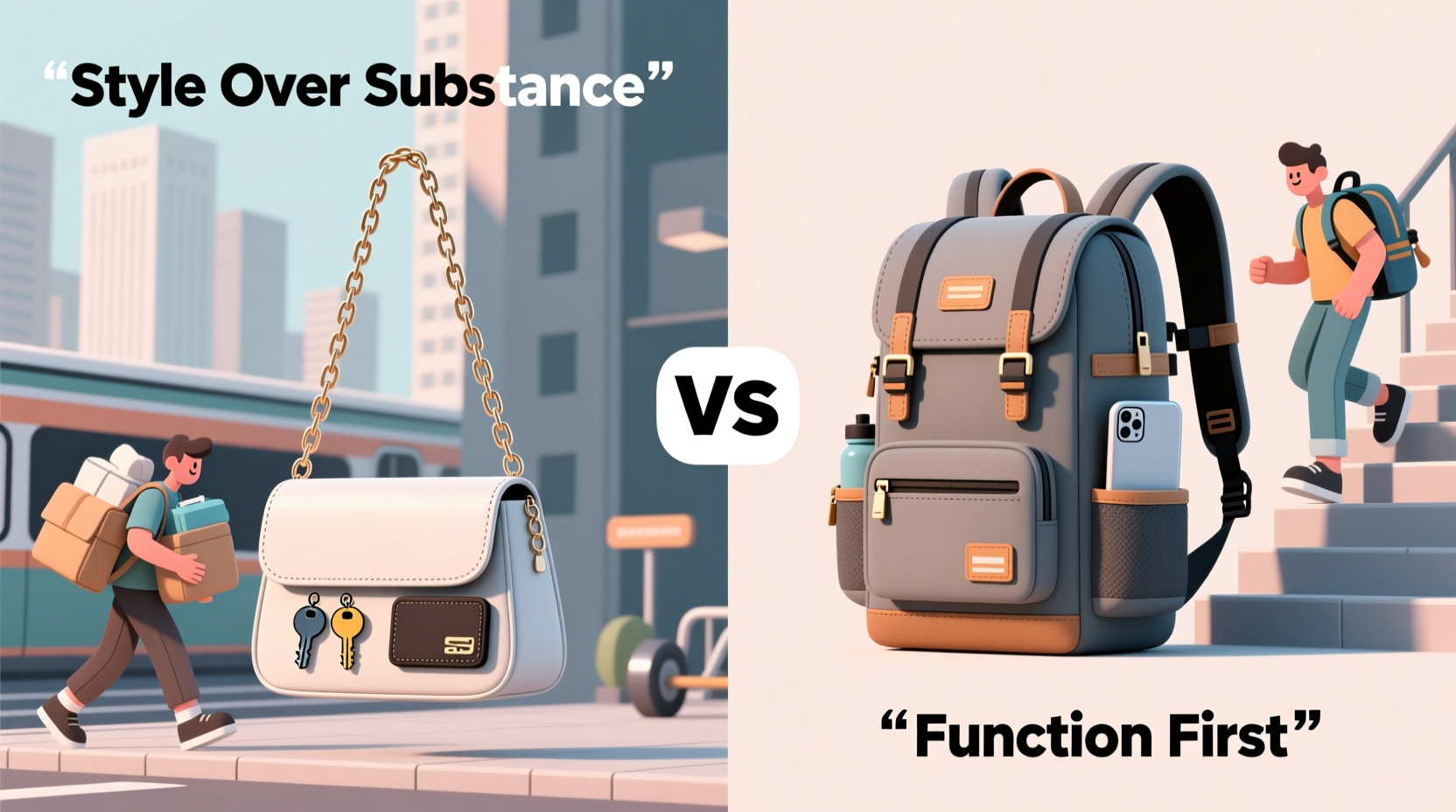
Before comparing styles, consider the contents. A minimalist who only needs a phone, wallet, and lip balm has vastly different requirements than someone hauling a laptop, gym clothes, lunch, and a water bottle.
Backpacks excel in volume and weight distribution. Their dual straps allow for balanced load-carrying, reducing strain on shoulders and spine. They typically offer multiple compartments, padding, and secure zippers—features engineered for utility.
Chain bags, by contrast, prioritize aesthetics and portability. They’re lightweight, easy to grab, and often serve as statement accessories. However, their thin chains can dig into shoulders, and their limited interior space restricts what you can realistically carry.
A Side-by-Side Comparison: Chain Bag vs. Backpack
| Feature | Chain Bag | Backpack |
|---|---|---|
| Carrying Capacity | Low (1–3 essential items) | High (5+ items, including laptops) |
| Comfort Over Time | Poor (strap pressure on shoulder) | Excellent (weight distributed evenly) |
| Fashion Flexibility | High (elevates casual or formal outfits) | Limited (some stylish models exist, but bulkier) |
| Safety & Security | Moderate (single strap, front carry only) | High (zippers, anti-theft designs, harder to snatch) |
| Durability | Variable (delicate chains, fragile materials) | Generally high (reinforced stitching, rugged fabrics) |
| Versatility Across Settings | Nightouts, brunch, shopping | Commuting, travel, outdoor activities, work |
This comparison reveals a fundamental truth: backpacks win on objective utility, while chain bags win on subjective appeal. Yet, usefulness isn’t solely about how much you can carry—it’s also about how the item integrates into your identity and environment.
When Each Option Shines: Real-World Scenarios
Let’s look at two contrasting days in the life of Sarah, a 32-year-old marketing consultant who splits her time between client meetings, coworking spaces, and evening events.
Scenario 1: Client Pitch Day
Sarah has a morning flight, a midday presentation, and dinner with stakeholders. She packs her laptop, charger, notebook, water bottle, jacket, and makeup touch-up kit. A sleek leather backpack lets her move through airports smoothly, keeps her gear organized, and doesn’t compromise professionalism. The chain bag? Left at home. It simply can’t handle the load.
Scenario 2: Friday Night Out
After work, Sarah meets friends for cocktails. She changes into a slip dress and wants something elegant but functional enough for her phone, cardholder, and lipstick. The backpack feels out of place. The chain bag, with its metallic sheen and compact profile, complements her outfit perfectly. It’s light, chic, and secure when worn crossbody.
“Functionality isn’t just about capacity—it’s about context. A bag that fits the moment is always useful, regardless of size.” — Lena Torres, Lifestyle Designer & Product Strategist
Does It Even Matter? Rethinking the Binary
The assumption that you must choose between a chain bag and a backpack assumes scarcity: that you can only own or use one type. But modern life rarely demands such rigidity. Most people don’t wear the same shoes to hike as they do to a wedding—and yet, we expect one bag to do everything.
The smarter approach? Build a rotation. Own both. Use each when it makes sense. This isn’t indecision—it’s strategic versatility.
Backpacks are tools for endurance and efficiency. Chain bags are tools for expression and elegance. Neither negates the other. Just as chefs own both a paring knife and a cleaver, your wardrobe can accommodate multiple functional roles.
How to Choose Based on Your Lifestyle
Instead of asking which bag is “better,” ask: “What kind of day am I having?” Here’s a step-by-step guide to help you decide:
- Inventory your daily carry. List every item you bring regularly—phone, keys, wallet, laptop, umbrella, etc.
- Assess your movement. Do you walk long distances? Ride a bike? Take public transport? These affect comfort needs.
- Evaluate your environment. Urban settings may require more security; formal events call for refined aesthetics.
- Consider duration. Will you be out for two hours or twelve? Longer durations favor ergonomic designs.
- Match to your outfit strategy. Are you dressing for impact or convenience?
If your list includes electronics, hydration, or fitness gear, lean toward a backpack. If your priority is looking polished with minimal contents, the chain bag earns its keep.
FAQ: Common Questions About Bag Utility
Can a chain bag be practical for everyday use?
For very light loads and short durations, yes. Some chain bags now come with adjustable straps, cushioned pads, or hybrid designs that improve comfort. However, extended wear often leads to shoulder fatigue. They’re best reserved for low-carry situations.
Are backpacks unprofessional in office settings?
Not anymore. Modern backpacks in neutral tones (black, navy, taupe) made from leather or technical fabrics are widely accepted in corporate environments. Brands like Tumi, Bellroy, and Raden have redefined the professional backpack as sleek and sophisticated.
Is it worth investing in a luxury backpack or chain bag?
Yes—if it aligns with frequent use. A $500 chain bag used once a month delivers less value than a $400 backpack used five days a week. Calculate cost-per-use to guide investment decisions.
Checklist: Choosing the Right Bag for Your Needs
- ✅ I know exactly what I carry daily
- ✅ I’ve considered my physical activity level
- ✅ I’ve assessed my typical environments (urban, office, casual, etc.)
- ✅ I’m not forcing a bag to fit a role it wasn’t designed for
- ✅ I’m open to owning multiple types for different purposes
- ✅ I prioritize long-term comfort over short-term style (or vice versa, intentionally)
Conclusion: Stop Choosing Sides—Start Choosing Smarter
The question isn’t whether chain bags or backpacks are more useful. The real issue is whether we’re honest about what we need versus what we want. Backpacks solve problems of load and endurance. Chain bags solve problems of image and occasion. Both have value—but only when applied appropriately.
It doesn’t matter which one you pick—as long as the choice is intentional. Stop trying to force a single bag to do everything. Instead, curate a small collection that reflects the variety of your life. That’s not excess. That’s intelligence.




 浙公网安备
33010002000092号
浙公网安备
33010002000092号 浙B2-20120091-4
Comments
No comments yet. Why don't you start the discussion?