
Frozen vegetables are a pantry staple for good reason: they’re convenient, affordable, and nutritionally comparable to fresh produce. But too often, soups made from frozen veggies fall flat—watery, bland, or one-dimensional in flavor. The solution isn’t more ingredients; it’s smarter spicing. With the right spice techniques, you can elevate a basic bag of mixed vegetables into a deeply aromatic, satisfying soup that tastes anything but frozen.
The key lies not just in *which* spices you use, but *how* you use them. Spices are not mere seasonings—they are catalysts for transformation. When applied with intention, they build layers of aroma, depth, and complexity that mask any perception of convenience food. This guide reveals five professional-grade spice strategies that chefs rely on to extract maximum flavor from humble ingredients. These are not random tips, but time-tested principles grounded in culinary science and sensory experience.
Why Spices Make All the Difference in Frozen Veggie Soups
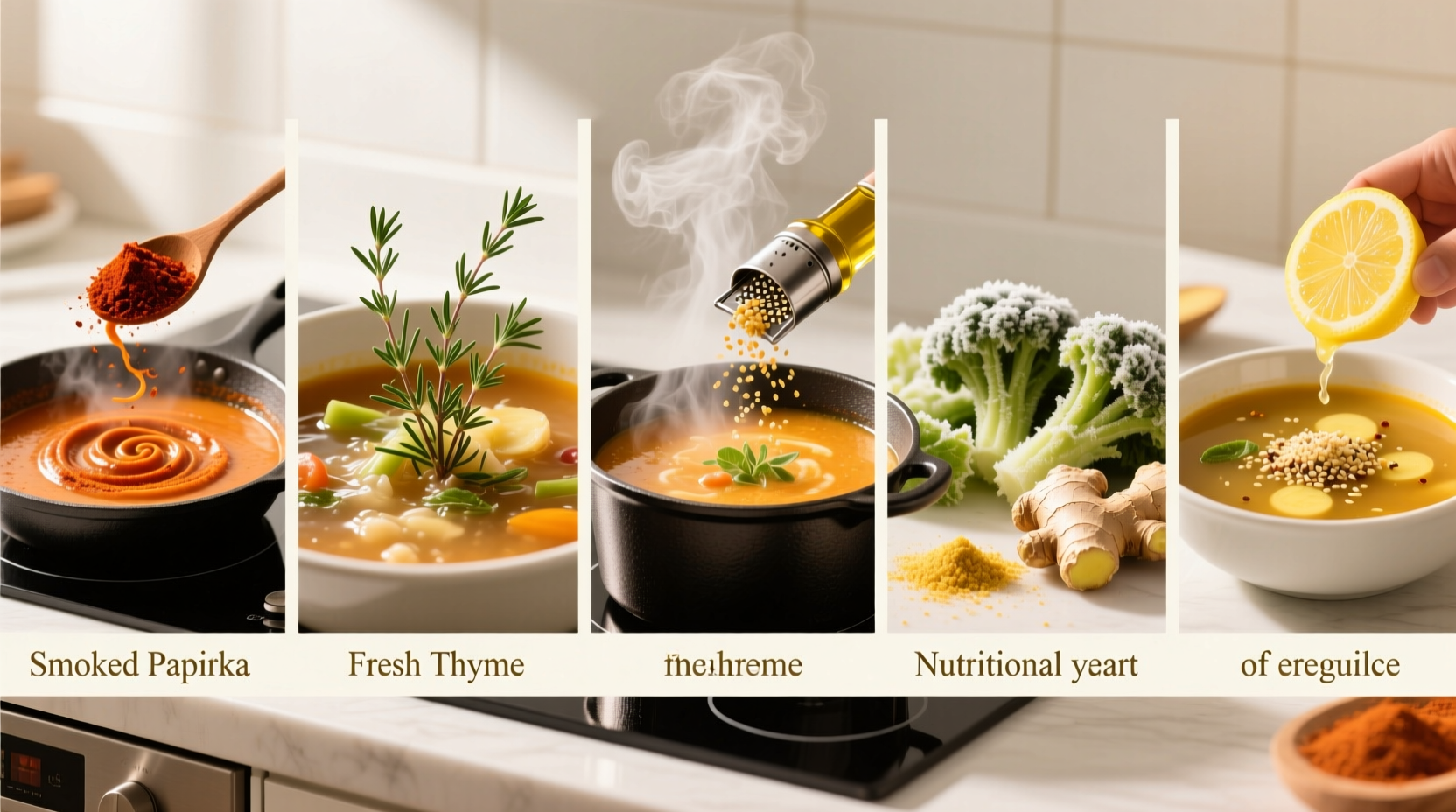
Frozen vegetables are typically blanched before freezing, which preserves nutrients but also removes some natural enzymes responsible for bright, fresh flavors. Additionally, thawing releases water, diluting taste and creating a thin broth. While salt and pepper help, they don’t address the root issue: lack of aromatic complexity.
Spices contain volatile oils, phenolic compounds, and pungent resins that survive freezing and reheating. When properly activated—through heat, fat, or timing—these compounds bloom into rich, multidimensional flavors. Unlike herbs, which degrade quickly, dried spices retain potency and offer greater control over seasoning. Used strategically, they compensate for the inherent limitations of frozen produce and create a soup that feels intentional, balanced, and deeply satisfying.
Spice Profile: The Core Aromatics in Soup Building
Before diving into the tricks, it helps to understand the foundational spices commonly used in savory soups. These are not exotic rarities but accessible, shelf-stable staples found in most kitchens. Each brings a distinct function beyond mere heat or fragrance.
Pro Tip: Always store spices in airtight containers away from light and heat. Ground spices lose potency within 6–12 months; whole spices last up to 2–3 years. Freshness matters—stale spices won’t bloom properly.
Common Soup Spices & Their Roles
| Spice | Flavor Profile | Culinary Function | Heat Level (Scoville) | Shelf Life (Ground) |
|---|---|---|---|---|
| Cumin | Earthy, warm, slightly nutty with smoky undertones | Builds base depth; enhances umami | 0–700 | 6–8 months |
| Paprika (sweet) | Bright, sweet, mildly peppery | Adds color and subtle sweetness | 100–500 | 8–12 months |
| Smoked Paprika | Deeply smoky, woodsy, slightly bitter | Imparts grilled character without charring | 100–1,000 | 8–12 months |
| Coriander | Citrusy, floral, slightly sweet | Balances earthiness; lifts heavy notes | 0 | 6–9 months |
| Turmeric | Earthy, slightly bitter, musky | Color enhancement; anti-inflammatory boost | 0–100 | 6–8 months |
| Garlic Powder | Pungent, savory, allium-rich | Quick umami foundation | 0 | 10–12 months |
| Onion Powder | Sweet, sharp, caramelized base note | Replaces fresh onion in dry form | 0 | 10–12 months |
| Black Pepper (freshly ground) | Sharp, piney, mildly hot | Enhances other spices; aids digestion | 1,000–10,000 | 12+ months (whole) |
Trick #1: Bloom Spices in Oil Before Adding Liquid
The single most effective technique for unlocking spice potential is blooming—cooking ground spices in oil or fat before introducing liquid. This process dissolves fat-soluble flavor compounds and mellows harsh edges, transforming raw powder into a fragrant paste.
To apply this to frozen veggie soup: after sautéing aromatics (like shallot or celery, if using), push them aside and add 1–2 teaspoons of neutral oil or butter to the center of the pot. Sprinkle in your chosen spices—such as cumin, coriander, and turmeric—and stir constantly for 30–60 seconds until aromatic. You’ll notice the color deepens and the kitchen fills with a roasted, toasty scent. Only then should you add the frozen vegetables and liquid.
This method prevents spices from clumping or tasting dusty. It also creates a flavor base akin to an Indian *tadka* or Middle Eastern *baharat* infusion. For example, blooming ½ tsp cumin + ½ tsp smoked paprika in olive oil before adding broth turns a basic carrot-potato mix into a rustic Spanish-inspired stew.
Action Step: Use a heavy-bottomed pot to avoid scorching. Keep heat at medium—spices burn easily. Stir continuously during blooming.
Trick #2: Layer Dried Herbs Early, Fresh Herbs Late
Dried herbs like thyme, oregano, and rosemary contain concentrated essential oils that require prolonged simmering to fully release. Add them early—within the first 5 minutes of cooking—to allow their woody notes to infuse the broth.
In contrast, fresh herbs such as parsley, dill, or cilantro contribute brightness and top notes. Adding them at the end preserves their volatile aromas. For instance, stirring in chopped parsley and a squeeze of lemon juice just before serving lifts a creamy broccoli-cheese style soup from monotonous to vibrant.
A hybrid approach works best: start with ½ tsp dried thyme during the bloom phase, then finish with 1 tbsp chopped fresh dill. This creates dimension—earthy depth beneath a crisp, green finish.
\"Layering herbs is like building a chord in music. The base note comes from dried herbs simmered long; the high note comes from fresh herbs added at the end.\" — Chef Elena Ruiz, Culinary Institute of America
Trick #3: Use Acidic Spices to Cut Through Flatness
Frozen vegetables often result in a dull, flat-tasting broth due to leached sugars and diluted cell structure. The remedy? Acidity—not just from vinegar or citrus, but from acidic spices.
Turmeric, though earthy, has a slight tartness that cuts through richness. Sumac, though less common, delivers a lemony tang ideal for lentil or chickpea-based soups. Even black pepper, with its sharp bite, acts as a palate cleanser between bites.
For best results, combine an acidic spice with a finishing acid. Try adding ¼ tsp turmeric during blooming, then finishing the soup with a splash of apple cider vinegar or lemon juice. This dual-acid strategy prevents one-note sourness while enhancing overall flavor clarity.
Acid Pairing Guide
- Turmeric + Lemon Juice – Brightens cream-based soups (e.g., cauliflower or potato)
- Sumac + Red Wine Vinegar – Enhances legume soups with Mediterranean flair
- Amchur (mango powder) + Lime – Adds fruity tartness to bean or corn chowders
- Black Pepper + Sherry Vinegar – Deepens mushroom or barley soups
Trick #4: Toast Whole Spices, Then Grind or Crush
While ground spices are convenient, whole spices retain essential oils far longer. Toasting them briefly in a dry pan before grinding unlocks exponentially more aroma.
For frozen veggie soups, try toasting 1 tsp cumin seeds and ½ tsp coriander seeds in a skillet over medium heat until fragrant (about 2 minutes). Cool slightly, then crush with a mortar and pestle or spice grinder. Use immediately in the bloom step.
This method produces a fresher, more vibrant flavor than pre-ground versions. A blind taste test between soups made with pre-ground vs. freshly toasted spices consistently shows preference for the latter—described as “livelier,” “more complex,” and “less dusty.”
Whole Spice Guide for Soup
| Whole Spice | Toasting Time | Best Paired With | Grinding Method |
|---|---|---|---|
| Cumin Seeds | 1.5–2 min | Root vegetables, beans, tomatoes | Mortar & pestle or electric grinder |
| Coriander Seeds | 2 min | Carrots, peas, squash | Grinder (hard seed) |
| Mustard Seeds | 1–1.5 min | Green vegetables, lentils | Use whole or lightly crushed |
| Fennel Seeds | 2 min | Cabbage, kale, broccoli | Crush for diffusion |
Time-Saver: Toast a larger batch of whole spices, grind, and store in a small jar for up to 2 weeks. Use within this window for peak freshness.
Trick #5: Finish with Umami Boosters and Toasted Spices
The final spoonful determines whether a soup satisfies or merely sustains. A finishing touch of umami-rich spices or toasted elements adds sophistication and mouthfeel.
After the soup is fully cooked, stir in one or more of the following:
- Toasted Sesame Oil (½ tsp) – Adds nutty depth to Asian-style soups
- Nutritional Yeast (1 tbsp) – Imparts cheesy, savory note without dairy
- Miso Paste (1 tsp, tempered) – Dissolve in a ladle of hot broth first, then blend in
- Smoked Salt or Chipotle Powder (pinch) – Enhances smokiness without overpowering
- Finely Grated Parmesan Rind (simmered in broth) – Adds glutamate-rich savoriness
These aren't spices in the traditional sense, but they function like flavor amplifiers. They work particularly well with frozen vegetables because they compensate for the lack of Maillard reaction (browning) that fresh ingredients might achieve when seared.
Variants & Regional Spice Blends for Soup Enhancement
Instead of using single spices, consider regional blends that already balance multiple flavor components. These are designed by tradition to work harmoniously.
Popular Blends for Frozen Veggie Soups
- Herbes de Provence – Lavender, thyme, savory, marjoram. Ideal for tomato-vegetable mixes.
- Chinese Five-Spice – Star anise, cloves, cinnamon, Sichuan pepper, fennel. Use sparingly (⅛ tsp) in cabbage or bok choy soups.
- Ras el Hanout – North African blend with ginger, cardamom, turmeric. Excellent with root vegetables.
- Old Bay Seasoning – Celery salt, paprika, black pepper. Perfect for corn and potato chowders.
- Garam Masala – Warming blend of cinnamon, cumin, cardamom. Finish creamy soups with a pinch.
When using blends, treat them like any spice: bloom in oil for deeper integration, or sprinkle at the end for aromatic lift. Avoid oversalinated blends—adjust added salt accordingly.
Comparison: Spices vs. Broth Enhancers
Many home cooks reach for bouillon cubes or soup bases to improve frozen veggie soups. While effective, these often contain excessive sodium and artificial flavors. Spices offer a cleaner, more controllable alternative.
| Factor | Using Spices | Using Bouillon/Stock Cubes |
|---|---|---|
| Sodium Control | High – you regulate salt separately | Low – often 800–1,200mg per serving |
| Flavor Complexity | Customizable – build layers intentionally | Limited – fixed profile |
| Ingredient Transparency | Full – whole spices, no additives | Poor – may contain MSG, preservatives |
| Cost Efficiency | High – spices last months, pennies per use | Moderate – ongoing purchase required |
| Shelf Life | 6–12 months (ground) | 18–24 months |
For health-conscious and flavor-focused cooks, spices provide superior control and authenticity. A well-spiced soup using only salt, pepper, cumin, and garlic powder can outperform a high-sodium broth cube in both taste and nutrition.
Practical Tips & FAQs
How much spice should I use for a standard pot of soup?
For a 4–6 serving batch (6 cups liquid), start with:
- 1 tsp garlic powder
- 1 tsp onion powder
- ½–1 tsp cumin
- ½ tsp smoked paprika
- ¼ tsp turmeric
- Freshly ground black pepper to taste
Adjust after blooming and before simmering. Taste again at the end and fine-tune.
Can I use fresh spices instead of dried?
Fresh spices like grated ginger or minced garlic are excellent, but they behave differently. They should be sautéed early with aromatics, not bloomed with dry spices. Use 1 tbsp fresh garlic or 1 tsp grated ginger as a base layer.
What if my soup tastes too spicy?
Add acidity (lemon juice) or sweetness (a pinch of sugar) to balance heat. Dilute with more broth if necessary. Coconut milk or a swirl of yogurt can also cool the palate.
Can I freeze spiced soup?
Yes, but freeze before adding fresh herbs or finishing oils. Reheat gently and add final touches after thawing for best flavor.
Are there spice substitutions for allergies?
Yes. For nightshade-sensitive individuals, replace paprika with annatto or turmeric for color. For gluten concerns, ensure spice blends are certified gluten-free (some may contain fillers).
Summary & Key Takeaways
Frozen vegetables don’t have to mean compromised flavor. With intelligent spicing, they become the foundation of soul-warming, complex soups that rival restaurant quality. The five essential tricks are:
- Bloom spices in oil to activate flavor compounds and prevent grittiness.
- Layer dried herbs early, fresh herbs late to build depth and brightness.
- Use acidic spices like turmeric and sumac to cut through flatness and enhance clarity.
- Toast whole spices and grind fresh for exponentially more aroma and potency.
- Finish with umami boosters like miso, nutritional yeast, or toasted sesame oil to elevate satisfaction.
These methods are rooted in culinary chemistry, not guesswork. They transform passive seasoning into active flavor engineering. Whether you're feeding a family on a weeknight or meal-prepping for the week, these spice strategies ensure your frozen veggie soups are never an afterthought—but a deliberate, delicious choice.
Final Challenge: Pick one bag of frozen vegetables and apply all five tricks in one pot. Taste before and after spicing—you’ll be amazed at the difference. Share your results with #SpiceTransformedSoup.




 浙公网安备
33010002000092号
浙公网安备
33010002000092号 浙B2-20120091-4
Comments
No comments yet. Why don't you start the discussion?