
Sterling silver is prized for its lustrous shine and timeless elegance, making it a favorite material for pendants and fine jewelry. However, with rising demand comes an increase in counterfeit items—pieces that look authentic but are made from base metals or plated alloys. Fortunately, you don’t need a jeweler’s loupe or laboratory testing to determine whether your pendant is genuine. With a few simple tests and observations, you can confidently assess its authenticity from the comfort of your home.
1. Check for Hallmark Stamps
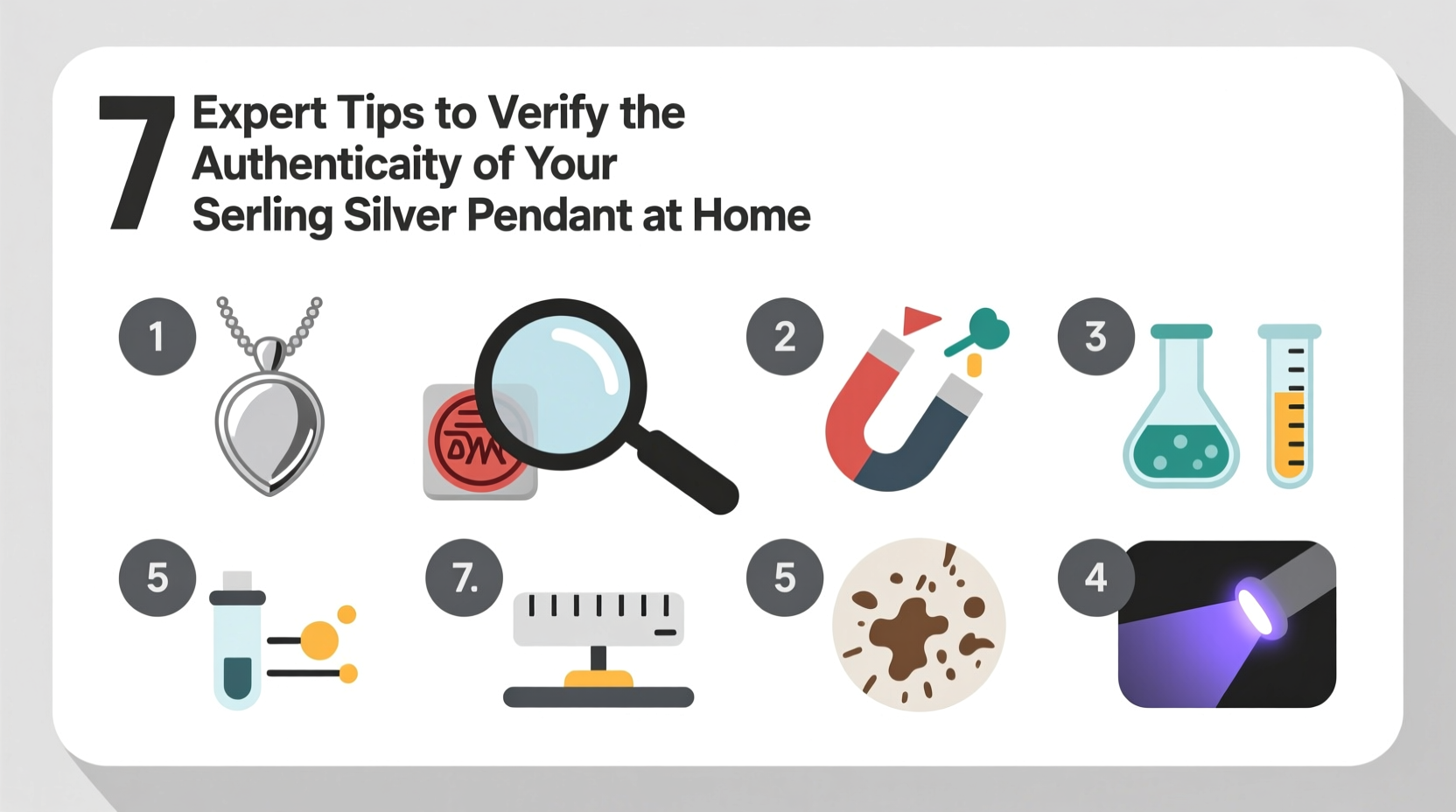
All legally sold sterling silver items in most countries must carry a hallmark indicating purity. The most common stamp is “925,” which means the piece contains 92.5% pure silver—the standard for sterling silver. Other variations include “Ster,” “Sterling,” or “.925.” These marks are usually found on the back, clasp, or edge of the pendant.
Absence of a stamp doesn’t automatically mean the piece is fake—some vintage or handmade pieces may lack official markings—but it should raise caution. Conversely, forged stamps do exist, so this test should be combined with others for confirmation.
2. Perform the Magnet Test
Silver is not magnetic. If your pendant is attracted to a magnet, it likely contains iron, nickel, or another ferromagnetic metal and is not genuine sterling silver.
“Magnetism is one of the quickest red flags for counterfeit silver. Real silver will show zero attraction.” — Daniel Reed, Certified Gemologist and Metals Appraiser
To conduct the test:
- Use a strong neodymium magnet (available online or from hardware stores).
- Hold the magnet close to the pendant.
- Observe if there's any pull or movement toward the magnet.
If the pendant sticks or moves noticeably, it’s not sterling silver. A slight resistance due to weight or air drag is normal—true attraction is unmistakable.
3. Conduct the Ice Test
Silver has the highest thermal conductivity of any common metal. This means it transfers heat faster than almost all other materials. The ice test leverages this property to yield quick results.
Place a small ice cube directly on the pendant. If it melts significantly faster than ice placed on a non-silver surface (like glass or ceramic), the piece is likely genuine silver. In many cases, the ice will begin melting within seconds.
This method isn't foolproof—some high-conductivity metals like copper behave similarly—but when combined with other tests, it adds valuable insight.
4. Look for Tarnish: The Natural Oxidation Factor
Real silver tarnishes over time when exposed to air and sulfur compounds. This oxidation creates a dark gray or black layer, especially in crevices and less-polished areas. While tarnish might seem undesirable, it’s actually a sign of authenticity.
Counterfeit pieces made from aluminum or stainless steel rarely tarnish naturally. If your “silver” pendant remains mirror-bright after months of wear, it may not be real.
That said, heavy plating can mimic tarnishing, so examine the pattern carefully. Genuine tarnish appears uneven and builds gradually. Abrupt discoloration or flaking suggests surface-level coating failure.
| Feature | Genuine Sterling Silver | Fake or Plated Metal |
|---|---|---|
| Tarnish Development | Gradual, patchy, darkens over weeks/months | None or sudden peeling/discoloration |
| Surface Texture | Smooth, consistent metal feel | May feel lighter, hollow, or rough under plating |
| Response to Polishing | Restores shine without revealing different metal underneath | Polishing may expose copper or brass base |
5. Use the Smell Test and Skin Reaction Check
Sterling silver is odorless. If your pendant emits a metallic, chemical, or sulfur-like smell—especially when rubbed—it may contain base metals like copper or zinc commonly used in fakes.
Additionally, pay attention to how your skin reacts. Authentic silver rarely causes irritation. If the pendant leaves green or black marks on your skin, it’s likely plated over reactive metals such as copper or nickel.
While skin discoloration isn’t harmful, it’s a reliable indicator of impure composition. Genuine sterling silver does not cause green fingers.
6. Perform a Simple Scratch and Acid Test (With Caution)
This method involves minor damage and should only be used on pieces where appearance isn’t critical—or if you suspect fraud and want definitive proof.
You’ll need a testing stone (unglazed ceramic tile works) and a nitric acid testing kit (available at jewelry supply stores):
- Rub the pendant across the stone to leave a streak.
- Apply a drop of 10–14K nitric acid to the mark.
- Observe the reaction:
- Creamy white or light gray = likely sterling silver.
- Green fizzing = base metal or plating.
- Brown or no reaction = possible silver-plated copper.
This test is highly accurate but requires care. Always wear gloves and work in a ventilated area. Avoid using hydrochloric or household acids—they are unsafe and unreliable.
7. Compare Weight and Temperature Feel
Silver has a distinct density—about 10.49 g/cm³. Fake pieces made from aluminum or alloy blends are often much lighter. Hold the pendant in your hand; real silver feels substantial and cool to the touch immediately, even in warm rooms.
The cool sensation occurs because silver rapidly draws heat away from your skin. Plastic, gold-plated brass, or aluminum won’t have the same effect.
If you own a similar-sized known silver item, compare weights side by side. A noticeable difference indicates the pendant may not be solid sterling.
Mini Case Study: How Sarah Caught a Counterfeit Pendant
Sarah purchased a delicate floral pendant online, drawn in by professional photos and a “925” stamp. When it arrived, she noticed it felt unusually light. She ran the magnet test—nothing happened. But then she placed an ice cube on it. It melted slowly, unlike ice on her grandmother’s silver locket, which melted in under 10 seconds.
She checked for tarnish: none, despite being labeled “antique-style.” Finally, after wearing it once, she noticed a green tint on her neck. She contacted the seller, provided evidence, and received a refund. Her diligence saved her from a $120 loss.
Sarah’s experience shows that combining multiple tests increases accuracy. No single method is perfect—but together, they form a powerful verification toolkit.
Essential Checklist: Verify Your Pendant in 5 Minutes
- 🔍 Inspect for “925,” “Sterling,” or “Ster” stamp
- 🧲 Hold a strong magnet near the pendant – no attraction should occur
- 🧊 Place an ice cube on the surface – rapid melting suggests real silver
- 👃 Smell the metal – no chemical or metallic odor should be present
- 🌡️ Feel the temperature – genuine silver feels cold instantly
- 👀 Examine for natural tarnish or skin discoloration after wear
- ⚖️ Compare weight with a known silver item
FAQ
Can a silver pendant be real without a 925 stamp?
Yes, especially if it’s handmade, vintage, or imported from countries with less stringent marking laws. However, absence of a stamp increases the need for additional testing.
Does vinegar harm real silver during testing?
Vinegar is mildly acidic and can accelerate tarnishing or dull the finish with repeated exposure. It’s not recommended as a primary test. Stick to safer methods like ice or magnet checks.
Are silver-plated pendants worthless?
No, but they’re not investment pieces. Plated jewelry offers aesthetic value at lower cost but wears down over time. Knowing what you own helps manage expectations.
Final Thoughts: Confidence Starts with Verification
Verifying your sterling silver pendant doesn’t require expertise or expensive tools. By applying these seven practical techniques, you protect yourself from deception and gain confidence in your collection. Whether you inherited a family heirloom, bought online, or received a gift, taking a few minutes to test authenticity ensures you know exactly what you own.




 浙公网安备
33010002000092号
浙公网安备
33010002000092号 浙B2-20120091-4
Comments
No comments yet. Why don't you start the discussion?