
Location tracking offers convenience—from fitness route mapping to turn-by-turn navigation—but it also raises valid concerns about privacy and battery consumption. The Apple Watch, tightly integrated with the iPhone ecosystem, shares location data across apps and services by default. For users who value discretion or want to reduce background activity, knowing how to disable location services without disrupting essential functionality is crucial. This guide walks through every method, consequence, and best practice for turning off location access on your Apple Watch securely and effectively.
Why Disable Location Services?
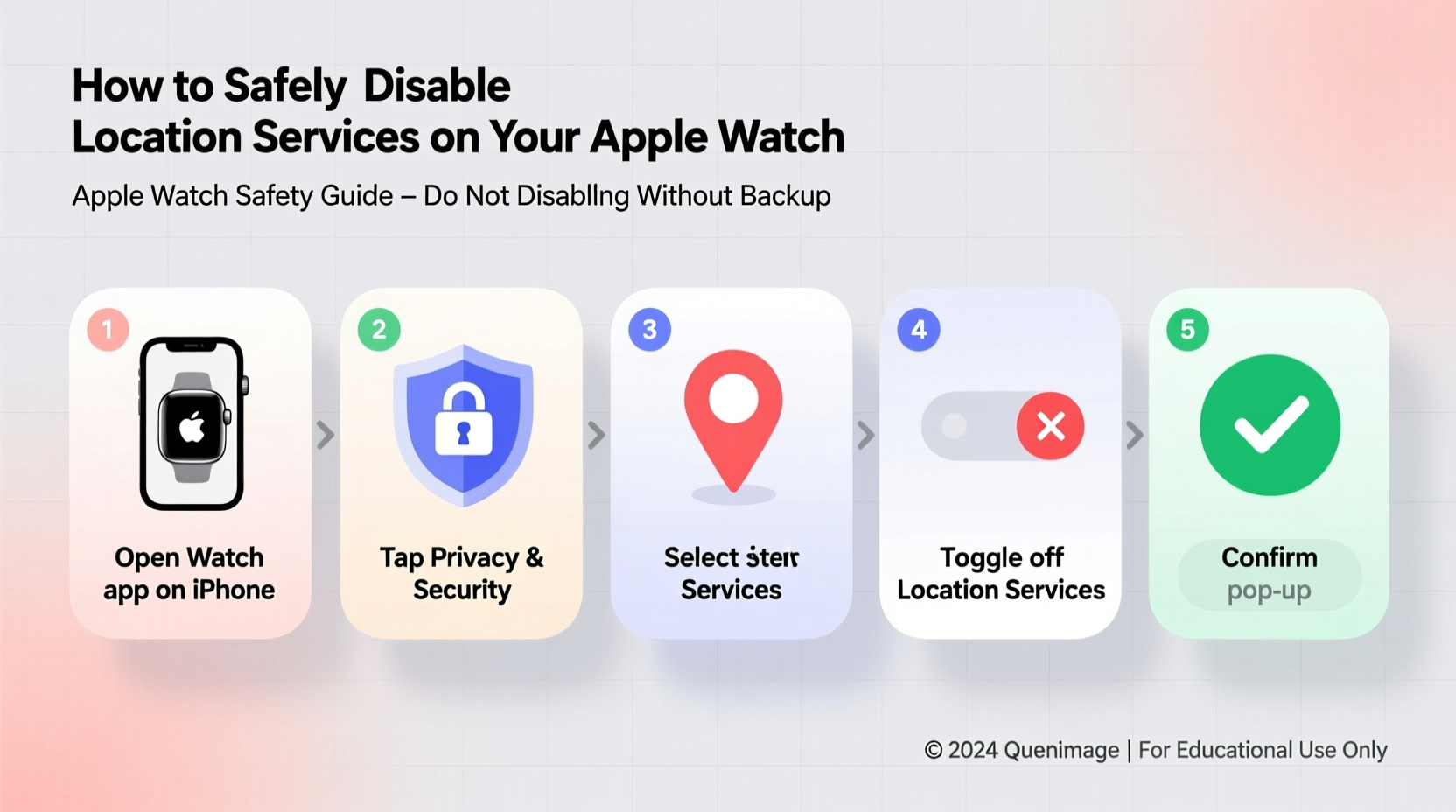
While Apple emphasizes user privacy and end-to-end encryption, location data remains one of the most sensitive digital footprints. Every time your Apple Watch pings GPS, Wi-Fi networks, or cellular towers, it logs movement patterns that could be accessed—intentionally or otherwise—by apps, advertisers, or even third-party developers.
Beyond privacy, constant location monitoring drains battery life. Background processes like geofencing (used by reminders or weather apps) keep the GPS active intermittently, reducing uptime between charges. Disabling unnecessary location access can extend battery performance by up to 15–20% under moderate use.
How Location Services Work on Apple Watch
The Apple Watch relies on multiple technologies to determine position:
- GPS: Built into GPS + Cellular models; used during workouts and outdoor navigation.
- iPhone Proximity: When near your iPhone, the watch uses its location instead.
- Wi-Fi & Bluetooth triangulation: Helps estimate location indoors when GPS isn’t available.
- Cellular networks: Available on cellular models for standalone positioning.
Unlike the iPhone, the Apple Watch doesn't have a standalone location settings menu in its Settings app. Instead, location permissions are managed through the paired iPhone via the Watch app. This design choice streamlines control but may confuse users expecting direct toggles on the wearable itself.
“Users often overlook that wearables collect just as much contextual data as phones. Managing location access is a foundational step in personal data hygiene.” — Dr. Lena Patel, Digital Privacy Researcher at Stanford Cyber Initiative
Step-by-Step: How to Disable Location Services
To disable location services for individual apps or globally, follow this sequence from your iPhone:
- Open the Watch app on your iPhone.
- Navigate to the My Watch tab.
- Tap Privacy, then select Location Services.
- Toggle the master switch at the top to turn off location access entirely—or leave it on and customize per app below.
- Scroll down to view a list of installed apps that request location access.
- Select any app (e.g., Weather, Maps, Workout) and choose one of these options:
- Never: Blocks all location requests.
- Ask Next Time: Prompts before sharing.
- While Using the App: Only allows access during active use.
- Always: Grants continuous background access (not recommended unless essential).
Note: Some system functions, such as Emergency SOS and Fall Detection, rely on approximate location and cannot be fully disabled without compromising safety features.
What Happens When You Turn It Off?
Disabling location services affects several functionalities differently depending on usage patterns:
| Feature | Impact of Disabling Location | Workaround |
|---|---|---|
| Workout Tracking (Outdoor Runs/Rides) | No GPS route mapping; distance/time estimates become inaccurate | Use iPhone instead or enable location only during workouts |
| Find My App | Cannot locate watch if lost | Re-enable temporarily when needed |
| Time Zone Adjustment | May not auto-update when traveling | Enable “Set Automatically” in iPhone’s Date & Time settings |
| Weather & Sunrise/Sunset Alerts | Shows generic or last-known location data | Manually update location in Weather app on iPhone |
| Maps Navigation | Turn-by-turn directions fail without real-time positioning | Start navigation on iPhone or re-enable briefly |
Best Practices for Balanced Control
You don’t have to go all-in on disabling location access. A smarter approach involves selective restriction based on actual utility.
Checklist: Optimize Location Permissions
- Review which apps have “Always” access—revoke unless absolutely necessary.
- Set fitness apps to “While Using” if you manually start workouts.
- Disable location for non-essential apps like games or news readers.
- Use Airplane Mode during flights or private meetings to suspend all signals.
- Periodically audit permissions every 60 days using the Watch app.
Real Example: Sarah’s Privacy Reset
Sarah, a freelance journalist covering sensitive topics, noticed her Apple Watch frequently lit up at odd hours. After checking her iPhone’s privacy logs, she discovered a meditation app was accessing her location daily—even though she only used it at home. Concerned about pattern inference, she opened the Watch app, went to Privacy > Location Services, and changed the setting from “Always” to “Never.” She regained peace of mind without losing core functionality. Later, she repeated the process for three other apps, extending her watch’s battery life by nearly two hours per charge.
Frequently Asked Questions
Can I disable location on the Apple Watch directly?
No. All location permissions must be adjusted through the Watch app on your paired iPhone. There is no independent location toggle within the Apple Watch’s Settings app.
Will disabling location affect emergency features?
Yes, partially. Emergency SOS and Medical ID rely on location to inform responders. While basic calling remains functional, delayed or inaccurate location delivery could impact response speed. Consider re-enabling location during high-risk activities or travel.
Do third-party apps behave differently after disabling location?
Some apps may show errors or reduced functionality. For example, a running app might skip pace updates or fail to save routes. However, none will crash the system. You can always revert changes via the iPhone if usability suffers.
Conclusion: Take Control Without Sacrificing Security
Disabling location services on your Apple Watch isn’t about rejecting technology—it’s about intentional use. By understanding what each permission enables and weighing it against your personal needs, you gain greater autonomy over your digital presence. Whether motivated by privacy, battery optimization, or minimalism, adjusting location access is a simple yet powerful act of digital self-determination.




 浙公网安备
33010002000092号
浙公网安备
33010002000092号 浙B2-20120091-4
Comments
No comments yet. Why don't you start the discussion?