
In an increasingly interconnected world, language barriers no longer need to hinder meaningful conversations. Smart glasses equipped with AI-powered real-time translation are transforming how we interact across languages—whether navigating a foreign city, negotiating a business deal, or connecting with someone from another culture. These wearable devices blend augmented reality (AR), voice recognition, and machine learning to deliver spoken and visual translations directly in your field of vision. But with multiple models emerging from tech innovators like Google, Xreal, and Viture, selecting the right pair requires careful consideration of features, accuracy, comfort, and use case.
Understanding How AI Translation Works in Smart Glasses
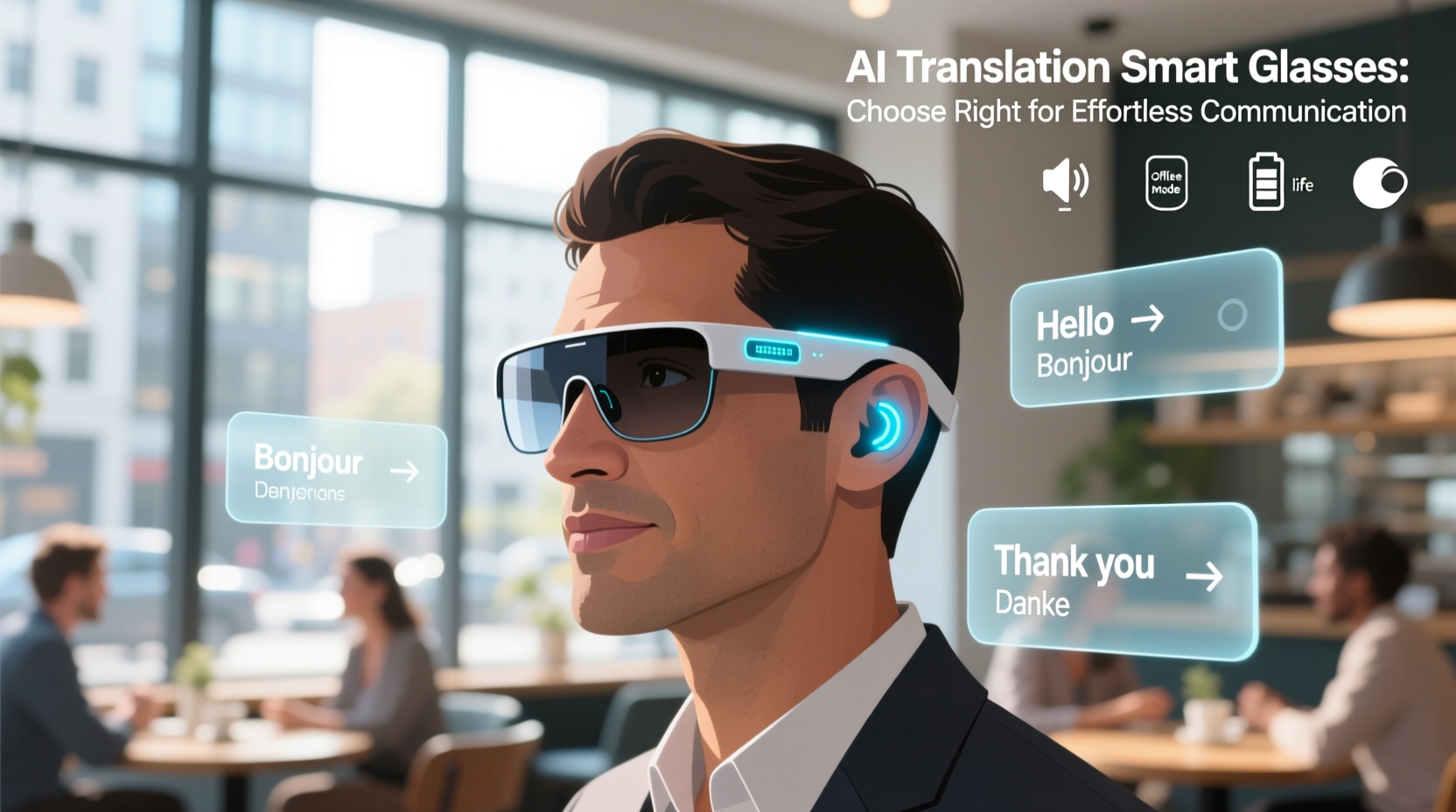
Modern smart glasses with AI translation rely on a combination of onboard microphones, cloud-based natural language processing (NLP), and AR displays. When two people speak different languages, the device captures speech through directional mics, processes it using AI models trained on vast linguistic datasets, and then overlays translated subtitles in real time on the lens display. Some models also offer audio translation through earbuds or bone conduction speakers, allowing users to hear translations without disrupting the flow of conversation.
The most advanced systems support bidirectional translation, meaning both parties can speak in their native language and receive accurate, context-aware responses. For example, a tourist asking for directions in English can see and hear the response in Spanish, while the local hears the original English query clearly. This symmetry is critical for natural dialogue and mutual understanding.
“Real-time translation isn’t just about converting words—it’s about preserving tone, intent, and cultural nuance.” — Dr. Lena Park, Computational Linguist at MIT Media Lab
Key Features to Evaluate Before Buying
Not all smart glasses with translation capabilities are created equal. Performance varies widely based on hardware quality, software intelligence, and ecosystem integration. Consider these core aspects when making your decision:
- Translation Accuracy: Look for devices powered by leading AI platforms such as Google Translate, DeepL, or proprietary NLP engines with proven multilingual fluency.
- Supported Languages: Ensure coverage includes the languages you need. Top-tier models support 30+ languages, including regional dialects like Mandarin vs. Cantonese or European vs. Latin American Spanish.
- Latency: Delay between speech and translation should be under 1 second for fluid interaction. High latency disrupts conversational rhythm.
- Display Clarity: Text must be legible in various lighting conditions. Waveguide optics and anti-glare coatings improve readability outdoors.
- Battery Life: Translation consumes significant power. Aim for at least 2–3 hours of continuous use or modular battery options.
- Comfort & Wearability: Lightweight frames (<45g) with balanced weight distribution prevent fatigue during extended wear.
- Noise Cancellation: Essential for crowded environments. Advanced beamforming microphones isolate voices even in noisy cafes or train stations.
Comparison of Leading Smart Glasses with AI Translation
| Model | Languages Supported | Translation Latency | Display Type | Battery Life | Price Range |
|---|---|---|---|---|---|
| Xreal Air 2 Pro | 40+ | ~0.8 sec | Micro-OLED, AR overlay | 2.5 hours (translation mode) | $399 |
| Viture One | 35 | ~1.2 sec | Waveguide AR | 3 hours | $449 |
| Google Pixel Glasses (Prototype) | 50+ (planned) | ~0.6 sec (estimated) | Holographic waveguide | TBD | Expected $600+ |
| Ray-Ban Meta (Gen 2) | 12 (via app only) | 2+ sec | No visual display | 4 hours | $299 |
Note that while Ray-Ban Meta offers voice translation via smartphone integration, it lacks on-lens text display—limiting its effectiveness for true hands-free communication. In contrast, Xreal and Viture provide full AR subtitle overlays, making them better suited for immersive multilingual experiences.
Step-by-Step Guide to Choosing the Right Pair
Selecting the ideal smart glasses involves more than comparing specs. Follow this practical sequence to ensure your choice aligns with your lifestyle and goals:
- Define Your Primary Use Case: Are you traveling frequently, working in global teams, or learning a new language? Prioritize features accordingly—e.g., travelers need offline translation; professionals may value calendar and email integration.
- Check Language Coverage: Confirm the device supports the specific language pairs you’ll use most. Don’t assume “supports Spanish” means accurate Colombian or Argentinian variants.
- Assess Real-World Performance: Watch independent review videos in noisy environments. Pay attention to how well the system handles overlapping speech or accents.
- Evaluate Comfort Over Time: Try on similar models if possible. Even a 10g difference can impact comfort after an hour of wear.
- Review Privacy Policies: Since these devices record audio and sometimes video, understand how your data is stored, processed, and encrypted—especially if used in sensitive meetings.
- Test Integration Needs: If you rely on Android Auto, Microsoft Teams, or Zoom, verify compatibility with your existing tools.
- Consider Future-Proofing: Choose brands offering over-the-air updates and active development roadmaps to extend device longevity.
Real-World Example: A Business Trip Transformed
Sophie Chen, a product manager at a Berlin-based startup, traveled to Tokyo for client negotiations. Despite studying basic Japanese, she struggled with technical terms during meetings. Using her Xreal Air 2 Pro glasses, she enabled real-time translation between German, English, and Japanese. As clients spoke, subtitles appeared discreetly in her peripheral vision, allowing her to respond confidently without pausing for interpreters. The result? Faster decision-making, improved rapport, and a signed contract two days ahead of schedule.
“It wasn’t perfect—occasionally idioms were lost—but the overall clarity changed how I approach international work,” Sophie said. “I felt present, not distracted by translation apps or note-taking.”
Essential Checklist Before Purchase
- ✅ Supports your top 3 needed languages
- ✅ Offers sub-1-second translation latency
- ✅ Includes AR subtitle display (not app-only)
- ✅ Has noise-resistant microphone array
- ✅ Weighs under 50 grams for all-day comfort
- ✅ Provides offline translation mode
- ✅ Integrates with your smartphone OS (iOS/Android)
- ✅ Includes privacy controls for audio/data
Frequently Asked Questions
Can smart glasses translate written text in real time?
Yes, many models feature optical character recognition (OCR) that translates signs, menus, or documents when you look at them. This is particularly useful for travelers navigating foreign cities.
Do I need internet for translation to work?
While most high-quality translation requires cloud processing, some premium models offer limited offline modes using preloaded language packs. However, accuracy and speed decrease without connectivity.
Are these glasses suitable for people who wear prescription lenses?
Some brands offer magnetic clip-on inserts compatible with common frame sizes. Others partner with opticians to create custom-fit prescription fronts. Always verify compatibility before buying.
Final Thoughts and Next Steps
Smart glasses with AI translation are no longer science fiction—they’re practical tools reshaping cross-cultural communication. Whether you're a frequent traveler, global professional, or language enthusiast, the right pair can remove friction and deepen connections. But success depends on choosing wisely: prioritize accuracy, low latency, comfort, and privacy. Avoid being swayed by sleek design alone—functionality matters most when you're relying on real-time understanding.
The future of human interaction is multimodal, intelligent, and inclusive. By adopting smart glasses thoughtfully, you’re not just upgrading your tech—you’re expanding your ability to connect, collaborate, and empathize across borders. Explore available models, test demos if accessible, and take the first step toward effortless multilingual communication today.




 浙公网安备
33010002000092号
浙公网安备
33010002000092号 浙B2-20120091-4
Comments
No comments yet. Why don't you start the discussion?