
Selecting the right pencil case isn’t just about color or size—it’s about functionality. One of the most overlooked yet critical decisions is the type of closure: zipper or snap. While both have loyal users, each comes with distinct advantages and trade-offs that affect daily usability, longevity, and convenience. Whether you're a student, artist, or professional organizing your desk, understanding these differences can prevent frustration and extend the life of your stationery.
The closure mechanism determines how securely your pens, pencils, erasers, and small tools stay inside. It also influences how quickly you can access them and how well the case resists wear over time. This guide breaks down every aspect of zipper and snap closures, backed by real-world use cases and expert insights, so you can choose the best option for your needs.
Understanding Closure Types: How They Work
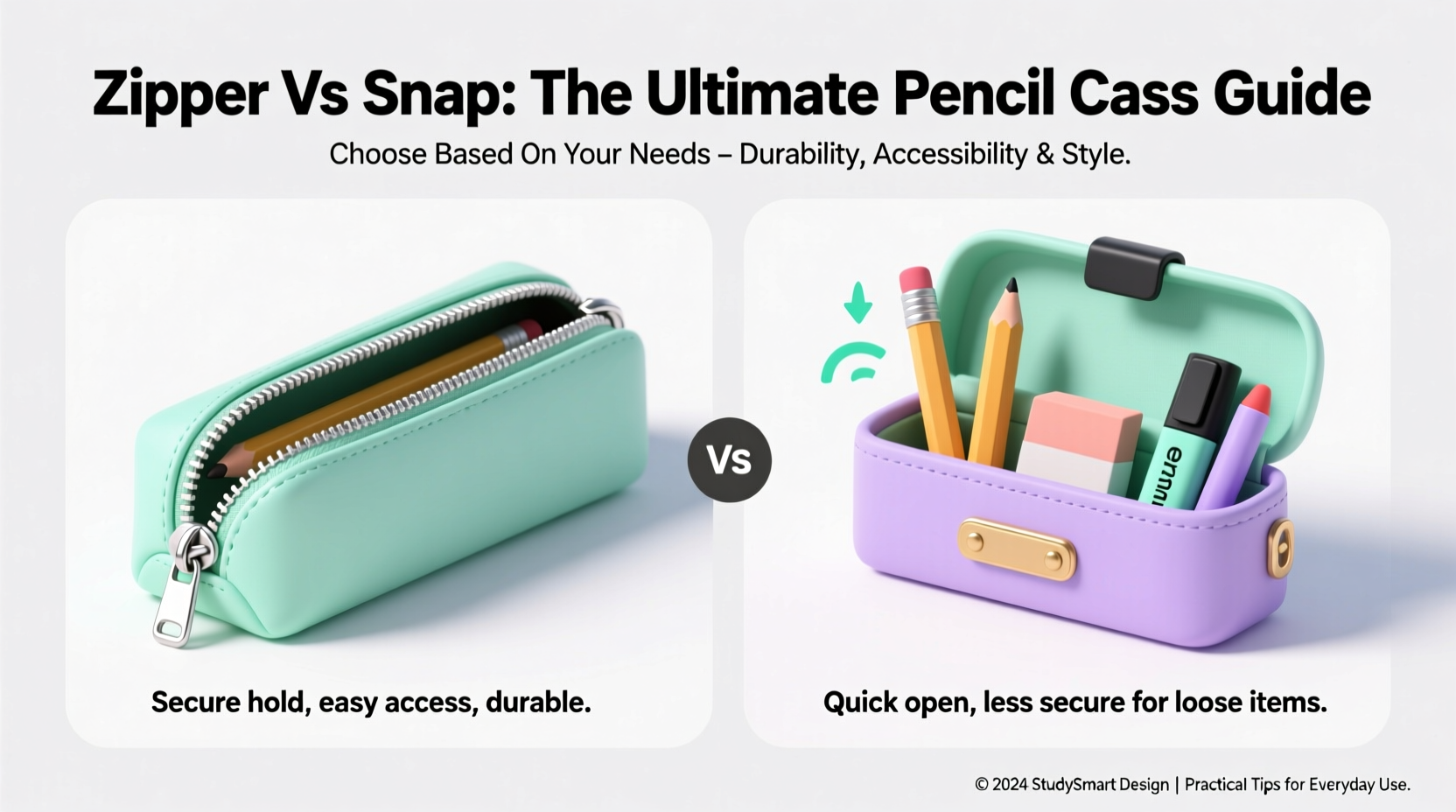
Before comparing zipper and snap closures, it's essential to understand how each functions mechanically.
Zipper closures rely on interlocking teeth or coils pulled together by a slider. When closed, they form a continuous seal along the edge of the pencil case. Most zippers used in stationery are coil zippers made from nylon or polyester, though some premium models use metal.
Snap closures, on the other hand, consist of two interlocking parts—a stud and a socket—usually made of plastic or metal. Pressing them together creates a secure but segmented fastening point. Some pencil cases use a single snap; others employ multiple snaps along the top edge for added security.
The fundamental difference lies in continuity: zippers provide a full-length seal, while snaps offer point-based locking. This distinction affects everything from spill resistance to long-term durability.
Comparative Analysis: Zipper vs Snap Closures
| Critera | Zipper Closure | Snap Closure |
|---|---|---|
| Durability | High, if quality materials are used. Prone to jamming or tooth separation with rough use. | Moderate. Snaps can break or loosen over time, especially plastic variants. |
| Security | Excellent. Fully sealed; prevents items from falling out even when inverted. | Fair to good. Gaps between snaps may allow small items to slip through. |
| Access Speed | Slower. Requires sliding motion; can snag on fabric or hair. | Faster. One-handed opening with a simple press. |
| Weather/Spill Resistance | Good. Can be water-resistant depending on zipper type and case design. | Poor. Gaps around snaps allow moisture or debris entry. |
| Maintenance | Requires occasional cleaning; lubrication helps smooth operation. | Low maintenance. Wipe clean; no moving parts beyond snap mechanism. |
| Aesthetic Flexibility | Limited by zipper visibility; can detract from minimalist designs. | More discreet; allows cleaner lines and retro styling. |
Real-World Use Case: The Student’s Dilemma
Consider Maya, a high school junior who carries her pencil case between five classes daily. Her old snap-closure case worked fine at first, but after three months, one of the plastic snaps cracked when she dropped her backpack. The case wouldn’t stay shut, and she lost several mechanical pencils during gym class.
She switched to a canvas pencil case with a heavy-duty YKK zipper. Though slightly slower to open, the new case survived being tossed into lockers, stuffed into side pockets, and even washed accidentally in her backpack. After nine months, the zipper still operates smoothly, and nothing has fallen out—even when the case was turned upside down retrieving a calculator.
This scenario illustrates a common pattern: snap closures may suffice for light, controlled use, but zippers excel in dynamic, high-movement environments where reliability is paramount.
Expert Insight: What Designers Recommend
“While snap closures offer vintage charm and quick access, they’re inherently less reliable under stress. For anyone using their pencil case beyond a desk drawer, we recommend reinforced zippers—especially those with double sliders for easier opening.” — Liam Tran, Product Designer at StudyGear Co.
Tran emphasizes material synergy: “A metal zipper on a leather case lasts years. But pairing a flimsy plastic snap with a durable fabric creates a weak point that fails first.” His team conducts drop tests and cycle testing (opening/closing 5,000+ times) before releasing new models, consistently finding zippers outperform snaps in endurance trials.
Choosing Based on Your Lifestyle: A Step-by-Step Guide
Follow this decision framework to select the ideal closure based on your habits:
- Assess your carrying environment: Do you toss your pencil case into a crowded bag? Choose a zipper for maximum containment.
- Evaluate item size: Small items like lead refills or mini-erasers need a sealed closure. Zippers win here.
- Test accessibility needs: If you sketch frequently and need rapid tool changes, a snap might suit better for speed.
- Consider long-term use: Will you keep this case for years? Invest in a metal zipper over plastic snaps.
- Check maintenance willingness: Are you okay occasionally wiping down a zipper track? If not, snaps require less upkeep.
Common Pitfalls and How to Avoid Them
- Ignoring zipper quality: Not all zippers are equal. Look for reputable brands like YKK or Lampo, often marked near the pull tab.
- Over-tightening snaps: Forcing a stiff snap can crack the housing. Align properly before pressing.
- Storing with debris inside: Pencil shavings or dirt near the closure accelerate wear. Empty and wipe monthly.
- Using excessive force: Yanking a stuck zipper can separate teeth permanently. Stop and inspect if resistance occurs.
FAQ: Your Top Questions Answered
Can I repair a broken zipper or snap?
Yes, but success depends on the case construction. Zipper replacements are possible if the seam allowance allows reattachment. Snaps can sometimes be replaced with rivet-style repair kits, though matching color and fit can be tricky. For glued-in cases, repair is often impractical.
Are magnetic closures a better alternative?
Magnetic closures combine the speed of snaps with stronger holding power. However, they can interfere with electronic devices and aren’t recommended for cases carried near phones or tablets. They also wear out over time as magnets weaken.
Which closure is more eco-friendly?
Zippers, particularly metal ones, are harder to recycle due to mixed materials (fabric, plastic, metal). Plastic snaps are simpler but contribute to microplastic waste if broken. The greenest choice is a durable design that lasts years, regardless of closure type.
Final Checklist Before You Buy
- ✅ Test the closure in-store if possible:
- Open and close it 5–10 times to assess smoothness and resistance.
- ✅ Check for reinforcement:
- Look for bar tacks or extra stitching at stress points, especially near zipper ends or snap bases.
- ✅ Examine the pull tab or snap button:
- It should be large enough to operate with cold hands or gloves if needed.
- ✅ Consider closure direction:
- Top-zip cases protect contents best; side-zips offer easier access but less security.
- ✅ Think long-term:
- Will this closure still function reliably after six months of daily use?
Make the Right Choice for Your Routine
The perfect pencil case isn’t defined by looks alone—it’s measured by how well it supports your daily workflow. A zipper offers unmatched security and resilience for active users, while a snap delivers elegance and speed for those with lighter, more predictable use. There’s no universal winner, only the best fit for your lifestyle.
By evaluating your needs honestly and prioritizing build quality over aesthetics, you’ll avoid the frustration of a failed closure mid-exam or a missing pen during a crucial meeting. Invest time in choosing wisely, and your pencil case will serve you reliably for years.




 浙公网安备
33010002000092号
浙公网安备
33010002000092号 浙B2-20120091-4
Comments
No comments yet. Why don't you start the discussion?