
Digital marketing is one of the most accessible and in-demand fields today. With low entry barriers, high earning potential, and remote opportunities, it’s no surprise that thousands are turning to it as a new career path. The best part? You don’t need a degree or prior experience to get started. What you do need is a clear plan, consistent effort, and the right resources. This guide walks you through every phase—from zero knowledge to landing your first role or client—with actionable steps that deliver real results.
Understand What Digital Marketing Really Is
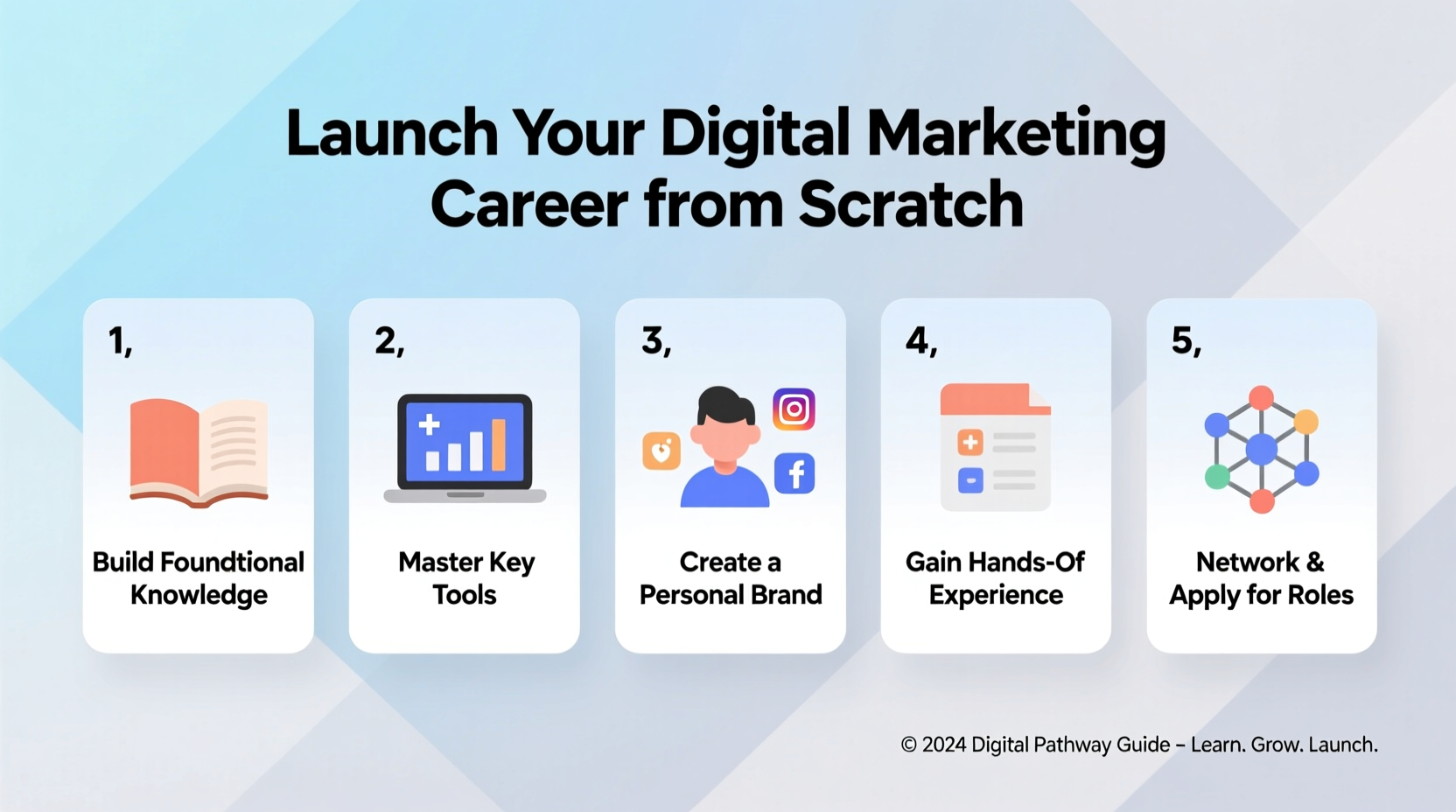
Digital marketing isn't just social media or ads. It's an umbrella term covering multiple disciplines: search engine optimization (SEO), pay-per-click advertising (PPC), email marketing, content creation, social media management, analytics, and conversion rate optimization. Each area requires different skills, but all share a common goal: driving measurable business outcomes online.
Before diving in, take time to explore each subfield. Spend a few hours researching what SEO specialists do versus PPC managers. Watch short YouTube videos on email automation workflows. Read blog posts about how brands grow audiences organically. This exploration helps you identify which areas align with your strengths and interests.
Build Foundational Skills Through Structured Learning
Self-learning works—but only if it’s structured. Randomly watching tutorials won’t give you job-ready expertise. Instead, follow a curriculum-style approach using free and low-cost resources.
Start with Google’s own certifications. The Google Digital Garage offers a free Fundamentals of Digital Marketing course with 40+ modules covering SEO, social media, email, and analytics. Completing it earns you a recognized certificate. Then move to Google Analytics Academy to master data interpretation—a critical skill for any marketer.
Supplement these with focused courses on platforms like Coursera, HubSpot Academy, or LinkedIn Learning. For example:
- HubSpot Academy: Free certifications in Inbound Marketing, Content Marketing, and Email Marketing.
- Coursera: University-backed programs like the Digital Marketing Specialization by the University of Illinois.
- Meta Blueprint: Free training for Facebook and Instagram advertising.
The key is consistency. Dedicate 5–7 hours per week over 8–12 weeks. Treat it like a part-time job. Complete every assignment, take notes, and apply concepts immediately—even if just to a personal project.
Develop a Real-World Portfolio (Even Without Clients)
Employers and clients care less about certificates and more about proof of ability. That’s why building a portfolio is non-negotiable—even when starting from scratch.
You don’t need paying clients to create meaningful work. Start small:
- Create a simple blog or website using WordPress or Wix.
- Write 5–10 articles optimized for SEO on topics you’re passionate about.
- Run a mock ad campaign using Google Ads’ Keyword Planner (free tool).
- Analyze website traffic using Google Analytics (use your own site).
- Design an email newsletter sequence using Mailchimp’s free tier.
Document each project with a brief case summary: objective, strategy, tools used, and results. For example:
“Optimized a travel blog post targeting ‘best hiking trails in Colorado.’ Used keyword research, on-page SEO, and internal linking. Achieved #3 ranking on Google within six weeks, increasing organic traffic by 180%.”
This demonstrates initiative, technical understanding, and results-oriented thinking—exactly what hiring managers look for.
Step-by-Step Timeline: From Zero to First Role in 6 Months
Success in digital marketing doesn’t require years of preparation. With focus, you can become job-ready in under half a year. Follow this realistic timeline:
| Weeks 1–4 | Learn fundamentals via Google Digital Garage. Choose one specialty (e.g., SEO). Set up a personal website or niche blog. |
|---|---|
| Weeks 5–8 | Complete 1–2 advanced courses (e.g., HubSpot SEO Certification). Publish 3–5 pieces of optimized content. Install Google Analytics. |
| Weeks 9–12 | Launch a small paid campaign (budget $20–$50) on Google or Meta. Document learnings. Build a portfolio PDF. |
| Weeks 13–16 | Apply for internships, freelance gigs, or entry-level roles. Join digital marketing communities (e.g., Reddit’s r/DigitalMarketing). |
| Months 5–6 | Land first role or client. Request feedback. Continue learning and scaling responsibilities. |
Real Example: How Sarah Landed Her First Job in 5 Months
Sarah, a former retail worker with no tech background, decided to switch careers after reading about remote digital marketing jobs. She followed a strict self-study plan: completed Google’s certification in six weeks, built a food blog focused on healthy recipes, and wrote SEO-optimized posts targeting low-competition keywords.
By month four, her blog ranked on page one for “easy high-protein breakfast ideas” and generated over 3,000 monthly visitors. She used Google Analytics to track user behavior and adjusted content based on bounce rates. She packaged this journey into a three-page portfolio.
She applied to five junior SEO analyst positions and landed an interview at a digital agency because she could show real data and decision-making. Six weeks later, she was hired at $45,000/year—fully remote.
Her success wasn’t due to luck. It came from doing visible, measurable work that proved competence.
Expert Insight: What Hiring Managers Actually Look For
“The biggest gap we see is candidates with theory but no application. Show us a live website you’ve optimized, a campaign you’ve run, even if it’s small. That tells us you can execute.” — Jamal Rivers, Senior Marketing Manager at TechGrowth Inc.
“Curiosity beats credentials in digital marketing. The field changes fast. We want people who test, learn, and adapt.” — Priya Mehta, Director of Digital Strategy, Nexus Media Group
Checklist: Launch Your Digital Marketing Career in 90 Days
- ✅ Complete Google’s Fundamentals of Digital Marketing certification
- ✅ Choose one specialization (SEO, PPC, content, etc.)
- ✅ Build a simple website or blog (free platforms welcome)
- ✅ Publish 5 pieces of original, optimized content
- ✅ Install and interpret Google Analytics data
- ✅ Run a micro-budget ad campaign ($20–$50)
- ✅ Create a one-page portfolio showcasing your projects
- ✅ Apply to 10 entry-level roles or freelance listings
- ✅ Join 1–2 online communities for networking and support
Frequently Asked Questions
Do I need a degree to work in digital marketing?
No. While some companies prefer degrees, most prioritize skills and demonstrated experience. Certifications, portfolios, and hands-on practice often outweigh formal education in this field.
How much can I earn starting out?
Entry-level roles like Digital Marketing Assistant or SEO Analyst typically pay between $38,000 and $50,000 annually in the U.S. Freelancers can charge $25–$75/hour depending on niche and location. Salaries increase quickly with proven performance.
Is digital marketing still a good career in 2024 and beyond?
Yes. As businesses continue shifting budgets online, demand for skilled marketers remains strong. Emerging areas like AI-driven marketing, automation, and data privacy compliance are creating new opportunities for those who stay current.
Take Action Today—Your Career Starts Now
The only thing standing between you and a digital marketing career is action. No gatekeepers. No waiting for permission. Open your browser, enroll in a free course, and publish your first piece of content. Every expert was once a beginner who showed up consistently. Build something real, learn in public, and let your progress speak for itself. The internet rewards initiative. Start now, stay focused, and within months, you’ll be surprised how far you’ve come.




 浙公网安备
33010002000092号
浙公网安备
33010002000092号 浙B2-20120091-4
Comments
No comments yet. Why don't you start the discussion?