
Checks remain a common method of payment despite the rise of digital transactions. Whether you're depositing, tracking, or reconciling payments, knowing how to read a check is essential. One often overlooked detail is the check number—a small but critical component that helps maintain order in your financial records. Unlike account or routing numbers, the check number doesn’t route funds, but it plays a vital role in organization, security, and verification. This guide breaks down where to find it, what it means, and how to use it effectively.
What Is a Check Number?
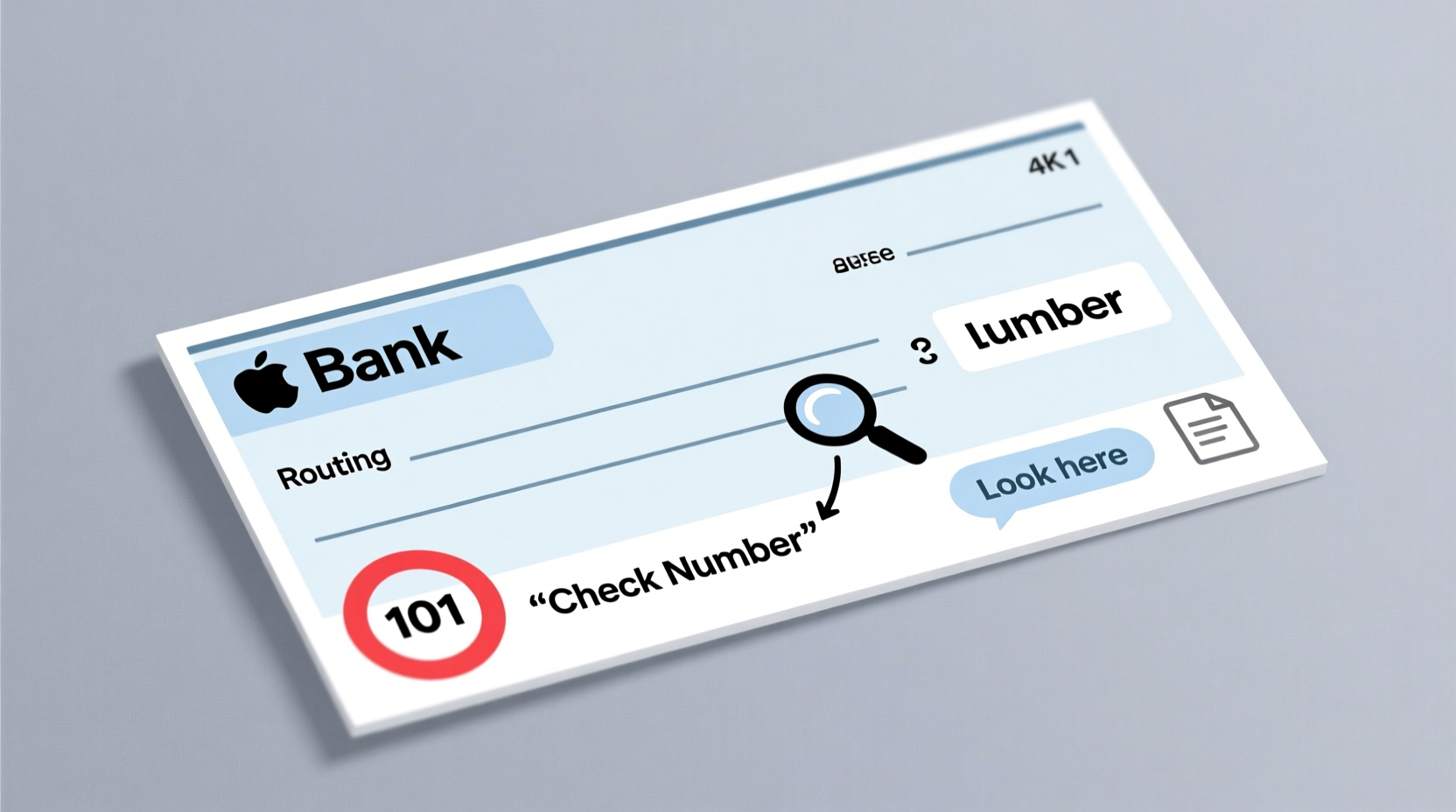
The check number is a unique identifier printed in the upper right corner and sometimes repeated at the bottom of a paper check. It corresponds to the sequence of checks in your checkbook and helps both you and your bank track individual transactions. Most personal checks are pre-numbered starting from 001, 002, and so on, though some starter checks may lack numbers.
This number does not affect how money is transferred—it’s purely administrative. However, when reconciling your bank statement or reporting a lost check, having the correct check number ensures accuracy and speeds up resolution.
Where to Find the Check Number
Locating the check number is straightforward once you know where to look. Here's how to identify it on a standard check:
- Upper Right Corner: The most visible check number appears here in large, easy-to-read digits.
- Bottom Row (MICR Line): A smaller version of the check number is embedded in the magnetic ink character recognition (MICR) line at the bottom of the check, usually as the last set of numbers after the routing and account numbers.
The MICR line contains three key sets of numbers:
- Routing Number: First set of nine digits—identifies your bank.
- Account Number: Middle set—unique to your account.
- Check Number: Final set—typically 3 to 4 digits.
Visual Identification (Text-Based Layout)
Imagine a typical check layout:
+----------------------------------------------------------+
| John Doe                            Check #105           |
| 123 Main Street                                          |
| Anytown, ST 12345                                        |
|                                                          |
| Date: _________       $______________                   |
|                                                          |
| Pay to the Order of: ___________________________         |
|                                                          |
| ___________________________________________ Dollars      |
|                                                          |
| Memo: _______________     Authorized Signature           |
|                                                          |
| [Bank Logo]                                              |
| Routing: 123456789    Account: 987654321     Chk#: 105   |
+----------------------------------------------------------+
In this example, \"Check #105\" in the top right and \"Chk#: 105\" in the MICR line both refer to the same check number.
Why the Check Number Matters
While seemingly minor, the check number supports several important financial functions:
- Transaction Tracking: Helps match cleared checks with entries in your check register or accounting software.
- Fraud Prevention: Banks can flag duplicate check numbers, which may indicate forgery or errors.
- Deposit Accuracy: Mobile deposits often require you to confirm the check number to prevent misprocessing.
- Customer Service: When contacting your bank about a specific check, providing the number speeds up inquiry resolution.
“Even in the digital age, physical checks still rely on sequential numbering to maintain audit trails and prevent processing errors.” — Lisa Tran, Senior Bank Operations Analyst
Step-by-Step Guide to Using Check Numbers Effectively
To make the most of check numbers in your financial management, follow these steps:
- Record Each Check Immediately: After writing a check, log the number, payee, date, and amount in your register or app.
- Verify Before Depositing: If someone writes you a check, confirm the number is present and legible. Missing numbers can delay processing.
- Match Against Bank Statements: When your statement arrives, cross-reference cleared checks by number to ensure no discrepancies.
- Report Lost or Stolen Checks Promptly: Provide your bank with the check number(s) to issue a stop payment or flag potential fraud.
- Store Cancelled Checks Securely: Keep them with your financial records for at least one year, especially for tax-related or large payments.
Common Misconceptions About Check Numbers
Several myths persist about the function and importance of check numbers. Clarifying these prevents confusion:
| Misconception | Reality |
|---|---|
| The check number affects how money is sent. | No—it’s only for tracking, not transaction routing. |
| All checks must have a number. | Starter checks or temporary checks may be unnumbered. |
| Duplicate numbers aren’t a problem. | Duplicates can trigger fraud alerts or cause reconciliation issues. |
| You can skip numbers without consequences. | Skipping is allowed, but gaps can raise questions during audits. |
Real-Life Example: Reconciling a Missing Check
Sarah noticed a discrepancy in her monthly bank statement. A check she wrote for $420 to her landscaper wasn’t marked as cleared, but her register showed it was issued as check #112. She logged into her online banking portal and searched transaction history by check number. There it was—processed two weeks later than expected due to postal delays. By using the check number, she avoided mistakenly paying the bill twice and corrected her budget forecast.
This scenario illustrates how a simple number can prevent costly errors and reduce financial stress.
Checklist: Managing Check Numbers Like a Pro
Stay organized with this practical checklist:
- ☑ Assign each new checkbook a starting number and verify sequence.
- ☑ Record every check written—number, date, payee, and amount.
- ☑ Confirm check numbers when depositing checks via mobile banking.
- ☑ Use check numbers to search transactions in online banking.
- ☑ Report missing or duplicated numbers to your bank immediately.
- ☑ Store voided and cancelled checks securely with other financial documents.
Frequently Asked Questions
Can a check work without a number?
Yes, especially if it’s a starter or counter check. However, numbered checks are preferred for tracking and security. Some banks may process unnumbered checks more slowly or request additional verification.
What should I do if my checkbook skips numbers?
Skipping numbers isn’t illegal or inherently problematic, but it can complicate recordkeeping. Note any skipped checks in your register and consider investigating whether they were misplaced or accidentally discarded. For business accounts, consistent numbering supports audit readiness.
Is the check number the same as the transaction reference?
Often, yes. Banks frequently use the check number as the reference or trace ID for that transaction. When reviewing your statement, the check number typically appears alongside the transaction description.
Final Thoughts
Understanding the check number is a small but powerful step toward better financial control. It bridges the gap between physical checks and digital records, ensuring clarity and consistency in your spending trail. Whether you write checks weekly or just a few times a year, taking a moment to note and verify this number pays off in accuracy and peace of mind.




 浙公网安备
33010002000092号
浙公网安备
33010002000092号 浙B2-20120091-4
Comments
No comments yet. Why don't you start the discussion?