
Making a phone call in the United States may seem straightforward, but nuances in area codes, time zones, calling etiquette, and technology can trip up even experienced callers—especially those unfamiliar with U.S. telecom norms. Whether you're contacting a business, reconnecting with family, or placing a customer service call from abroad, understanding the structure of U.S. telephony ensures your call connects smoothly and professionally.
This guide breaks down everything you need to know: from dialing formats and time zone awareness to voicemail habits and modern calling tools. With practical advice and real-world examples, you’ll gain confidence in navigating the American phone system efficiently and respectfully.
Understanding U.S. Phone Number Structure
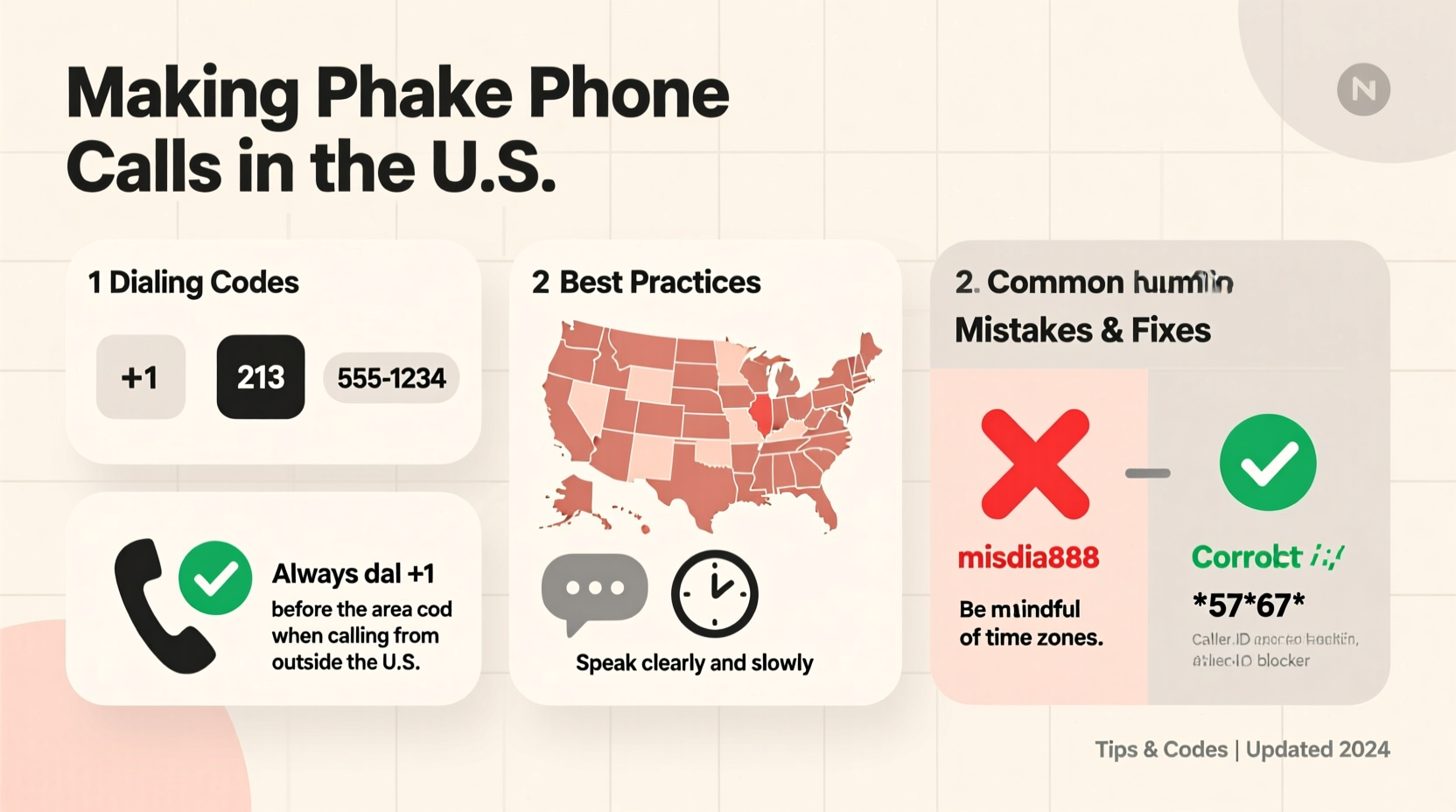
All U.S. phone numbers follow a standardized 10-digit format: (XXX) XXX-XXXX. This includes a three-digit area code, followed by a three-digit central office code, and ending with a four-digit line number. Originally designed under the North American Numbering Plan (NANP), this system is used across the U.S., Canada, and several Caribbean nations.
To place a domestic call within the U.S., you typically dial the full 10-digit number—even if you're in the same area code. Ten-digit dialing has become mandatory in many regions due to the overlay of new area codes on existing geographic zones.
For international callers, the process begins with the exit code of your country, followed by the U.S. country code (+1), then the full 10-digit number. For example, calling New York from the UK would be: 00 1 (212) 555-0198.
Dialing Codes and When to Use Them
Beyond standard numbers, various prefixes modify how calls are routed or billed. Knowing when and how to use them prevents confusion and unexpected charges.
| Code | Purpose | When to Use |
|---|---|---|
| +1 or 011 + 1 | U.S. country code | Calling the U.S. from another country |
| 1 + [10-digit number] | Domestic long-distance | Calling outside your area code; often required even for local calls |
| *67 | Caller ID blocking | Hide your number on a per-call basis |
| *69 | Last call return | Return the last incoming call (may incur fee) |
| *82 | Unblock caller ID | Temporarily show your number if usually hidden |
| 411 | Directory assistance | Find unlisted or local business numbers (fee applies) |
Most mobile carriers now include unlimited domestic calling, so using “1” before long-distance numbers rarely incurs extra cost. However, landline users should confirm their plan details to avoid surprise fees.
Step-by-Step: How to Make a Successful Call in the U.S.
Follow this sequence to ensure your call reaches the right person at the right time—and leaves a positive impression.
- Verify the number: Confirm the full 10-digit number, including area code. Double-check for typos.
- Check the time zone: The U.S. spans six time zones. Calling at 9 AM your time might be 6 AM in Pacific Time—too early for most people.
- Prepare your purpose: Know what you want to say. Have account numbers, questions, or reference details ready.
- Dial correctly: On mobile, enter +1 followed by the 10-digit number. From a landline, dial 1 + area code + number.
- Identify yourself clearly: Begin with your name and reason for calling. Example: “Hi, this is Alex Kim. I’m calling about my recent order #12345.”
- Be mindful of hold times: If transferred or placed on hold, remain patient. Avoid hanging up unless wait exceeds 10–15 minutes without updates.
- Leave a concise voicemail: If no answer, state your name, number, purpose, and best callback time.
“Clarity and brevity are valued in U.S. phone culture. Get to the point respectfully, and you’ll get better responses.” — Linda Ruiz, Communications Trainer at National Customer Service Institute
Best Practices for Professional and Personal Calls
Americans generally expect phone conversations to be polite but efficient. Striking the right balance improves outcomes whether you’re scheduling a doctor’s appointment or negotiating a contract.
- Call during business hours: 9 AM to 5 PM local time is safest for professional matters. Avoid weekends unless previously arranged.
- Use speakerphone sparingly: It’s acceptable in private settings but discouraged in public or group environments.
- Don’t overuse automated systems: While many companies use IVR (Interactive Voice Response), pressing “0” or saying “agent” repeatedly often routes you faster to a human.
- Confirm next steps: End calls by summarizing agreements. Example: “So you’ll email the form by Friday, and I’ll send the signed copy Monday.”
- Respect voicemail etiquette: Speak slowly, repeat your number twice, and keep messages under one minute.
Real Example: Navigating a Cross-Country Call
Sophie, a freelance designer in Chicago, needed to finalize a project with a client in Seattle. She scheduled a call for 10 AM her time, unaware that Seattle is two hours behind. Her call went unanswered—Seattle time was only 8 AM, and the client hadn’t started work.
After rescheduling for 1 PM Chicago time (11 AM in Seattle), the conversation flowed smoothly. Sophie prepared bullet points, used a headset for clarity, and confirmed deliverables at the end. The client later praised her professionalism, leading to a referral.
The lesson? Time zone awareness and preparation turned a potentially awkward misstep into a successful interaction.
Common Mistakes and How to Avoid Them
Even small errors can derail a call. Here are frequent pitfalls and how to prevent them:
- Assuming all area codes are local
- Area codes don’t always reflect geography due to number portability. A 212 number could be used in Miami. Always verify location via caller ID or ask politely.
- Calling too early or late
- Never call before 8 AM or after 9 PM local time unless urgent. Early calls are often seen as intrusive.
- Speaking too fast or unclearly
- Enunciate clearly, especially if English isn’t your first language. Pause between key points.
- Ignoring voicemail instructions
- If a message says “leave your order number,” do it. Skipping prompts increases the chance of no callback.
FAQ
Do I need to dial '1' before every call in the U.S.?
Yes, for all calls from a landline—including local ones—dialing '1' is often required. Mobile phones usually auto-dial correctly, but including '1' ensures consistency.
Why did my call fail when I dialed without the '1'?
Many U.S. regions enforce 10-digit dialing. Omitting the '1' for long-distance or inter-area-code calls results in an error message like “Incorrect number dialed.” Always include it to be safe.
Can I make free calls within the U.S. from abroad?
Direct dialing from abroad incurs international rates. Instead, use internet-based apps like WhatsApp, Google Voice, or FaceTime Audio over Wi-Fi for free or low-cost calling.
Conclusion
Mastering phone communication in the U.S. isn’t about memorizing rules—it’s about respecting time, clarity, and cultural expectations. By understanding dialing codes, honoring time zones, and practicing courteous habits, you’ll connect more effectively whether you’re a traveler, expat, or new resident.




 浙公网安备
33010002000092号
浙公网安备
33010002000092号 浙B2-20120091-4
Comments
No comments yet. Why don't you start the discussion?